


The recent revelation that some 100 artworks long believed to be Andy Warhol originals are probably fakes has raised a slew of questions in the art world, notably about the work of experts, but inquiries into the affair have so far met a wall of silence.
The key person in the tale - who reportedly ordered the fakes to be made in 1990, three years after Warhol's death - died in 2006. He was Pontus Hulten, an internationally renowned art expert and the former head of the Pompidou Centre's modern art museum in Paris and Stockholm's modern art museum Moderna Museet.
Neither the Andy Warhol Foundation, nor the Andy Warhol Art Authentication Board would comment. Two auction houses also declined.
The works in question are Brillo Boxes, pieces inspired by the real cardboard packaging of Brillo soap pads from the US. They sell for up to US$100,000.
Swedish daily Expressen broke the story in mid-2007 after months of research.
Moderna Museet then confirmed in November that more than 100 copies were made in 1990, and said it planned to withdraw its six Brillo Boxes that were part of that batch.
The copies were reportedly made for an exhibition in Saint Petersburg.
People questioned were cautious not to smear Hulten's stellar reputation, but the revelation casts serious doubts over his actions.
How could he have sold Brillo Boxes which he claimed were originals from 1968 while others say they were made after Warhol's death? Why did he say they were made in Sweden and displayed as part of a 1968 Warhol exhibition at Moderna Museet, when several sources insist that is untrue? In 1994, Hulten sold 40 Brillo Boxes to an art collector in Antwerpen, Belgium, Ronny van de Velde.
In a certificate of sale, he wrote: "These Brillo Boxes were produced in Stockholm in 1968, according to Andy Warhol's instructions. These Brillo Boxes were included in the exhibition Andy Warhol at the Moderna Museet, Stockholm, February to March 1968."
"I can't confirm that. He remembers incorrectly," said Olle Granath, the permanent secretary of the Swedish royal academy of fine arts and Hulten's assistant during the 1968 exhibition.
"Pontus had grown very old" by then, he suggested.
Expressen journalist Mikael Oelander added: "There's not one document proving that the 100 Brillo Boxes were made for the exhibition" in Stockholm in 1968.
It is, however, certain that when Hulten had the boxes made in 1990, it was not his intention to dupe the world. It was a widely known fact that they were being made to be part of an exhibition.
"It is clear that they were not made to pretend to be originals, but were made as part of the scenography for an exhibition," Granath said.
Another Expressen journalist, Christian Holmen, said "it was no secret" when they were made.
So why did Hulten say they were from 1968? "I wish Pontus Hulten was still alive so he could provide us with an explanation," said the current curator of Moderna Museet, Lars Nittve.
The affair also casts a shadow over the Andy Warhol Art Authentication Board, which, according to Expressen, issued authenticity certificates for many of the copies.
According to Granath, many of Warhol's authentic works were in fact not made by the artist himself.
"I'm glad I'm not a member of a committee that authenticates Andy Warhol's works. It was always someone else who made his artworks," he said.
The Andy Warhol Art Authentication Board did not respond requests for an interview.
"The board is looking into this issue," the board's lawyer, Ronald Spencer, said, "and I expect them to write to existing owners shortly." In April, a Brillo Box was sold at Christie's auction house for US$131,000.
The text describing the artwork in the catalogue said the piece was made in 1968 and that its previous owner was Pontus Hulten.
Was it a copy made in 1990? The auction house had no comment, and its spokesman Matthew Paton stressed that Christie's sells only pieces authenticated by the Andy Warhol Art Authentication Board.
Sotheby's auction house also declined to comment.
"Despite the statute of limitations, both auction houses are concerned by claims, they're concerned for their reputation," said American lawyer Peter Stern, who specializes in art cases and serves as chairman of the board for the Volunteer Lawyers for the Arts organization.
The recent revelation was very serious, Stern said, especially for the board.
However, he noted that the Andy Warhol Art Authentication Board did not risk legal proceedings if it was found to have authenticated fakes, as it was protected by special legal clauses.
As for the consequences for Warhol's reputation, Stern said there was little risk there either.
"The interest in his artwork is so substantial. It just means that buyers have to be more careful. I really don't think it will have an impact on Warhol's reputation or on the Warhol market," Stern added.
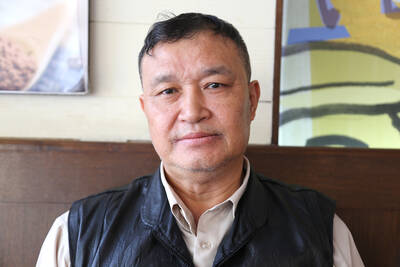
Taiwan has next to no political engagement in Myanmar, either with the ruling military junta nor the dozens of armed groups who’ve in the last five years taken over around two-thirds of the nation’s territory in a sprawling, patchwork civil war. But early last month, the leader of one relatively minor Burmese revolutionary faction, General Nerdah Bomya, who is also an alleged war criminal, made a low key visit to Taipei, where he met with a member of President William Lai’s (賴清德) staff, a retired Taiwanese military official and several academics. “I feel like Taiwan is a good example of
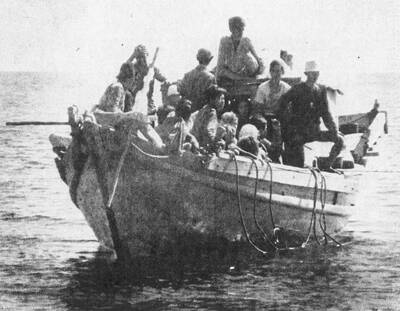
March 2 to March 8 Gunfire rang out along the shore of the frontline island of Lieyu (烈嶼) on a foggy afternoon on March 7, 1987. By the time it was over, about 20 unarmed Vietnamese refugees — men, women, elderly and children — were dead. They were hastily buried, followed by decades of silence. Months later, opposition politicians and journalists tried to uncover what had happened, but conflicting accounts only deepened the confusion. One version suggested that government troops had mistakenly killed their own operatives attempting to return home from Vietnam. The military maintained that the
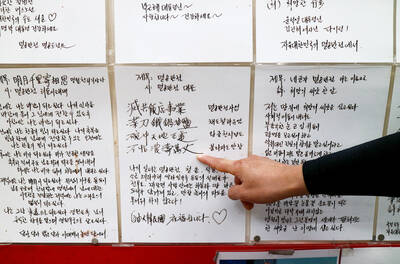
“M yeolgong jajangmyeon (anti-communism zhajiangmian, 滅共炸醬麵), let’s all shout together — myeolgong!” a chef at a Chinese restaurant in Dongtan, located about 35km south of Seoul, South Korea, calls out before serving a bowl of Korean-style zhajiangmian —black bean noodles. Diners repeat the phrase before tucking in. This political-themed restaurant, named Myeolgong Banjeom (滅共飯館, “anti-communism restaurant”), is operated by a single person and does not take reservations; therefore long queues form regularly outside, and most customers appear sympathetic to its political theme. Photos of conservative public figures hang on the walls, alongside political slogans and poems written in Chinese characters; South
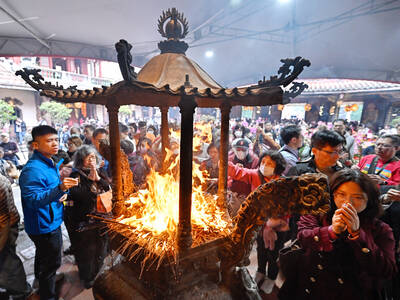
Taipei Mayor Chiang Wan-an (蔣萬安) announced last week a city policy to get businesses to reduce working hours to seven hours per day for employees with children 12 and under at home. The city promised to subsidize 80 percent of the employees’ wage loss. Taipei can do this, since the Celestial Dragon Kingdom (天龍國), as it is sardonically known to the denizens of Taiwan’s less fortunate regions, has an outsize grip on the government budget. Like most subsidies, this will likely have little effect on Taiwan’s catastrophic birth rates, though it may be a relief to the shrinking number of


 RSS
RSS