

Little Natasha is a giggling, wriggling bundle of mischief. She adores Barney the Dinosaur, claps along to her favorite songs, and throws a typical 3-year-old's temper tantrums.
Natasha, who picked up the AIDS virus in her mother's womb, also suffers from hearing problems, rashes and stomach upsets, and can't play outdoors too often because she easily catches cold.
But she is alive. So very alive.
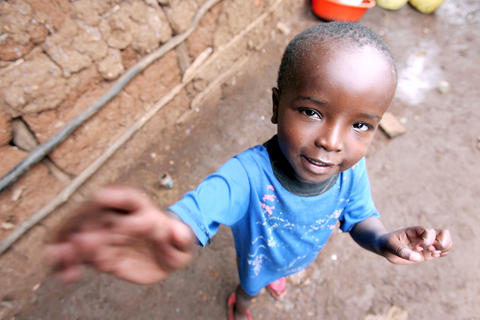
Natasha's health represents a small but significant victory over an epidemic gripping South Africa and neighboring countries. AIDS drugs are turning what was a certain death sentence for infants and young children into a manageable disease, providing a glimmer of hope on a continent of gloom.
But a long, hard road lies ahead. In Sub-Saharan Africa, fewer than 10 percent of infected children are receiving the medication they need. Even in South Africa, which has a relatively advanced AIDS-fighting network, an estimated 5.5 million people are estimated to have the virus, including about 240,000 children, only some 25,000 of whom have had the treatment that saved Natasha.
Last year, an estimated 950 South Africans died each day from AIDS-related diseases and a further 1,400 were infected each day, according to the Medical Research Council. UNAIDS head Peter Piot said at a conference in the coastal city of Durban this month that for every person in the country who started taking AIDS drugs, another five contracted the virus.
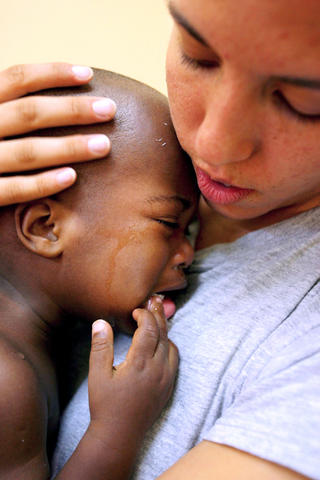
PHOTO: EPA
And despite the grim statistics and never-ending funerals, many South African men continue to have unprotected sex with multiple partners despite government pleas to change their behavior.
On a continent where poverty, war and lack of education rob children of their futures, AIDS attacks on many fronts. Even children who survive are often orphaned and vulnerable to abuse and exploitation.
Natasha clung to life against the odds. She stood little chance of survival at birth. Doctors referred her to Bowy House, a love-filled home with room for about 15 children.
"She was so thin you could see through her,'' Lalie Lombaard said with a shudder. Lombaard has cared for dozens of children at the home in Paarl, about an hour's drive from Cape Town.
Given the stigma that still surrounds AIDS in Africa, the identities of children are fiercely guarded and their surnames are rarely released. Under the UN Convention on the Rights of the Child, Natasha has the right to privacy.
She also has the right to life.
The South African government, long criticized for doing too little, now has the world's biggest treatment program, and children are a focal point of a five-year AIDS program unveiled in May.
Authorities have also vowed to step up prevention programs to stop fetuses being infected. Other governments such as Zambia, Malawi and Botswana are also giving more priority to children.
UNAIDS and the UN Children's Fund say 2.3 million children in sub-Saharan Africa are HIV-positive, most of them infected by their mothers because they did not receive drugs taken for granted in wealthy countries to prevent transmission of the virus.
Globally, an estimated 530,000 children were newly infected last year and 380,000 died of AIDS, the vast majority in Africa. Without treatment, half of infected infants die before age 2.
Throughout southern Africa, child mortality rates have soared because of AIDS, reversing health gains from better sanitation and immunization even in relatively prosperous countries such as Botswana and South Africa.
When Natasha arrived at Bowy House, aged nine months, she had twig-thin limbs, protruding ribs and a balding head. Photographs taken only three months later show her restored to health, celebrating her first birthday with her parents and a pink-and-green cake decorated with fairies.
Her photo album gives snapshots of the many small signs of progress across southern Africa. Lower drug prices, easier diagnosis, and better training of health workers augur a dramatic increase in the numbers of lives that will be saved. Government efforts are being boosted by the Clinton Foundation, the Bill and Melinda Gates Foundation, UN money and President Bush's Emergency Plan for AIDS Relief.
There are a whole host of other programs. For instance, backed by funding from drug companies, the Texas-based Baylor College of Medicine has an acclaimed pediatric AIDS initiative with children's clinics in some of the most ravaged countries.
In Botswana, more than 3,800 children are receiving care and treatment at clinics affiliated with the Baylor initiative, including its flagship hospital in the capital, Gaborone. The aim is also to assign foreign physicians and nurses to ease debilitating staff shortages and train local health workers.
The Zambian government has shifted its priority from purely high-risk adults to getting treatment to more children.
"The most significant success we have now is that we have a recognition that this is a priority area,'' said Albert Mwango, AIDS medical coordinator at Zambia's health ministry.
Eric Goemaere, the head of Medecins Sans Frontieres in South Africa, blames lack of political will for past inaction, because child AIDS wasn't a crisis in North America and Europe and drug companies had little financial incentive to develop a child-friendly therapy.
In 2005, 57 children in the US were infected by their mothers.
In the impoverished Cape Town slum of Khayelitsha alone - home to some 500,000 people - it was three times as high, according to Goemaere.
Khayelitsha, where one in four pregnant women is infected, is now home to one of South Africa's busiest anti-AIDS programs, with about 500 children on medication. Wednesdays are dedicated pediatric days and the no-frills clinic set up by MSF reverberates with children's shouts.
Children have remarkably few side-effects, partly because their systems cope better, says Goemaere. But there are other problems; older children battle with rejection by family and friends and often lapse into depression, he says.
The very young can't swallow tablets and have to take multiple doses of syrup, according to a body weight formula that can baffle caregivers - often illiterate grandmothers. The medicine needs to be refrigerated, difficult in poor areas with no electricity. And cash-strapped caregivers often can't afford the cost of driving kids to clinics.
But there is progress. Prices of ARV drugs for children have come down dramatically over the past 12-18 months. The Clinton Foundation HIV/AIDS Initiative negotiated a reduction in the cost of pediatric drugs - often taken in combination - to US$60 per year.
Pharmaceutical companies previously accused of being greedy are now lining up to fund children's projects in a complex network of public-private partnerships.
The local government provides drugs free of charge to Bowy House, where Natasha has spent most of her life and has come to regard its caregivers and children as her family. Staff there recently drove her on a seven-hour journey over mountains and dirt roads to spend time with her mother, who is dying of AIDS. Natasha has an extended family in her dusty village, but her father is unable to care for her. The village has no electricity and no schools.
She adores weekends at the beach, being pushed in a stroller and feeding the ducks. In summer she and her friends chase through the garden sprinklers, despite the risk of catching cold.
"In general we forget that they are ill children. They are naughty and full of mischief but when we see how quickly they can have a setback it reminds us that they aren't normal,'' says Lombaard.
She knows how to defend herself against Luvo, a boisterous 3-year-old boy who also looked like a famine victim when he arrived at Bowy House and now revels in annoying the girls. And she thrashes in fury when Lombaard, her surrogate mother, has no time to pick her up.
The home is an example of the localized care that many experts say should be Africa's model. The government pays for the medication, but Hester Veldsman, who founded Bowy House, relies entirely on private donations and struggles to meet monthly expenses of US$9,500 and is always grateful even for donations of diapers and groceries.
And what happens when communities don't care or can't cope?
In Zimbabwe, about 1.3 million children - or one in five - are classed as orphans and 100,000 live in child-headed households, according to UNICEF estimates. Zimbabwean President Robert Mugabe's confrontation with the West has caused humanitarian aid to plummet and families are collapsing under an inflation rate heading toward 4,000 percent.
Zimbabwe's official media regularly report on children being raped by HIV-infected men who believe sex with a virgin will cure them.
Similar abuse has been reported in impoverished Lesotho and Swaziland, where AIDS has slashed life expectancy to the mid-30s and left an army of orphans vulnerable to exploitation. School enrollment rates for girls have dropped as they quit to care for younger siblings and sick parents or simply can't afford the fees.
In Zambia, the AIDS-related death of parents and grandparents coupled with migration to cities has left many rural children with nobody to care for them. Faith-based organizations are struggling to fill the gap.
In Cape Town, a church-based charity called Act of Grace plans to use some 150 shipping containers as emergency shelters for AIDS orphans.
Bowy House founder Veldsman even now is overcome by tears when she thinks of the 5-year-old boy for whom her home was named, and who died months before AIDS drugs became available.
She counts Natasha as one of her victories.
"The doctors gave up on her, and I said, 'No, we can't give up,''' said Veldsman.
Aside from the medicine, there was one other vital ingredient in Natasha's survival, Veldsman said: "Tender loving care.''
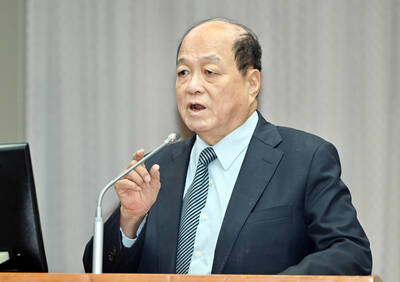
The Nuclear Safety Commission (NSC, 核安會) on Sept. 24 approved the re-operation plan that Taiwan Power Co (Taipower, 台電) filed in March for the Ma-anshan Nuclear Power Plant in Pingtung County, after three rounds of review and 589 comments. Taipower now has to carry out the work in the plan and its own inspections on ageing, radiation and seismic resistance, then report back to the commission for review and on-site checks. Minister of Economic Affairs Kung Ming-hsin (龔明鑫) has named 2028 as the earliest restart. The NSC has given no date. THE DEBATE No challenge has been identified as to whether Ma-anshan
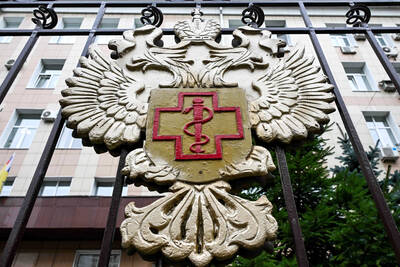
In pandemic preparedness work, scientists like to focus on the technical challenges: identifying pathogens, diagnosing infections, understanding their effects and developing vaccines and treatments. Each step promises progress through human innovation, investment and planning. The WHO, for example, brings experts together to identify and prioritize emerging disease threats and collect the evidence needed to prepare for them. But preparedness depends on more than scientific innovation. As the past week has shown, politics is the elephant in the room in all of this. No one could have predicted we would be talking about pneumonic plague, and that the death of a single

The Han Kuang exercises in August simulated the repelling of attackers from the People’s Republic of China (PRC). One scenario saw the PRC seizing Taipei International Airport (Songshan airport) in a daring helicopter assault. The airport is a key military operations center, and its seizure or destruction in a PRC invasion would be inevitable. Yet that is hardly the only conflict involving Songshan. Taipei Mayor Chiang Wan-an’s (蔣萬安) recent, surprising suggestion that the airport be converted to an AI park is just the latest variation on an old theme. Replacing Songshan airport with some kind of green or park space

The South China Morning Post (SCMP) article from earlier this month on how Beijing would govern a post-annexation Taiwan (Amber Wang, “Beijing’s policy advisers map out how post-reunification Taiwan could be governed,” Oct. 6, 2026) is a reminder that even “peaceful” (coerced) occupation by the People’s Republic of China (PRC) will beggar Taiwan. The “scholars” cited in the SCMP piece argued that Taiwan would be governed in a manner similar to Hong Kong. As I observed in my piece for Monday (“Beijing’s intimidation tactics in Taiwan and beyond,” Oct. 12, 2026), that claim is simply a form of cognitive warfare. One


 RSS
RSS