


Francesco Borrello has a passion for the hospitality industry. As a veteran hotel manager who has been part of the industry boom that has seen places like Dubai, Bahrain and Yemen develop from oil-dependant desert outposts into centers of luxurious living, he is no stranger to the challenges that face Taiwan in its ambition to become a hub for international tourism.
And Francesco Borrello is an optimist. He believes that Taiwan is the "world's best kept secret," replete with potential to become a major destination for international tourists.
The trouble is simply that it remains stubbornly a secret, with only 3.52 million foreign tourists visiting last year. Borrello compares this unfavorably with tiny Singapore, which received nearly 10 million for the same period, without any of the advantages in human resources, culture or natural beauty that Borrello lists for Taiwan.
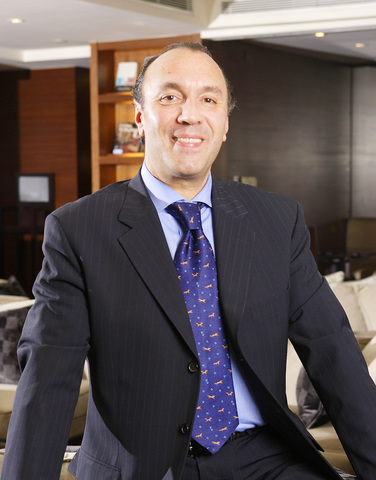
Photo: courtesy of Grand Formosa Regent Taipei
Naturally, as a general manager of the Grand Formosa Regent, one of the capital's foremost five-star hotels, Borrello has an interest in encouraging tourism to Taiwan. In his own small way, he has already been successful here. Since taking up his post in November 2006, Formosa Regent has seen occupancy for the first half of 2007 increase by 10 percent, and food and beverage revenue increase by 15 percent, over the same period last year. Clearly he must be doing something right.
As gratifying as such figures must be to an hotelier, Borrello is also convinced of the necessity of Taiwan reinventing itself as a service-oriented country, something it has yet to achieve.
"I think Taiwan has shifted its economy since the beginning, from the IT (information technology). Today Taiwan is the most developed country in terms of IT. When they started the development of the country they prioritized it. It's correct, it is a business decision. … Taiwan is going through a different phase now. It is time to diversify the economic stream. The first question is, what brings more money today? It is the leisure and travel business."
Borrello compares Taiwan's current situation with the UAE, were he worked at the Abu Dhabi Grand, Dubai, Le Royal Meridien, Bahrain and others, which were part of a grand plan by these oil-rich kingdoms to reduce their exclusive reliance on oil wealth. Taiwan, he says, must similarly reduce its dependence on the IT business.
"Now, the competent authorities are diversifying the offering of Taiwan," Borrello said.
Borrello enthuses over the beauty of Toroko and the vast collection of the National Palace Museum, lamenting how few people around the world know of the existence of these marvels. He would like to see a "master plan" which could harness these resources into a tourism strategy.
Has this happened yet? Francesco Borrello is a diplomatic man. It is part of his business. He speaks of the new opportunities created by technology that have reduced the time it takes to develop a tourist area. "Before it used to take 50 years, 100 years. Now with the new technology, advanced opportunities, it is much quicker … but the key is that you must want it to happen." And while the desire for the money to come rolling in is certainly there, Borrello suggests that in his own experience here, the political will is lacking.
"When you look at the tourism industry in Dubai today, you think there was a miracle. There was no miracle; it was just that they had a master plan. With the intention of becoming a great tourism destination and not to be oil dependant. Now you have the best hotel in the world there. Taiwan should take this as an example." He adds, with emphasis, that Taiwan is also different from places like Dubai, and even Singapore, because "Taiwan has the people."
What to do with these people is something that Borrello has worked hard on, within the Formosa Regent at least. Training is a huge priority: "Our hotel, it has become a school, I call it the 'knowledge factory,'" he said. And the purpose of all this training is to create a body of people who understand the nature of hospitality, the whole chain from quality products to outstanding service that is essential to creating a desirable tourism experience.
"They have great buildings, state-of-the-art shopping malls, even international museums, but they do not understand that this does not make the country … we have to make this become a service-oriented country," Borrello said.
"You can have the most prestigious brands and the most luxurious malls, but if the girl behind the counter cannot understand what you want…," he added, throwing his hands up at the huge challenge this situation represents.
"We (Formosa Regent and himself) can help set the quality of the service industry in Taiwan, and this should be the role of every single hotel in Taiwan," he said. "We are helping the development of the tourist industry. I think the Taiwanese people are a great potential in all aspects, … [it is necessary to] refocus, and the job of the government is to help us. … for alone we cannot do much, we need a greater force." And as diplomatic as Borrello wishes to be, he admits that this "master plan," this political support, this unity of purpose, is far from evident in Taiwan.
Borrello embarks on a highly animated metaphor. The money is on the table, millions of dollars are available, but he cannot get it. He circles it, reaches out for it, but cannot grasp it. Why? Because of a handicap. His hand is clenched and unable to open. So even though the money in right in front of him, it is out of reach. The potential is there, Taiwan "holds all the cards, but they are still waiting to be played."
Looking at the increasingly global community, Borrello sees little true internationalism in Taiwan. "This place is about 99.9 percent local." He speaks animatedly about how truly successful destinations do not just belong to the locals, they belong to the whole world, and while each location can be unique, visitors need not feel foreign. "Being local does not help even the locals," he said, suggesting that Taiwan should embrace a wider world than it does at present.
"People want to travel and Taiwan must become a new tourism destination in the world. At the moment it does not exist."
In working toward this end, Borrello puts his own role into perspective: "The only way I can help is to put my passion forward. That is all I have. I don't have billions to create a tourism master plan. No one individual can do that. This has to be the effort of the entire country. The efforts of a people who really love their own country."
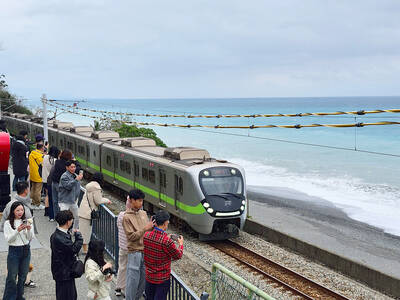
The small platform at Duoliang Train Station in Taitung County’s Taimali Township (太麻里) served villagers from 1992 to 2006, but was eventually shut down due to lack of use. Just 10 years later, the abandoned train station had become widely known as the most beautiful station in Taiwan, and visitors were so frequent that the village had to start restricting traffic. Nowadays, Duoliang Village (多良) is known as a bit of a tourist trap, with a mandatory, albeit modest, admission fee of NT$10 giving access to a crowded lane of vendors with a mediocre view of the ocean and the trains
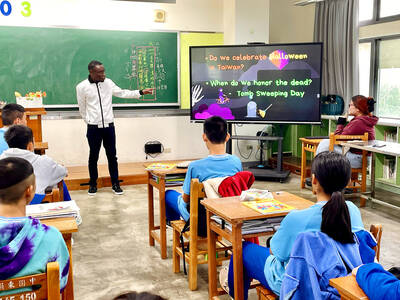
For many people, Bilingual Nation 2030 begins and ends in the classroom. Since the policy was launched in 2018, the debate has centered on students, teachers and the pressure placed on schools. Yet the policy was never solely about English education. The government’s official plan also calls for bilingualization in Taiwan’s government services, laws and regulations, and living environment. The goal is to make Taiwan more inclusive and accessible to international enterprises and talent and better prepared for global economic and trade conditions. After eight years, that grand vision is due for a pulse check. RULES THAT CAN BE READ For Harper Chen (陳虹宇), an adviser
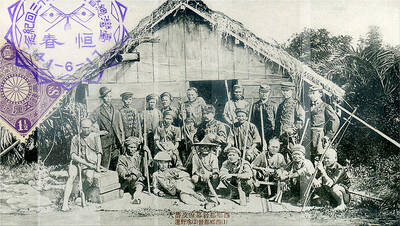
Traditionally, indigenous people in Taiwan’s mountains practice swidden cultivation, or “slash and burn” agriculture, a practice common in human history. According to a 2016 research article in the International Journal of Environmental Sustainability, among the Atayal people, this began with a search for suitable forested slopeland. The trees are burnt for fertilizer and the land cleared of stones. The stones and wood are then piled up to make fences, while both dead and standing trees are retained on the plot. The fences are used to grow climbing crops like squash and beans. The plot itself supports farming for three years.
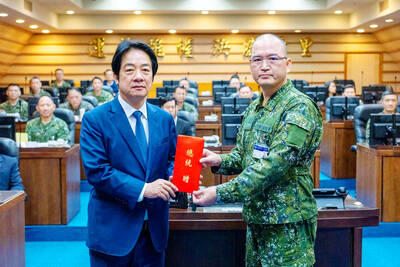
President William Lai (賴清德) on Nov. 25 last year announced in a Washington Post op-ed that “my government will introduce a historic US$40 billion supplementary defense budget, an investment that underscores our commitment to defending Taiwan’s democracy.” Lai promised “significant new arms acquisitions from the United States” and to “invest in cutting-edge technologies and expand Taiwan’s defense industrial base,” to “bolster deterrence by inserting greater costs and uncertainties into Beijing’s decision-making on the use of force.” Announcing it in the Washington Post was a strategic gamble, both geopolitically and domestically, with Taiwan’s international credibility at stake. But Lai’s message was exactly


 RSS
RSS