


An icy wind blasted in our faces as we trudged up a rocky slope on the southern outskirts of Kabul, the war-shattered capital of Afghanistan. Around us rose a moonscape of treeless, dun-colored hills, broken by clusters of mud-walled squatter huts. I squinted into the sunlight, looking east toward the earthen citadel of Bala Hissar, a stronghold from the time of the Silk Road to the post-Soviet wars. High above us, another wall of mud brick and stone — a fragment of the ancient rampart of Kabul, constructed before the arrival of Islam in a futile attempt to defend the city against invaders from Arabia and Central Asia — snaked along the ridgeline.
"It's always been easy to conquer Afghanistan," said my companion, Jonathan Bean, the American co-founder of the Great Game Travel Company Afghanistan, which shepherded about 70 Western tourists, including several dozen Americans, through this rugged land last year. "The problem is keeping control of it."
After an hour's slog up trackless scree to the top of the ridge, Jonathan and I, along with our security guard, a lean, gray-bearded Pashtun named Shafik Ullah, reached the rampart. We followed it for a 1.6km, sometimes walking alongside it, sometimes balancing ourselves on its crumbling surface. Perforated with apertures for archers, 9m high in places, the barrier climbed toward the summit of Kabul's highest hill, 2,195m above sea level.
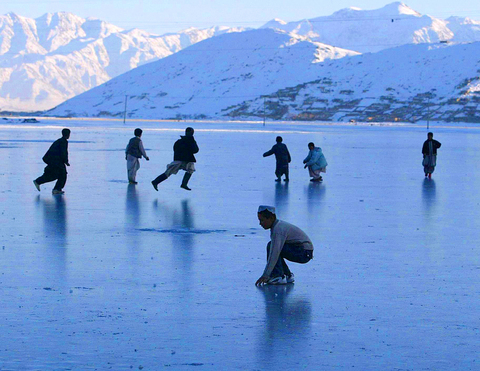
PHOTOS: AP
The Hindu Kush, a massif of snow and ice, loomed 48km to the north; Kabul lay far below us, obscured behind a layer of dust and smoke that smudged the panorama like a dirty fingerprint. Jonathan opened a thermos of coffee, and we warmed ourselves amid piles of stones and spent cartridges, the remains of a military post used by Ahmad Shah Massoud and his Northern Alliance fighters during the battle for Kabul in the early 1990s. "You can feel the history all around us," Shafik said.
In the 1970s, tens of thousands of visitors poured into Kabul each year, when the Afghan capital rivaled Katmandu as the favored Central Asian haunt for young backpackers who bunked down in cheap hotels and congregated on fabled Chicken Street to smoke hashish and while away the hours in coffee and carpet shops.
Then came the Russians, then the Taliban, and then the bombings following 9/11, pretty much destroying Kabul's reputation as a favored stop on the Hippie Trail. Now, however, even though much of Afghanistan remains dangerous, tourists are beginning to trickle back in, some lured by the thrill of the unknown, others by the pleasures offered by such new tourist spots as the Kabul Serena, an elegant US$36.5-million hotel that claims a "five-star ambience" in the heart of the city. As many as 5,000 Western tourists visited Kabul last year, Jonathan Bean told me, most of them affluent Europeans and Americans who have traveled to "30 or 40" countries, including developing ones. "Most of our clients are experienced travelers," Jonathan said. "They've trekked in Nepal, gone on safari in East Africa. Some have returned after coming here in the 1960s and 1970s. They see Afghanistan as the next great adventure-travel destination."
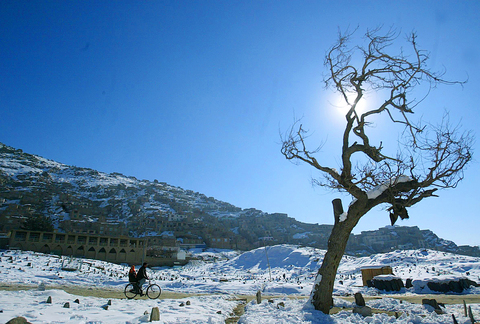
Most tourists who pass through view Kabul as an overnight stopover on the way to more remote corners of the country: the rugged Pamir Mountains in the northeast; the exotic bazaar town of Mazar-i-Sharif; and Bamiyan, the former site of the giant stone Buddhas that were destroyed by the Taliban. But those who linger for a few days, as I did, will discover a vibrant capital, steeped in tumultuous history and rich with Silk Road atmospherics.
"Kabul is the definition of the frontier town," I was told by Rory Stewart, the British diplomat turned author of the The Places in Between, a best-selling account of his winter walk from Herat to Kabul just after the Taliban's defeat. Today Stewart lives in Kabul, where he runs the Turquoise Mountain Foundation, which trains local craftsmen and is helping to renovate the decrepit Old Town by the Kabul River. The city is "a pluralistic place, with a fascinating history, half a dozen languages and countless subcultures," he said.
The city's security remains a cause for concern. Although most of the violence is concentrated in Taliban strongholds in the country's southeast, a handful of attacks have rocked the capital during the last year, including a suicide-bomb explosion on Sept. 8 at Massoud Circle, a major traffic hub, which killed two Americans and at least 16 Afghans. Anti-Western riots broke out last May in the aftermath of a fatal collision involving a US military convoy and civilian vehicles; crowds chanted "death to America" and attacked restaurants, hotels, police stations and shops, and British marines evacuated 21 European diplomats from the city.
Yet with a few spectacular exceptions, the capital has remained violence free. "NATO and Afghan security forces have done a good job," I was told by Vince White, a Ministry of Finance consultant who has lived in Kabul for nearly five years. "The security companies try to make us paranoid," he said. "They depend on expatriate fear for their business."
Bean regularly takes foreign tourists on walking tours of Kabul with a single, unarmed Afghan security guard. "People love Kabul," Bean said. "They've heard nothing positive about the place — that it was destroyed, that it's dangerous. Then they get here and get a big surprise — they see a bustling bazaar city, full of life."
In a week of exploring the city, from the windswept, near-deserted ramparts to the teeming, labyrinthine passageways of the Mandayi Bazaar, I never once felt threatened. To the contrary, I was welcomed everywhere by Afghans eager to show me that their country and city were groping their way toward recovery.
It didn't take me long to discover one of the newest hubs of expatriate Kabul. A photojournalist friend directed me to the Cabul Coffee House, a cozy establishment, painted adobe-pink and filled with Central Asian handicrafts, located on a muddy alley in the lively Qal-I-Fatula district.
Opened last year by two American women and the Afghan husband of one of them, the Cabul Coffee House functions as a sort of cross between Starbucks and a Manhattan literary bar. In addition to its lattes and double-shot cappuccinos, it offers readings and lectures one or two nights a week. I got there at about six o'clock on a Tuesday evening to find several dozen Westerners, including aid workers, teachers, contractors and consultants, along with a smattering of Afghans, eating cheeseburgers, Greek salads and kebabs while waiting for the cultural program to begin. (The fact that so many foreigners had ventured into the streets of Kabul after dark was perhaps the most telling indication of the capital's relative stability.)
The guest speaker was Whitney Azoy, a Princeton-educated former US diplomat to Afghanistan. Azoy had left the foreign service decades ago and transformed himself into one of the world's experts on buzkashi, Afghanistan's national sport, a sort of polo played with a goat carcass.
The following day I hired a driver and set out to see the National Museum of Afghanistan, in western Kabul. Large sections of capital remained wrecked after decades of war and neglect; beggars swarmed over us at intersections, and the traffic in the downtown area, along the Kabul River, was horrendous.
The National Museum itself bears testimony to the traumas of the last two decades. Until 1992 it contained one of the finest collections of art and cultural artifacts in Asia: 100,000 pieces from two millenniums of Afghan history. During the fight for Kabul, mujahedeen armies occupied and looted the museum; the structure was shelled in 1993 and fire destroyed the roof and the second floor. By the time the Taliban seized power, only a few thousand pieces remained; the museum's staff had hidden away the best works. Then, in 2001, Taliban leaders ordered all art objects depicting the human form destroyed, and cadres set upon the remaining exhibits with axes and sledgehammers, ruining 2,500 more works.
But the museum, like much of Kabul, is struggling back to life. The two-story, gray concrete villa was rebuilt with Greek, American and Italian money in 2004. When I arrived, workmen were laying tiles in the lobby and putting the finishing touches on a marble staircase, a project being financed by an Austrian aid group.
The real fascination of Kabul, I found, lies in the ordinary rhythms of life here, in the bustle of a reviving city. Early one morning Jonathan and Shafik met me in the lobby of the Serena (perhaps the only luxury hotel in the world that operates on a cash-only basis), to which I had moved after a few nights at the Gandamack, and led me on foot along the Kabul River to the Mandayi Market.
Destroyed by British forces in the 1840s, and again during the 1990s civil war, this rebuilt bazaar is the nerve center of the Afghan capital. Shafts of sunlight penetrated serpentine alleys lined by canvas-covered wooden stalls; the harsh light illuminated the bearded faces of Pashtun merchants and their bountiful wares: nuts, spices, dried fruits, tea, slabs of raw meat, live turkeys, blankets, beads of lapis lazuli. Sparks flew from the spinning wheels of knife sharpeners, and strips of beef sizzled in huge pans of sesame oil. Adolescent boys careened through the passages pushing wheelbarrows, sending shoppers scurrying for safety; two butchers led a bleating black sheep to a rear courtyard for slaughter.
We turned into a cacophonous bird market, where bright-green parakeets and budgies flitted by the hundreds inside bamboo cages. Five ethnic Uzbek men, swathed in wool blankets, with dark faces and almond eyes suggesting their Mongol ancestry, marched single-file through the alley and struck a deal for a fighting partridge, a large, red-beaked bird whose killer instinct is legendary. "The High Court has ruled bird fighting illegal," Shafik told me, "But it happens every Friday morning across the city. It's a part of life in Kabul."
That evening, Vince White, the American consultant, took me to a teetering building in the shadow of the domed Pul-i-Khishti Mosque, the dominant edifice of central Kabul. We had come to attend a weekly gathering of Sufi Muslims, members of a mystical sect whose ritualistic music, qawwali, and dance were banned during the Taliban era but have since been revived. We slipped past hashish-smoking men in a muddy alley, climbed to the building's second floor, removed our shoes and entered a fluorescent-lit room.
Seated on the green-carpeted floor were burly ethnic Tajiks wearing the beret-like brown pakul, popularized by Massoud; Pashtuns with prophets' white beards and billowing turbans; sloe-eyed Uzbeks and Hazaras; and a Medusa-haired ascetic in rags who flopped down beside me and began haranguing me in Dari, Afghanistan's dominant language (close to Farsi). All other eyes were focused on an elderly sitarist in a white turban, an adolescent drummer, a harmonium player, a virtuouso of the rubab — a mandolin-like Afghan instrument — and a black-haired young vocalist who is regarded, White told me, as one of Afghanistan's finest Sufi singers. "All of these people are poor," he said, over the singer's wailing vibrato. "This is a great escape from the problems of life in Afghanistan."
I stared across the room at a black-bearded gnome shrouded in a white robe. His head was bobbing, his face frozen in a rictus of ecstasy. The wild-haired ascetic clapped his hands to his cheeks and began to sway back and forth. A young Pashtun poured me a cup of Afghan green tea, and I sipped contentedly as the music wafted over me. Then, near midnight, my companion and I headed back to our car, through a darkened alley, past the sweet aroma of hashish, and the huddled forms of men warming themselves around a wood fire glowing in a barrel. Kabul — raw, ruined, yet stirring back to life — had never seemed more magical.
Getting there
From Dubai, you can connect to Kam Air (www.flykamair.com; 888-952-6247), a private Afghan airline with daily flights between Dubai and Kabul. A Dubai-Kabul round trip costs about US$430. The US dollar is almost universally accepted in Afghanistan.
Hotels
The best hotel in town by far is the Kabul Serena (Froshgah Street; 93-79-9654-000; www.serenahotels.com), in the heart of the congested downtown area, near the Kabul River and the Mandayi Market. Opened in November 2005, the US$36.5 million showpiece, with 160 rooms and 17 suites, was reconstructed out of the carcass of the old Kabul Hotel near Zamegar Park. Double rooms are about US$140 a night: all have high-speed Internet connections, with WiFi in the lobby. Public spaces are crammed with Afghan carpets, along with antique furniture, copperware and local art.
The Safi Landmark Hotel and Suites (Charahi Ansari, Shar e Naw; 93-20-220-3131) is a somewhat downscale alternative to the Serena in Kabul's restaurant and entertainment district. It has 90 rooms, 40 apartments and WiFi. Double rooms are US$100 a night.
Peter Jouvenal's Gandamack Lodge (93-70-27-6937 or 93-79-56-9904; www.gandamacklodge.co.uk), on Sherpur Square, is a dark, atmospheric hangout for foreign correspondents and aid workers, as well as the occasional adventure traveler. It has 15 pleasant rooms, which cost US$115 a night, a good restaurant, a basement bar called the Hare and Hound and frequent cultural events, including lectures and movie screenings. It's an intimate, slightly down-at-the-heels alternative to the Serena.
Transport and guides
Afghan Logistics and Tours (93-799-391-462 or 92-70-479-435) provides good cars and drivers who speak some English for US$40 to US$50 a day within Kabul, more if you're traveling outside of town. The service is reliable and the drivers invariably pleasant.
For guided tours of the city and the rest of Afghanistan, the Great Game Travel Company Afghanistan (93-799-489-120; www.greatgametravel.com) is the place to go. The co-founders and co-owners, Andre Mann and Jonathan Bean, have a fleet of four-wheel-drive vehicles and a staff of well-informed English-speaking guides and security advisers. A day tour of Kabul runs to about US$100. It also offers a variety of other tours, including a week-long trek through the Pamir Mountains and a trip by vehicle to Bamiyan, Herat and Mazar-i-Sharif.
Taiwan’s English education system is being pulled apart by three opposing forces. Bilingual Nation 2030 pulls students toward English and global communication. Artificial Intelligence (AI) readiness pulls them toward digital judgment, verification and AI-mediated work. But Taiwan’s old exam culture pulls them back toward memorization, grammar drills, timed reading and correct answers. If the education system keeps using old exams to define success, it risks producing graduates who are neither genuinely bilingual nor genuinely AI-ready, but trained for tasks machines can already perform. The first force is Bilingual Nation 2030. Launched in 2018, the policy aimed to “help Taiwan’s workforce connect
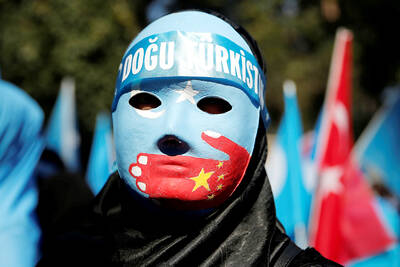
It seems every few days one bumps into one of those “real man” comments in which Taiwan is urged to “face reality” or similar, and “make a deal,” with the speaker implying that soon it will be too late. “Deal” advocates always present themselves as having a superior grip on reality, and the manly ability to make the “hard choice.” Their testosterone-laden language often echoes that of Taiwan sellout advocates. Note that such commentary always specifies a process (“make a deal, work with, make progress”), never the end state of what occupation by a violent authoritarian colonialist state will entail. In
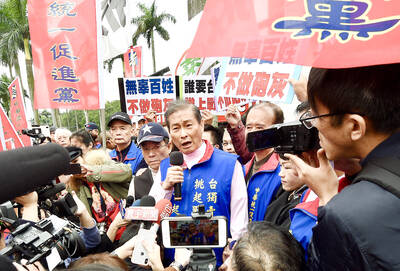
There are shadowy cabals plotting to sell out Taiwan to be annexed by China, by invasion if necessary. Fortunately, they are buffoons. In 2019, former Bamboo Union gangster and founder of the China Unification Promotion Party (CUPP), Chang An-le (張安樂, colorfully known as “White Wolf”), led a protest at the Legislative Yuan against comments made by then-premier Su Tseng-chang (蘇貞昌) that in the event of an attack by China, he would never surrender, but would protect the nation by fighting to the end, even if he only had a broom. Chang had party members bring a wooden casket that they
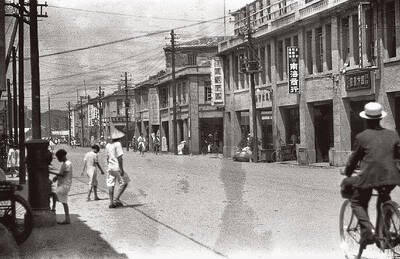
June 1 to June 7 "If all Taiwanese were as afraid of dying as you, then what would happen?” Physician Shih Chiang-nan (施江南) reportedly said this to his wife Chen Chiao-tung (陳焦桐) after she urged him to stop intervening on behalf of Taiwanese soldiers stranded overseas after serving in the Japanese Army during World War II. Shih had clashed with high-ranking officials over the issue, engaged in several heated arguments with Taiwan governor-general Chen Yi (陳儀) and allegedly shouted at general Ko Yuan-fen (柯遠芬), chief of staff of the Taiwan Garrison Command, over


 RSS
RSS