


Whey seem almost alive: snapshots of the living human brain.
Not long ago, scientists predicted that these images, produced by sophisticated brain-scanning techniques, would help cut through the mystery of mental illness, revealing clear brain abnormalities and allowing doctors to better diagnose and treat a wide variety of disorders. And nearly every week, it seems, imaging researchers announce another finding, a potential key to understanding depression, attention deficit disorder, anxiety.
Yet for a variety of reasons, the hopes and claims for brain imaging in psychiatry have far outpaced the science, experts say.
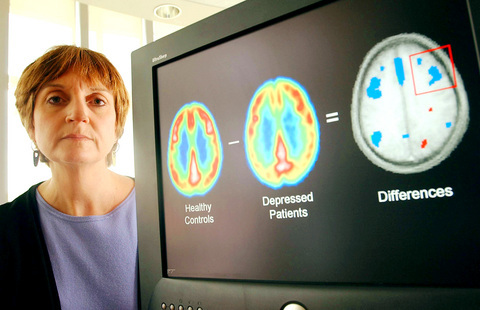
After almost 30 years, researchers have not developed any standardized tool for diagnosing or treating psychiatric disorders based on imaging studies. Several promising lines of research are under way. But imaging technology has not lived up to the hopes invested in it in the 1990s -- labeled the "Decade of the Brain" by the American Psychiatric Association -- when many scientists believed that brain scans would turn on the lights in what had been a locked black box.
Now, with imaging studies being published at a rate of more than 500 a year, and commercial imaging clinics opening in some parts of the country, some experts say that the technology has been oversold as a psychiatric tool. Other researchers remain optimistic, but they wonder what the data add up to, and whether it is time for the field to rethink its approach and its expectations.
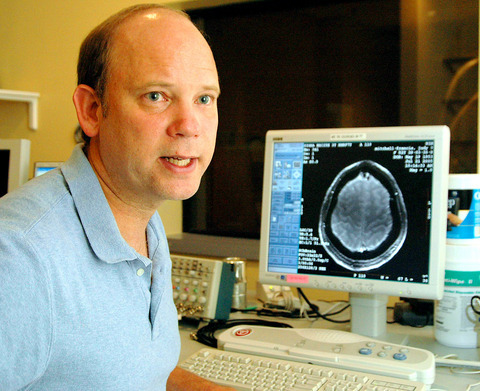
"I have been waiting for my work in the lab to affect my job on the weekend, when I practice as a child psychiatrist," said Dr. Jay Giedd, chief of brain imaging in the child psychiatry branch at the National Institute of Mental Health, who has done MRI scans in children Monday through Friday for 14 years.
PHOTOS: NY TIMES NEWS SERVICE
"It hasn't happened. In this field, every year you hear, `Oh, it's more complicated than we thought.' Well, you hear that for 10 years, and you start to see a pattern." Psychiatrists still consider imaging technologies like MRI, for magnetic resonance imaging, and PET, for positron emission topograph, to be crucial research tools. And the scanning technologies are invaluable as a way to detect physical problems like head trauma, seizure activity or tumors. Moreover, the experts point out, progress in psychiatry is by its nature painstakingly slow, and decades of groundwork typically precede any real advances. But there is a growing sense that brain scan research is still years away from providing psychiatry with anything like the kind of clear tests for mental illness that were hoped for.
"I think that, with some notable exceptions, the community of scientists was excessively optimistic about how quickly imaging would have an impact on psychiatry," said Dr. Steven Hyman, a professor of neurobiology at Harvard and the former director of the National Institute of Mental Health.
"In their enthusiasm, people forgot that the human brain is the most complex object in the history of human inquiry, and it's not at all easy to see what's going wrong." For one thing, brains are as variable as personalities, Hyman said.
In a range of studies, researchers have found that people with schizophrenia suffer a progressive loss of their brain cells: A 20-year-old who develops the disorder, for example, might lose 5 percent to 10 percent of overall brain volume over the next decade, studies suggest.
Ten percent is a lot and losses of volume in the frontal lobes are associated with measurable impairment in schizophrenia, psychiatrists have found. But brain volume varies by at least 10 percent from person to person, so volume scans of patients by themselves cannot tell who is sick, the experts say.
Studies using brain scans to measure levels of brain activity often suffer from the same problem: What looks like a "hot spot" of activity change in one person's brain may be a normal change in someone else's.
"The differences observed are not in and of themselves outside the range of variation seen in the normal population," said Dr. Jeffrey Lieberman, chairman of the psychiatry department at Columbia University Medical Center and director of the New York State Psychiatric Institute.

Michael slides a sequin glove over the pop star’s tarnished legacy, shrouding Michael Jackson’s complications with a conventional biopic that, if you cover your ears, sounds great. Antoine Fuqua’s movie is sanctioned by Jackson’s estate and its producers include the estate’s executors. So it is, by its nature, a narrow, authorized perspective on Jackson. The film ends before the flood of allegations of sexual abuse of children, or Jackson’s own acknowledgment of sleeping alongside kids. Jackson and his estate have long maintained his innocence. In his only criminal trial, in 2005, Jackson was acquitted. Michael doesn’t even subtly nod to these facts.

The March/April volume of Foreign Affairs, long a purveyor of pro-China pablum, offered up another irksome Beijing-speak on the issues and solutions for the problems vexing the People’s Republic of China (PRC) and the US: “America and China at the Edge of Ruin: A Last Chance to Step Back From the Brink” rang the provocative title, by David M. Lampton and Wang Jisi (王緝思). If one ever wants to describe what went wrong with US-PRC relations, the career of Wang Jisi is a good place to start. Wang has extensive experience in the US and the West. He was a visiting

The January 2028 presidential election is already stirring to life. In seven or eight months, the primary season will kick into high gear following this November’s local elections. By this point next year, we will likely know the Democratic Progressive Party (DPP) candidate and whether the Taiwan People’s Party (TPP) will be fielding a candidate. Also around this time, the Chinese Nationalist Party (KMT) will either have already completed their primary, or it will be heading into the final stretch. By next summer, the presidential race will be in high gear. The big question is who will be the KMT’s

One of the challenges with the sheer availability of food in today’s world is that lots of us end up spending many of our waking hours eating. Whether it’s full meals, snacks or desserts, scientists have found that it’s not uncommon for us to be mindlessly grazing at some point during all of our 16 or so waking hours. The problem? As soon as this food hits the bloodstream in the form of glucose, it initiates the release of the hormone insulin. This in turn activates a switch present in every one of our cells, which is responsible for driving cell


 RSS
RSS