


With his documentary Taipei 101: A Travelogue of Symptoms (Sensitive Version, James Hong claims to open the first front in what he predicts will be the world's impending race war. It's not a pretty sight but at least this race battle is being waged through images, instead of with weapons, as in, say, the US' current conflict in Iraq.
The film is a rant by Hong, an American-born Chinese with family in Taiwan, who returns to Taipei after a 10-year absence and witnesses phenomena in the city that trigger an unbridled rage deep within him.
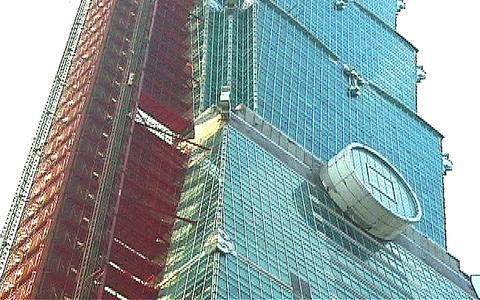
PHOTO COURTESY OF TIDF
First among these is the rampant Americanization of the city's landscape and its people. American chain stores and restaurants dot the city and Taipei 101, the tallest building in the world, lords over the city as a giant monument to the wholesale adoption of American-style capitalism and is a constant reminder, in the form of a glass-sheathed phallus, of Western, read American, domination.
Hong makes clear in the opening narrated scenes of the movie that, for him, the concept of America is an exclusive realm for white people and that he is an outsider in his own country. America, simply stated, is white, Hong said in an interview in Taipei yesterday.
Coming from this strained relationship with white people, the abundance of white men in Taipei and their presence, particularly when in the company of local women, disgusts Hong. The raw, emotional intensity of his distemper, some may say hatred, has invited intense controversy over the film in the US, where his bluntness runs against the grain of extant ideologies regarding race. Racist whites would naturally object to Hong's disparaging remarks, he said, and white members of the liberal left who espouse the popular ideology of rainbow multiculturalism would find the sound of an ornery Asian man unsettling.
Hong is, indeed, unrelenting and unforgiving toward white people. Shots of pasty white men, usually overweight and dressed sloppily, shuffle around the city in the company of Taiwanese women as the torrent of racial epithets in Hong's narration is censored out with a high-pitched beep.
The first version of the film, Hong said, was uncensored and offended audiences. As does the final censored cut. But he ultimately preferred the censored narration for the additional level of complexity it brought to the film by suggesting a power that attempts to muzzle the director and by allowing viewers to fill in the blanks with their own racial epithets. The censored edit is called the "sensitive version."
Another irony of Taipei 101: A Travelogue of Symptoms, which screens today, is that, while the movie lashes out at perceived US, white, male domination in Taiwan, it is a uniquely American product. It is born of the director's ethnic alienation in the US that climaxes in the context of Taiwan.
An episode at Taipei-Spot Film House, where Taiwanese director Hou Hsiao-hsien (
Hong's point regarding global domination by white men is one that has been made since the advent of post-colonial theory and hardly stands as the film's original trait, interesting though it may be. Instead, Taipei 101: A Travelogue of Symptoms is significant for its stripping away of what Hong calls insincere ideologies of multiculturalism in the US and the ushering in of a new paradigm of racial relations in the new century that he claims will be characterized by racial balkanization brought about by a frank assessment of racial and cultural differences. "People are not born equal. To say so is a lie," Hong said.
However that sort of rhetoric sounds -- a step forward or a step backward -- it's definitely not easy listening. It suggests that we don't all need to just get along, to get along.
FILM NOTE:
Taipei 101: A Travelogue of Symptoms (Sensitive Version)
Directed by James Hong
Running time: 23 minutes
Screening times and location: Tonight, 7:40pm, Taipei Spot; Wednesday, 2:30pm, Shih-ming Hall of Taiwan Cement Building
病癥紀實
詹姆斯洪
美國
一名亞裔美國人在前來台灣的朝聖之旅上,邂逅了外觀美國化的強力效應。他發現,當今全世界最高的台北101、台灣文化和他自己的意識,都無可抹滅地被全球化、美國、資本主義以及白種男人掌權所註記著。就好像白色口罩保護人們不受SARS感染一樣,片中消音的對話讓敏感的觀眾,不至於因為不適宜的話,以及不想看到的病癥而被冒犯了。然而,想像或假定的東西,往往都比隱匿的東西更令人不快。

Taiwan’s English education system is being pulled apart by three opposing forces. Bilingual Nation 2030 pulls students toward English and global communication. Artificial Intelligence (AI) readiness pulls them toward digital judgment, verification and AI-mediated work. But Taiwan’s old exam culture pulls them back toward memorization, grammar drills, timed reading and correct answers. If the education system keeps using old exams to define success, it risks producing graduates who are neither genuinely bilingual nor genuinely AI-ready, but trained for tasks machines can already perform. The first force is Bilingual Nation 2030. Launched in 2018, the policy aimed to “help Taiwan’s workforce connect
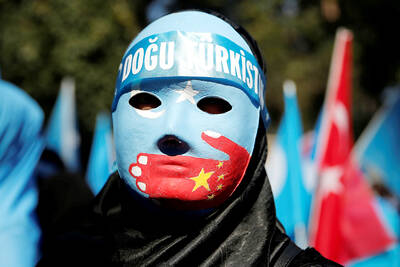
It seems every few days one bumps into one of those “real man” comments in which Taiwan is urged to “face reality” or similar, and “make a deal,” with the speaker implying that soon it will be too late. “Deal” advocates always present themselves as having a superior grip on reality, and the manly ability to make the “hard choice.” Their testosterone-laden language often echoes that of Taiwan sellout advocates. Note that such commentary always specifies a process (“make a deal, work with, make progress”), never the end state of what occupation by a violent authoritarian colonialist state will entail. In
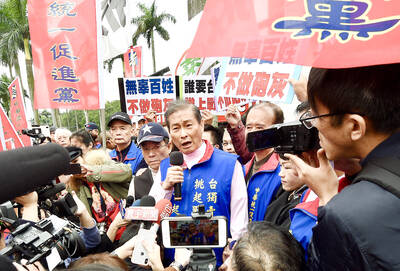
There are shadowy cabals plotting to sell out Taiwan to be annexed by China, by invasion if necessary. Fortunately, they are buffoons. In 2019, former Bamboo Union gangster and founder of the China Unification Promotion Party (CUPP), Chang An-le (張安樂, colorfully known as “White Wolf”), led a protest at the Legislative Yuan against comments made by then-premier Su Tseng-chang (蘇貞昌) that in the event of an attack by China, he would never surrender, but would protect the nation by fighting to the end, even if he only had a broom. Chang had party members bring a wooden casket that they
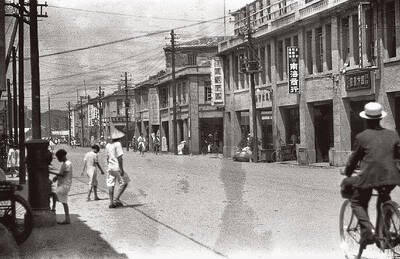
June 1 to June 7 "If all Taiwanese were as afraid of dying as you, then what would happen?” Physician Shih Chiang-nan (施江南) reportedly said this to his wife Chen Chiao-tung (陳焦桐) after she urged him to stop intervening on behalf of Taiwanese soldiers stranded overseas after serving in the Japanese Army during World War II. Shih had clashed with high-ranking officials over the issue, engaged in several heated arguments with Taiwan governor-general Chen Yi (陳儀) and allegedly shouted at general Ko Yuan-fen (柯遠芬), chief of staff of the Taiwan Garrison Command, over


 RSS
RSS