


Orlando is different from most of the restaurants serving set meals around the Shida Road area. Not just because the food is more imaginative than most of its competitors, the decor is a touch more tasteful and the service more courteous.
The main reason it is a little special is because it is a "lesbian restaurant." Opened less than a month ago by four women, two Chinese and a pair of foreigners, Orlando's predominant clientele is the smart gay population of the city and their straight friends.
Tuesday to Sunday, it opens for lunch and delivers a good set meal for NT$150 to NT$180 that ranges from fish dinners such as lemon fish steak and miso-flavored salmon, to lean pork cutlets and roast chicken. These meals come with a tangy soup, rice and vegetables, cold noodles and those ubiquitous diced carrot, corn and pea mixes. There is also Japanese-style ramen, pasta of the day, gratin casseroles and other appetizing dishes.
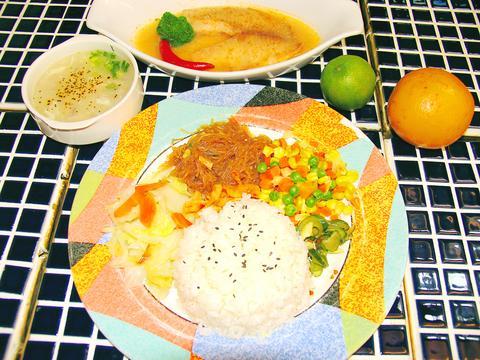
PHOTO: JULES QUARTLY, TAIPEI TIMES
So, as a standard eatery, Orlando is a cut above the rest. But this is not all. After 8:30pm the place becomes a tapas bar, which fits in well with its generally laid-back atmosphere that is conducive to talk and idle contemplation. The tapas dishes are NT$80 each and the selection includes bruschetta, a fruit and cheese plate, polpette di carne, tortilla di patates and other Spanish staples.
All this should be washed down with draft Carlsberg, which is NT$100 for 250ml, or NT$180 for 250ml. House white and red wines from Italy are NT$780 for the bottle and available by the glass for NT$250.
The space is cozy and the dinner table tastefully decorated with homemade mosaics. Overall, the ambience is cheerful without being pretentious. The dominant impression is Taiwan-Continental.
One of the owners, Xiao Lai (
"So, I think that to have a place like this is an important thing and is a measure of how we are becoming more accepted. The attitude and atmosphere here is good. There is a good feeling. This place provides an opportunity to make friends and have a small party. People bring their friends, for a mixed and sociable occasion," Lai said.

As mega K-pop group BTS returns to the stage after a hiatus of more than three years, one major market is conspicuously missing from its 12-month world tour: China. The omission of one of the group’s biggest fan bases comes as no surprise. In fact, just the opposite would have been huge news. China has blocked most South Korean entertainment since 2016 under an unofficial ban that also restricts movies and the country’s popular TV dramas. For some Chinese, that means flying to Seoul to see their favorite groups perform — as many were expected to do for three shows opening
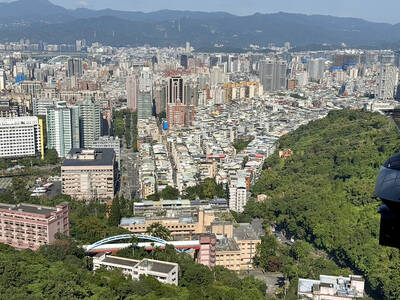
A recent report from the Environmental Management Administration of the Ministry of Environment highlights a perennial problem: illegal dumping of construction waste. In Taoyuan’s Yangmei District (楊梅) and Hsinchu’s Longtan District (龍潭) criminals leased 10,000 square meters of farmland, saying they were going to engage in horticulture. They then accepted between 40,000 and 50,000 cubic meters of construction waste from sites in northern Taiwan, charging less than the going rate for disposal, and dumped the waste concrete, tile, metal and glass onto the leased land. Taoyuan District prosecutors charged 33 individuals from seven companies with numerous violations of the law. This
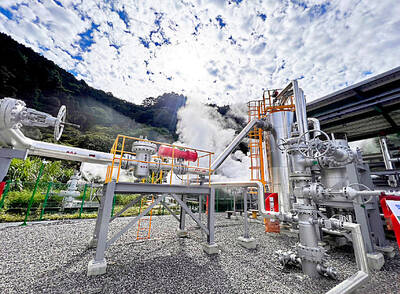
Taiwan’s semiconductor industry consumes electricity at rates that would strain most national grids. Taiwan Semiconductor Manufacturing Co (TSMC) alone accounted for more than 9 percent, or 2,590 megawatts (MW), of the nation’s power demand last year. The factories that produce chips for the world’s phones and servers run around the clock. They cannot tolerate blackouts. Yet Taiwan imports 97 percent of its energy, with liquefied natural gas reserves measured in days. Underground, Taiwan has options. Studies from National Taiwan University estimate recoverable geothermal resources at more than 33,000 MW. Current installed capacity stands below 10 MW. OBSTACLES Despite Taiwan’s significant geothermal potential, the
Chinese Nationalist Party (KMT) Chair Cheng Li-wun (鄭麗文) returned from her trip to meet People’s Republic of China (PRC) dictator Xi Jinping (習近平) bearing “a gift” for the people of Taiwan: 10 measures the PRC proposed to “facilitate the peaceful development of cross-strait relations.” “China on Sunday unveiled 10 new incentive measures for Taiwan,” wrote Reuters, wrongly. The PRC’s longstanding habit with Taiwan relations is to repackage already extant or once-existing policies and declare that they are “new.” The list forwarded by Cheng reflects that practice. NEW MEASURES? Note the first item: establishing regular communication mechanisms between the Chinese Communist Party


 RSS
RSS