


Weekend getaways to Thailand or Bali are an ocean away, but a similar beach experience with an enjoyably distinctive Taiwanese twist is just a 45-minute drive from Taipei.
Jinshan (金山) is a quaint beachside community on the northeast coast of Taiwan that has remained one of Taipei County's best-kept secrets.
Anyone under the impression that the Taiwanese do not like the beach, or swimming, are in for a shock at Jinshan.
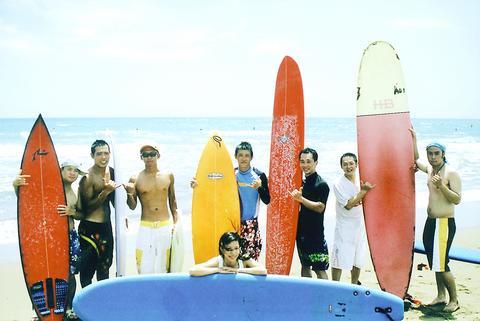
PHOTO: ADAM ULFERS, TAIPEI TIMES
As a testament to a growing beach culture on the island, over the weekend one might find anywhere between 100 and 300 people at the Taipei County hotspot.
You may encounter a terrifying one-piece bathing suit or Spandex eyesore, but bikini-clad bunnies and bronzed surfers represent a growing population along the country's coastline, bobbing offshore, tossing Frisbees, riding waves or simply basking in the sun.
With five surf clubs in a 200m radius, Jinshan has the necessary resources (surfboards for rent and sale) and qualified instructors.
Johnny Hu (
A Toshiba engineer during the week, Hu says, "This is a very convenient and clean beach. Since I arrived less than a year ago, I've seen a lot more people everyday."
There are local variations on the world's stereotypical beach scene -- swim caps, biendangs (lunchboxes) and excessive littering -- but the scene is developing into the international norm.
There are an increasing number of eateries and coffee shops under construction to satisfy the crowds frequenting the shoreline.
Another shop owner, who calls himself Kevin (
His store, Surfing Shop, also offers aspiring surfers a modestly priced daily rental fee for boards, with a complimentary lesson included.
"You won't find overly competitive shop keepers or unfriendly surfers in the water, we just want people to have a good time," Kevin said.
The stores are located on either side of the beach entrance, others less than a block away, marked by economical hand painted signs.
Bring a full bottle of sunscreen, a pair of sandals and a big towel for a day off in the sun.
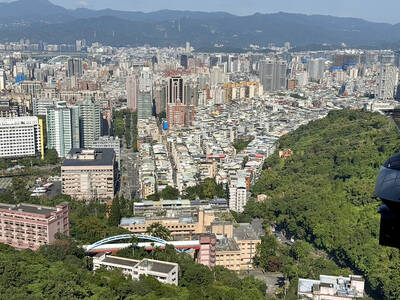
A recent report from the Environmental Management Administration of the Ministry of Environment highlights a perennial problem: illegal dumping of construction waste. In Taoyuan’s Yangmei District (楊梅) and Hsinchu’s Longtan District (龍潭) criminals leased 10,000 square meters of farmland, saying they were going to engage in horticulture. They then accepted between 40,000 and 50,000 cubic meters of construction waste from sites in northern Taiwan, charging less than the going rate for disposal, and dumped the waste concrete, tile, metal and glass onto the leased land. Taoyuan District prosecutors charged 33 individuals from seven companies with numerous violations of the law. This

As mega K-pop group BTS returns to the stage after a hiatus of more than three years, one major market is conspicuously missing from its 12-month world tour: China. The omission of one of the group’s biggest fan bases comes as no surprise. In fact, just the opposite would have been huge news. China has blocked most South Korean entertainment since 2016 under an unofficial ban that also restricts movies and the country’s popular TV dramas. For some Chinese, that means flying to Seoul to see their favorite groups perform — as many were expected to do for three shows opening

What is the importance within the Chinese Nationalist Party (KMT) of the meeting between Xi Jinping (習近平), the leader Chinese Communist Party (CCP), and Cheng Li-wun (鄭麗文), the leader of the KMT? Local media is an excellent guide to determine how important — or unimportant — a news event is to the public. Taiwan has a vast online media ecosystem, and if a news item is gaining traction among readers, editors shift resources in near real time to boost coverage to meet the demand and drive up traffic. Cheng’s China trip is among the top headlines, but by no means
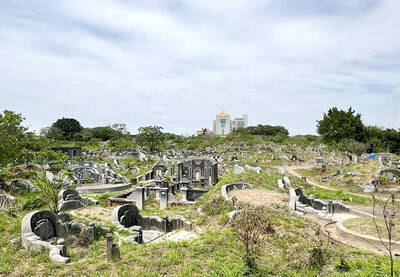
Apr. 13 to Apr. 19 From 17th-century royalty and Presbyterian missionaries to White Terror victims, cultural figures and industrialists, Nanshan Public Cemetery (南山公墓) sprawls across 95 hectares, guarding four centuries of Taiwan’s history. Current estimates show more than 60,000 graves, the earliest dating to 1642. Besides individual tombs, there are also hundreds of family plots, one of which is said to contain around 1,000 remains. As the cemetery occupies valuable land in the heart of Tainan, the government in 2018 began asking families to relocate the graves to make way for development. That


 RSS
RSS