


Apr. 13 to Apr. 19
From 17th-century royalty and Presbyterian missionaries to White Terror victims, cultural figures and industrialists, Nanshan Public Cemetery (南山公墓) sprawls across 95 hectares, guarding four centuries of Taiwan’s history.
Current estimates show more than 60,000 graves, the earliest dating to 1642. Besides individual tombs, there are also hundreds of family plots, one of which is said to contain around 1,000 remains.
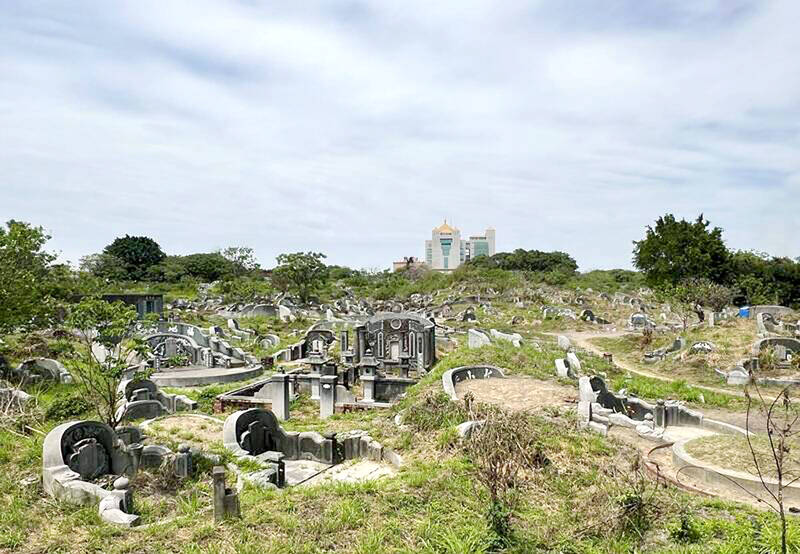
Photo: Taipei Times file
As the cemetery occupies valuable land in the heart of Tainan, the government in 2018 began asking families to relocate the graves to make way for development. That year, a Tainan mayoral candidate even proposed razing the site to build a giant Thailand-style night market.
This sparked a civic movement to preserve the cemetery. But last April, the Tainan Municipal Administration of Cultural Heritage denied the site cultural landscape status. Only four graves so far have been designated as historical relics.
Tainan Mayor Huang Wei-che (黃偉哲) says the city plans to transform the grounds into a “Life Education Park” that balances historical preservation with urban development — but activists remain skeptical. The city restarted the relocation process earlier this year, giving families until the end of next month to relocate the first batch of graves — reigniting the debate as preservationists took to the streets on March 28 and began gathering signatures for a referendum.
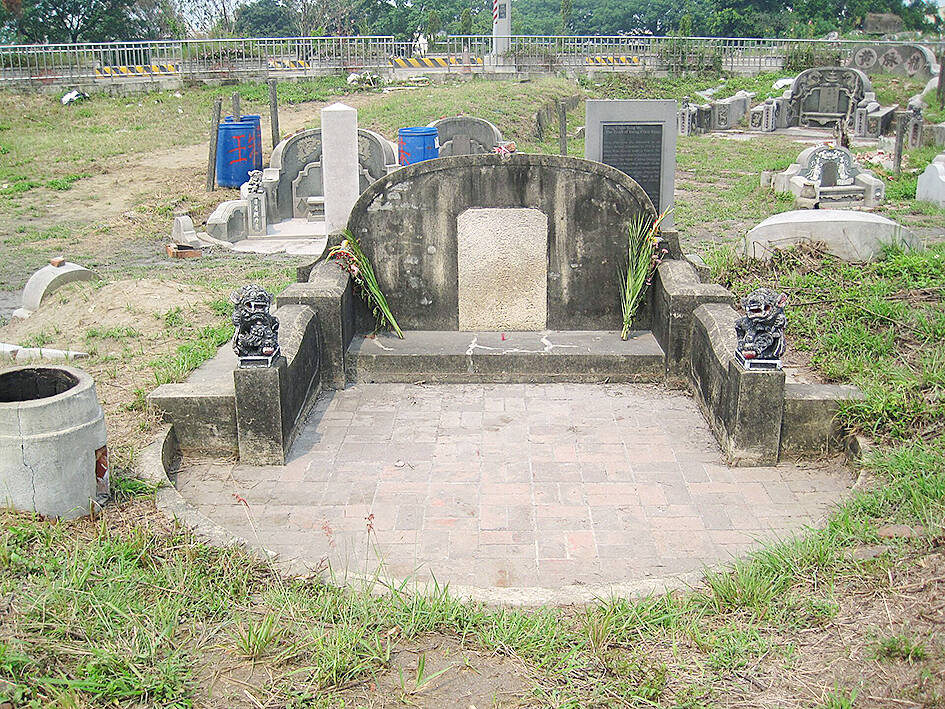
Photo courtesy of Wikimedia Commons
AUSPICIOUS LAND
Prior to Japanese arrival, when Tainan was still a walled city, its outskirts were dotted with graves. According to the book Protect Nanshan Public Cemetery (守護南山公墓), any rugged land on the surrounding highlands that were unsuitable for habitation or agriculture was commonly used for burials.
Located southwest of the city, the land that became Nanshan Cemetery consists of a complex terrain of ridges and valleys formed by the main stream and tributaries of the Jhusi River (竹溪). The landscape made it unsuitable for settlement, but it contained many “dragon lairs” considered auspicious in fengshui beliefs.
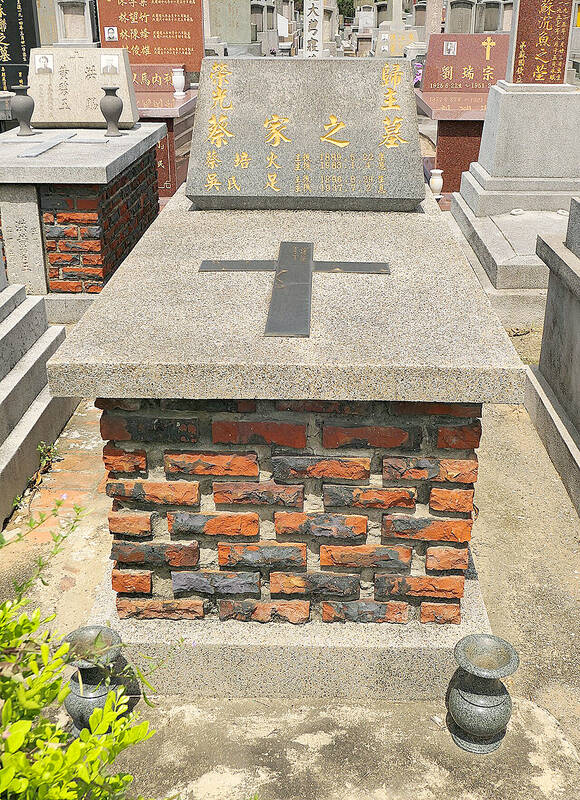
Photo courtesy of Wikimedia Commons
Historians believe the name Nanshan (“South Mountain”) comes from its location in the hilly area south of Tainan, as well as the term’s traditional associations with longevity.
Most early Han settlers in Taiwan preferred to be laid to rest in their hometowns in China whenever possible. But cross-strait travel restrictions in the mid-1700s made transporting coffins difficult, and temples became crowded with remains awaiting shipment, prompting officials to allocate land and encourage local burials.
Under Qing-era regulations and local practice, burials were generally allowed on uncultivated land outside settlements, even if it was privately owned.
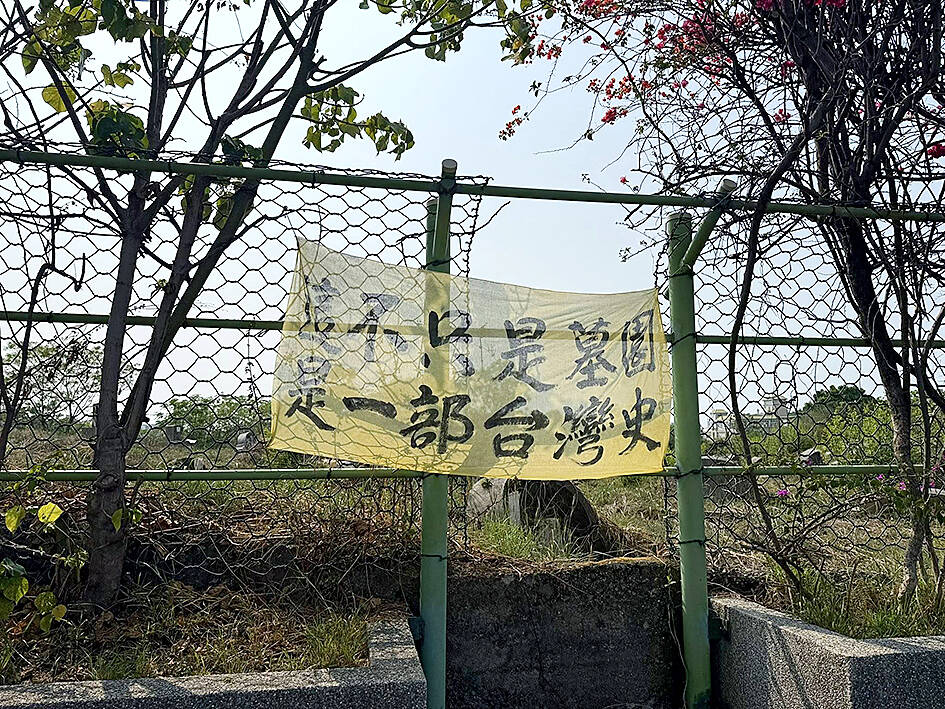
Photo courtesy of Our Tainan Our Culture
RESTRICTING BURIALS
In the late 1890s, the Japanese colonial government began restricting burials to designated areas and promoting cremation. As Tainan’s city walls were dismantled and the city expanded, countless graves were relocated. Many ended up in Nanshan Cemetery, which became one of the city’s main burial grounds.
During relocations, unclaimed graves were often consolidated into surname or ancestral plots, grouped according to family name or place of origin in China, writes Wu Chao-ming (吳昭明) in “The cultural and humanistic significance of Nanshan Public Cemetery” (南山公墓的人文意涵).
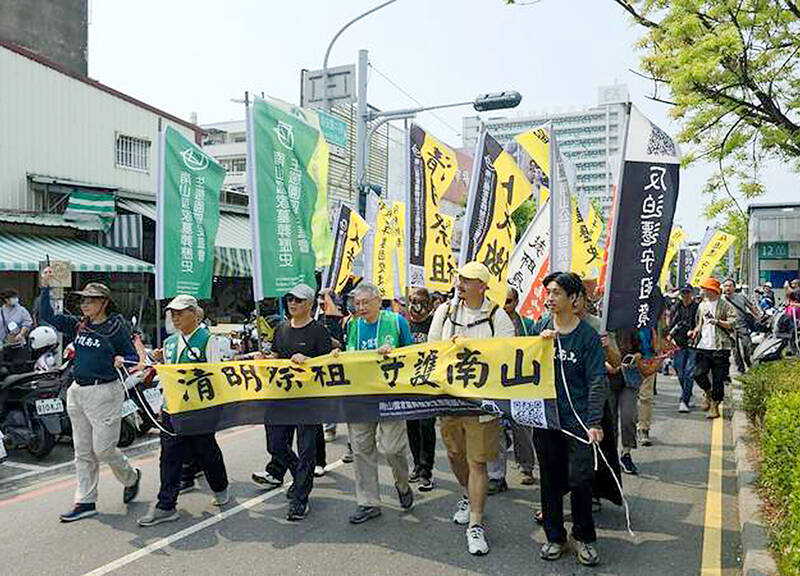
Photo: Hung Jui-chin, Taipei Times
In 1928, the Japanese decided to clear graves south of the city to build a sports ground commemorating the accession of Emperor Hirohito. The plan sparked strong public opposition, and in June nearly 3,000 people showed up to the meetings between officials and civil representatives. The police dispersed the crowd, but unrest continued and only subsided after 13 people were arrested.
After World War II, the government designated the cemeteries in this area as Tainan First Public Cemetery. Today, most historic burial grounds around Tainan have been cleared, leaving Nanshan as the last major one.
THE RESIDENTS
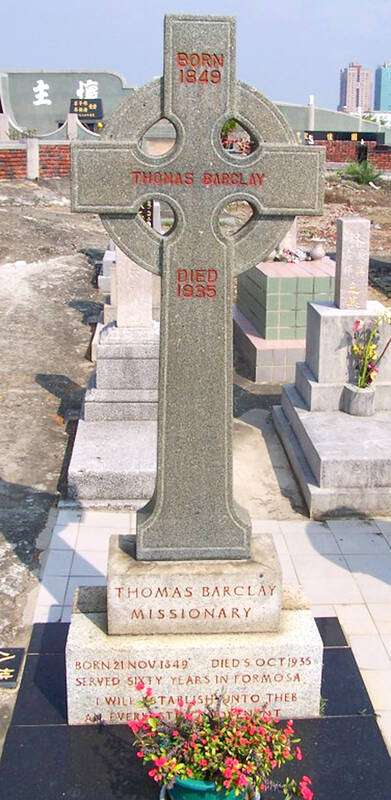
Photo courtesy of Wikimedia Commons
The earliest attested grave at Nanshan Cemetery belongs to Tseng Chen-yang (曾振暘), who arrived in Tainan from Zhangzhou, China during Dutch rule. He died in 1642, and his tombstone is inscribed with a Ming Dynasty reign year.
Ming loyalist Cheng Cheng-kung (鄭成功, also known as Koxinga) drove out the Dutch in 1662 and established the Kingdom of Tungning (東寧). One tombstone at Nanshan is inscribed with the names of two of his sons, Chen Jui (鄭睿) and Cheng Fa (鄭發), who died young and left no descendants. Another records two of Koxinga’s concubines, surnamed Tsai (蔡) and Tseng (曾).
Along with the grave of 19th-century imperial scholar Shih Chiung-fang (施瓊芳), these are the only municipally-protected sites in the cemetery.
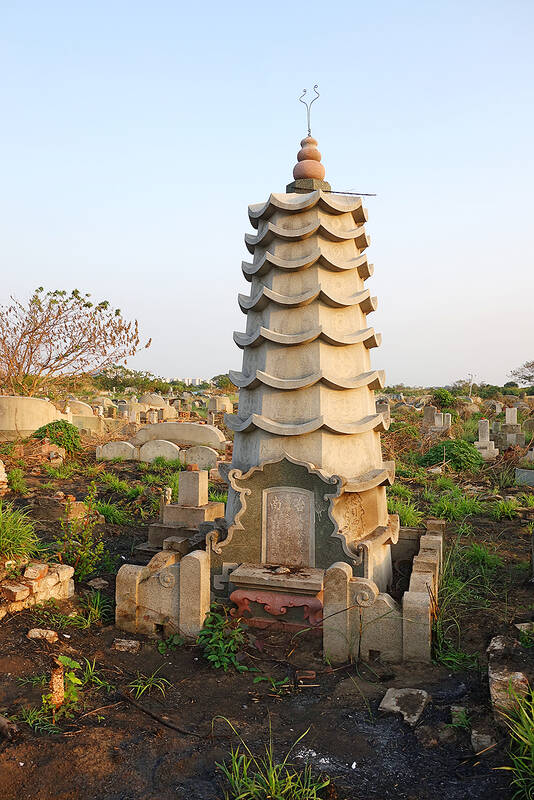
Photo courtesy of Wikimedia Commons
Other notable Qing-era figures include wealthy businessman Lin Chao-ying (林朝英), famed for his calligraphy, sculpture and painting. He’s widely credited for single-handedly funding the 1806 renovation of the Tainan Confucius Temple.
As Japanese troops closed in on Tainan in 1895, resistance leader Liu Yung-fu (劉永福) fled to China, leaving his fighters behind and the city in chaos. Presbyterian missionary Thomas Barclay met with the Japanese on behalf of the local gentry and helped facilitate a peaceful entry to restore order and prevent further bloodshed. Barclay is buried in the Presbyterian section of Nanshan Cemetery. Also in this section is Tsai Pei-huo (蔡培火), a social and political activist who advocated for Taiwanese autonomy during the Japanese period.
Many White Terror victims are buried here, including Lin Mao-sheng (林茂生) and Shih Shui-huan (施水環). The cemetery also contains the graves of prominent political and business families, as well as that of “Mad Artist” Hung Tung (洪通), whose work sparked a brief nationwide craze in the 1970s.
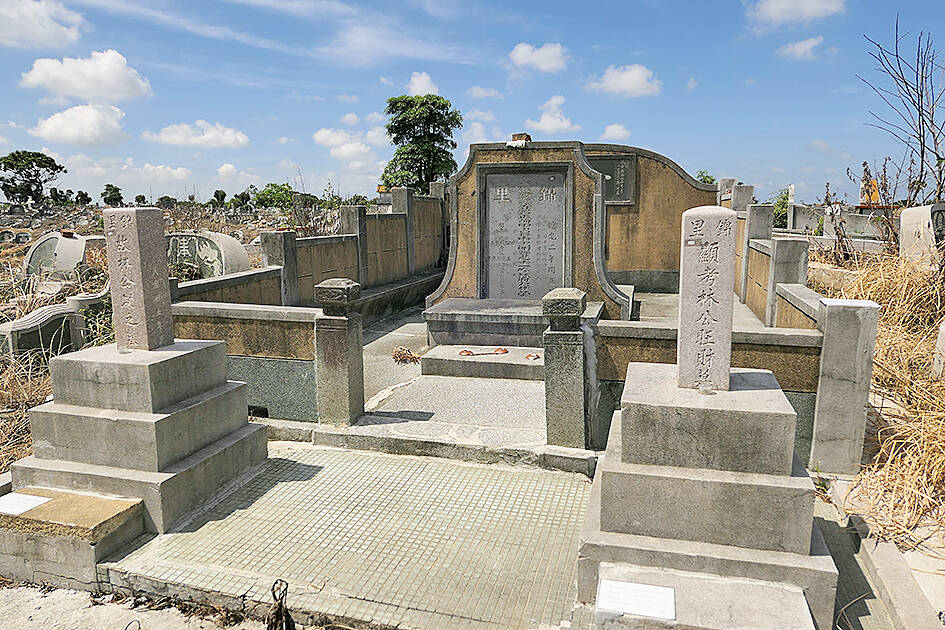
Photo courtesy of Wikimedia Commons
There are countless more to list. As a protest banner outside the cemetery proclaims, “This is not just a cemetery, it is a chapter of Taiwan history.”
Taiwan in Time, a column about Taiwan’s history that is published every Sunday, spotlights important or interesting events around the nation that either have anniversaries this week or are tied to current events.
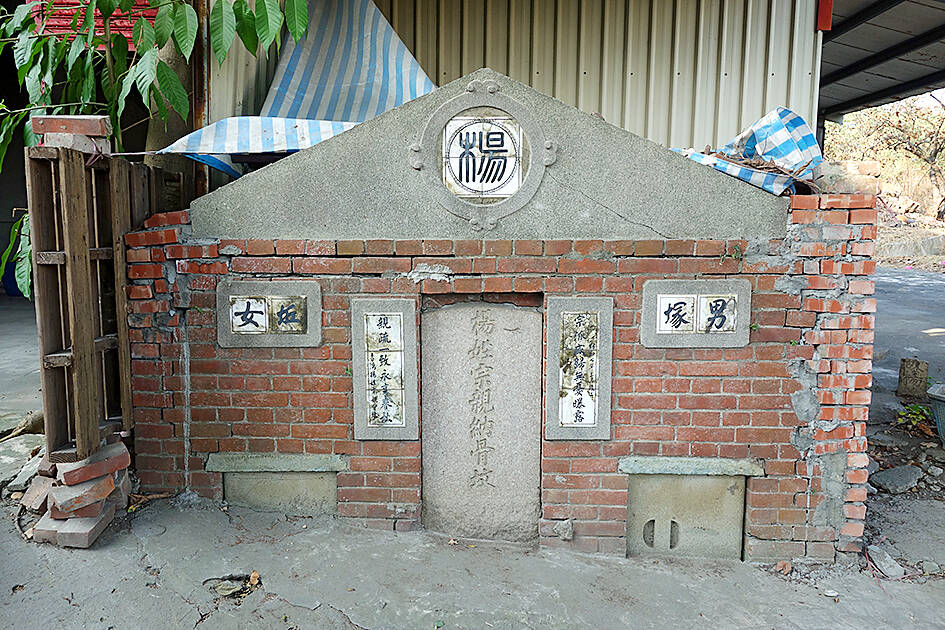
Photo courtesy of Wikimedia Commons
If one asks Taiwanese why house prices are so high or why the nation is so built up or why certain policies cannot be carried out, one common answer is that “Taiwan is too small.” This is actually true, though not in the way people think. The National Property Administration (NPA), responsible for tracking and managing the government’s real estate assets, maintains statistics on how much land the government owns. As of the end of last year, land for official use constituted 293,655 hectares, for public use 1,732,513 hectares, for non-public use 216,972 hectares and for state enterprises 34 hectares, yielding
The March/April volume of Foreign Affairs, long a purveyor of pro-China pablum, offered up another irksome Beijing-speak on the issues and solutions for the problems vexing the People’s Republic of China (PRC) and the US: “America and China at the Edge of Ruin: A Last Chance to Step Back From the Brink” rang the provocative title, by David M. Lampton and Wang Jisi (王緝思). If one ever wants to describe what went wrong with US-PRC relations, the career of Wang Jisi is a good place to start. Wang has extensive experience in the US and the West. He was a visiting

One of the challenges with the sheer availability of food in today’s world is that lots of us end up spending many of our waking hours eating. Whether it’s full meals, snacks or desserts, scientists have found that it’s not uncommon for us to be mindlessly grazing at some point during all of our 16 or so waking hours. The problem? As soon as this food hits the bloodstream in the form of glucose, it initiates the release of the hormone insulin. This in turn activates a switch present in every one of our cells, which is responsible for driving cell
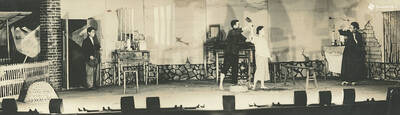
April 27 to May 3 Everything about Castrated Chicken (閹雞) followed the rules — until the Taiwanese folk songs began. As the male choir sang Diu Diu Deng (丟丟銅仔) and June Fields (六月田水), the audience danced and sang along, even calling for the songs to be repeated several times. It was a bold move by the Housheng Theater Research Group (厚生演劇研究會), formed on April 29, 1943 amid tightening Japanese colonial control over culture and growing concern over the direction of local theater. The next morning, troupe leader Wang Ching-chuan (王井泉) was summoned to the police station. He feared that the remaining performances


 RSS
RSS