


The revelers quickly made their way back to Club Q.
Just days after a brawl inside the bar that left a British teenager dead, girls danced on the bar and drunken boys wobbled below. At nearby pubs, ample cocktails were served in "fishbowls" with straws or in shot glasses passed out for free.
The wild and wicked summer rages on in Faliraki, a former stretch of serene coastline on the island of Rhodes that has become a beach-and-booze citadel. Young tourists, mostly from Britain, often arrive ready for nonstop parties with their inhibitions left at home.
The no-limits atmosphere, however, may have finally crossed the line.
Greek police have expanded patrols at many of the freewheeling resorts around Greece, led by Faliraki's neon strip of pubs, amusement parks and tattoo parlors that draws up to 500,000 people a year, or nearly 4 percent of Greece's 14 million tourists.
They also agreed to accept help from a team of British police who specialize in dealing with drunken behavior back home. "Three officers will come from Scotland Yard so that they can bring us the know-how and experience they have from similar situations with English troublemakers," government spokesman Christos Protopapas said Wednesday.
The crackdown -- for the moment at least -- changes the traditional pact between Greek authorities and those making money off the youthful passions: keep the hard-drinking intensity to isolated areas and the law will generally look the other way.
But this summer, the outcry in Greece has been too loud as the list of disturbing events has piled up at the resorts: beatings, sexual assaults, burning Greek flags, trafficking of the club drug ecstasy and public outdoor sex.
On Aug. 12, a 17-year-old Briton died after being stabbed in the neck with a broken beer bottle during a melee at Club Q in Faliraki. Police said the brawl started when two men bumped each other on the dance floor.
A 20-year-old British man has been jailed pending trial for murder and seven others, ages 19 to 34, face charges of complicity and have been released on bail.
Earlier this month, a 30-year-old British man died after being run over by a garbage truck following an apparent bet with friends to crawl under the vehicle.
A number of Britons have been convicted of indecent exposure, including an 18-year-old woman for an impromptu barroom striptease during a bikini contest.
"It's been a good time ... but the atmosphere is so aggressive. You constantly have to be on guard," said Scott Burns, a 19-year-old from Edinburgh, Scotland.
Faliraki, about 400km southeast of Athens, is just the latest point of friction between authorities and rowdy foreigners in the sun-drenched Mediterranean.
At least four stabbings have been reported this summer in the Cypriot resort of Agia Napa between British tourists apparently quarreling over favorite bands.
Portuguese and British police already are working together to combat British soccer hooligans at the Euro 2004 soccer tournament next June and July in Portugal.
In 1998, the British vice consul on the Spanish island of Ibiza -- a favorite of British and German youth -- resigned over the "degenerate" behavior of the holidaymakers.
"The English start drinking very early and by midnight many people cannot control themselves," said police chief Themos Kalamatas, whose thinly manned precinct covers Faliraki. "They are generally not bad people who come here or criminal types, but they believe they can have fun without limits."
Britain's Foreign Office has warned its citizens heading to Greece that "indecent behavior ... is not tolerated."
A commentary in Monday's edition of the Britain's Daily Mirror tabloid laid scorn on British thrill-seekers in Faliraki for "turning a quiet fishing village into a sordid dump."
"The bitter irony is that some of the ugliest citizens in our nation are now despoiling some of the most beautiful parts of Europe," said another column in the Daily Mail.
At her souvenir shop, Tasia Kosta, wipes the dust off ceramic plates and postcards showing the medieval walls of Rhodes Town and the 2,500-year-old Temple of Athena at Lindos, both examples of the island's rich heritage.
"They don't buy anything from Rhodes any more ... just calendars with nude women and silly games," she said. "I don't think these people know where they are. They just sleep and drink."
Across the street, the KGB Bar offered four cocktails for the price of one.
"We love the English. They are our livelihood," said bar owner Maria, who did not give her last name. "But what kind of a mind can someone have with 30 drinks in his stomach?"
The most common complaint is leveled against highly competitive British tour operators offering week-long holidays to Faliraki for as little as US$150 in the hope of making money by selling tickets for so-called "pub crawl" drinking binges, parties and other outings billed as opportunities to have sex.
On the home page of its Web site, the youth-oriented Club 18-30 shows a young woman with her arms around two naked men with their backs to the camera on the beach.
A spokesman for the company, David Smithson, said the accusations are unfair.
"The behavior of British holidaymakers is a problem for the industry as a whole not just youth tour operators," he said.
Faliraki Mayor Yiannis Iatridis, who rents his beachfront property to a McDonald's restaurant, says the resort's violent reputation is highly exaggerated.
"At any one time, there are 35,000 tourists here, and this population is changing every week. ... So of course there are some people among them who will cause trouble."
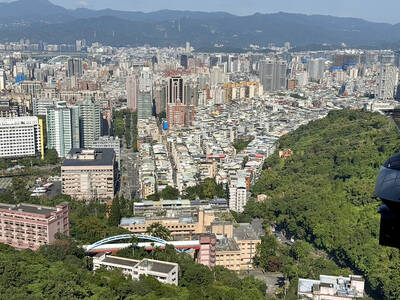
A recent report from the Environmental Management Administration of the Ministry of Environment highlights a perennial problem: illegal dumping of construction waste. In Taoyuan’s Yangmei District (楊梅) and Hsinchu’s Longtan District (龍潭) criminals leased 10,000 square meters of farmland, saying they were going to engage in horticulture. They then accepted between 40,000 and 50,000 cubic meters of construction waste from sites in northern Taiwan, charging less than the going rate for disposal, and dumped the waste concrete, tile, metal and glass onto the leased land. Taoyuan District prosecutors charged 33 individuals from seven companies with numerous violations of the law. This

As mega K-pop group BTS returns to the stage after a hiatus of more than three years, one major market is conspicuously missing from its 12-month world tour: China. The omission of one of the group’s biggest fan bases comes as no surprise. In fact, just the opposite would have been huge news. China has blocked most South Korean entertainment since 2016 under an unofficial ban that also restricts movies and the country’s popular TV dramas. For some Chinese, that means flying to Seoul to see their favorite groups perform — as many were expected to do for three shows opening

What is the importance within the Chinese Nationalist Party (KMT) of the meeting between Xi Jinping (習近平), the leader Chinese Communist Party (CCP), and Cheng Li-wun (鄭麗文), the leader of the KMT? Local media is an excellent guide to determine how important — or unimportant — a news event is to the public. Taiwan has a vast online media ecosystem, and if a news item is gaining traction among readers, editors shift resources in near real time to boost coverage to meet the demand and drive up traffic. Cheng’s China trip is among the top headlines, but by no means
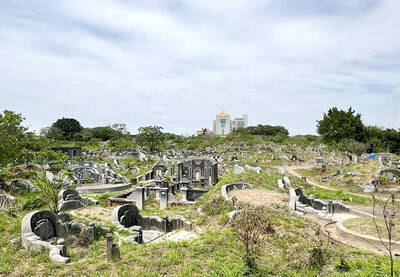
Apr. 13 to Apr. 19 From 17th-century royalty and Presbyterian missionaries to White Terror victims, cultural figures and industrialists, Nanshan Public Cemetery (南山公墓) sprawls across 95 hectares, guarding four centuries of Taiwan’s history. Current estimates show more than 60,000 graves, the earliest dating to 1642. Besides individual tombs, there are also hundreds of family plots, one of which is said to contain around 1,000 remains. As the cemetery occupies valuable land in the heart of Tainan, the government in 2018 began asking families to relocate the graves to make way for development. That


 RSS
RSS