


Central Asia is the most romantic place on earth. It fascinated Western explorers and the ancient Chinese in equal measure. What more evocative names are there in the annals of travel than Kashgar, Samarkand or Tashkent?
Victorian adventurers couldn't have enough of its fabulous cities buried under the sand, and the Chinese continue to venerate a "fragrant concubine" from Xinjiang who combined all possible erotic charms. Today the Silk Road continues to mesmerize travelers, and innumerable films capitalize on the allure of a wild life among the dunes.
This new book on China's Xinjiang Province is advertised as the first account of the area for the general reader. It may be the case. Lonely Planet has covered it for the traveler (notably in Central Asia, second edition, 2000), but in pre-Communist times this was a well-trodden area for ambitious Westerners and many books resulted. Peter Fleming's News from Tartary (1936) is considered a classic of travel writing, but there were also books describing the Taklamakan Desert (said to be the most inhospitable on earth), the ancient mummies of Urumchi, and a people who genetically have little in common with their Chinese masters.
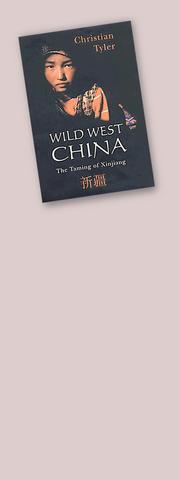
And now of course, post Sept. 11, the whole world is focused on the problems of outraged Muslim sensibilities anywhere from Indonesia to the Middle East. What, then, about Xinjiang, home of China's largest Muslim minority, the Uighurs?
"The world is only too aware of what the Chinese are up to in Tibet," writes Peter Hopkirk, author of The Great Game (1990), in an endorsement of this book. "But few know of the sufferings of neighboring Xinjiang."
Here we read of the "Baby General," Ma Zhongying, the Muslim warlord of the 1930s who became a commander at 15 and subsequently took over the leadership of the Turki revolt. He fashioned himself on Alexander, was the champion athlete in an army composed entirely of athletes and rode at the head of troops mounted on white, brown and black horses (in three separate sections), their flags fluttering in the desert air.
And then there was Yang Zengxin, governor of Xinjiang from 1911 to 1928 and widely cited at the time as the world's most absolute ruler. He had two ministers beheaded as they sat comfortably at a banquet in 1916 and was himself shot dead during student graduation festivities 12 years later. This was an era when China could barely control its own heartland, yet alone far-flung Xinjiang (almost half-way to Europe, Western explorers were fond of saying). But Yang had ruled it with a rod of iron, on what he claimed were strictly Confucian principles.
Many recognizable modern motifs are here -- the controversial imposition of Sharia law, Islamists armed only with antique rifles causing the world's major powers to tremble, the ambivalent attitudes of Russia. In addition, much of the narrative reads like a story from the gold-digging American wild west of 150 years ago. Attempts to link the area with Moscow by telegraph over the Tian Shan range, for instance, foundered when bears tore down the poles, mistaking the humming in the wires for bees.
There is almost an excess of local color. There are minor potentates living in tents, drinking the best French champagne, walking on the finest carpets in Central Asia, but refusing to be photographed. Peacocks shriek in gardens ablaze with flowers in the hot, dry air, and the Baby General is described as galloping in person down the main street of newly conquered towns, standing between the saddles of two horses, and shooting at targets specially set up along the way.
All this is a salutary reminder of the fact that 70 years ago the Muslim world represented the very pinnacle of mystery and romantic seductiveness for Hollywood and the Western world generally. How things have changed.
There is much of geographical interest, too. We read of the region's famous "wandering lake," more correctly described as a wandering river. This was a famous early 20th century marvel. The Tarim river changed its course in 1921, having done a similar thing back in 330, taking its lake with it.
Today the lake has dried up altogether, leaving merely a glimmering saltpan in the desert of Lop, the eastern end of the Taklamakan described by the Edwardian archeologist Aurel Stein as "bearing everywhere the impress of death."
Xinjiang has had many different names throughout its history, a fact which itself points to the area's complex ethnic mix. Most of the names refer to the non-Chinese origins of much of the region's culture, and one such phrase, "East Turkestan", is currently banned in China.
Christian Tyler is a former writer on London's Financial Times. He was in the area in 1995, and even learnt some Uighur before going. His journalist's habit of seeing quickly into the essential configuration of many different aspects of life has clearly been good training for the writing of this book.
This is not in any sense a classic of history, geographical description, travel writing or political analysis. Instead, it contains elements of all four. It depends extensively on written sources, and the most has been made of what was probably limited travel in the region.
Finally, there is plenty of material on the current oppression of the Uighurs by Beijing. But it makes for very sad reading. If you really want to know the details of, for example, the many prison camps in the area, or the heroic investigative efforts of Harry Wu, graduate of the gulags and secret returnee to China in order to expose the true extent of its penal system, then you'd better read this informative and notably accessible book for yourself.
This, then, is an enjoyable and very readable general account. The author has put together a book that will save anyone interested in Xinjiang -- someone planning a trip along the Chinese section of the Silk Road, for instance -- from the labor of having to read a whole library of others.

Taiwan’s English education system is being pulled apart by three opposing forces. Bilingual Nation 2030 pulls students toward English and global communication. Artificial Intelligence (AI) readiness pulls them toward digital judgment, verification and AI-mediated work. But Taiwan’s old exam culture pulls them back toward memorization, grammar drills, timed reading and correct answers. If the education system keeps using old exams to define success, it risks producing graduates who are neither genuinely bilingual nor genuinely AI-ready, but trained for tasks machines can already perform. The first force is Bilingual Nation 2030. Launched in 2018, the policy aimed to “help Taiwan’s workforce connect
It seems every few days one bumps into one of those “real man” comments in which Taiwan is urged to “face reality” or similar, and “make a deal,” with the speaker implying that soon it will be too late. “Deal” advocates always present themselves as having a superior grip on reality, and the manly ability to make the “hard choice.” Their testosterone-laden language often echoes that of Taiwan sellout advocates. Note that such commentary always specifies a process (“make a deal, work with, make progress”), never the end state of what occupation by a violent authoritarian colonialist state will entail. In

There are shadowy cabals plotting to sell out Taiwan to be annexed by China, by invasion if necessary. Fortunately, they are buffoons. In 2019, former Bamboo Union gangster and founder of the China Unification Promotion Party (CUPP), Chang An-le (張安樂, colorfully known as “White Wolf”), led a protest at the Legislative Yuan against comments made by then-premier Su Tseng-chang (蘇貞昌) that in the event of an attack by China, he would never surrender, but would protect the nation by fighting to the end, even if he only had a broom. Chang had party members bring a wooden casket that they
June 1 to June 7 "If all Taiwanese were as afraid of dying as you, then what would happen?” Physician Shih Chiang-nan (施江南) reportedly said this to his wife Chen Chiao-tung (陳焦桐) after she urged him to stop intervening on behalf of Taiwanese soldiers stranded overseas after serving in the Japanese Army during World War II. Shih had clashed with high-ranking officials over the issue, engaged in several heated arguments with Taiwan governor-general Chen Yi (陳儀) and allegedly shouted at general Ko Yuan-fen (柯遠芬), chief of staff of the Taiwan Garrison Command, over


 RSS
RSS