


Stepping into Mary's Hamburger is like taking a trip to an American truck stop diner that's been emptied of its menacing clientele. Most of the classic decor elements unique to diners are present and the menu contains all the standard delicacies.
As its name suggests, this is primarily a hamburger joint and 23 years of business have allowed the restaurant to perfect its burger-frying skills. Choose from the regular or the jumbo-size burgers, the latter being about as big as a quarter pounder, and add cheese or bacon.
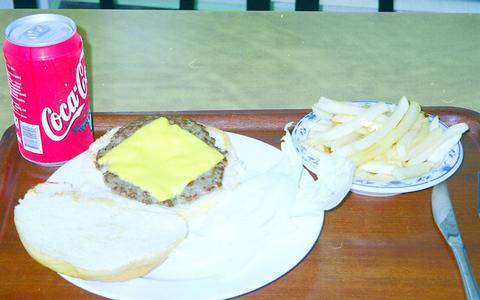
PHOTO: MAX WOODWORTH, TAIPEI TIMES
The prices are similar to those at McDonald's, but there is simply no comparison between the two establishments' burgers. Mary's uses superior grade beef patties, fried only when ordered, so that the flavor is intact and the burger comes piping hot on a rich, flavorful bun topped with fresh lettuce and onions. None of the burger chains even come close.
But there is more on the menu than just burgers. There is a limited breakfast selection with eggs, pancakes and fried potatoes and for lunch and dinner people can choose from fried chicken, salads, sandwiches, spaghetti and fried rice. Spaghetti is the most expensive item on the menu and it's only NT$110, which should tell you that a meal at Mary's won't break the bank. A BLT, for example, is only NT$40 and a side order of delicious, crispy fries comes in at NT$30. The restaurant doesn't even try to gouge diners with drinks prices -- a soft drink is NT$20.
Along with the food, one of the great things about eating at Mary's is the genuine diner atmosphere, complete with the loud sizzling coming off the griddle, the back-lit menu on the wall above the counter, the formica tables and especially the American-style cutlery and serving utensils.
Because it's a single outlet, mom-and-pop store, none of these items seems in the least contrived or intended to add ambience. It's just the real thing.
Mary's was started in 1979 using burger-making skills taught by American G.I.'s and aimed at the large foreign community centered around Tienmu.
The G.I.'s are long gone, but there is plenty of business from students at the Taipei American School and the Japanese School next door, the neighborhood's many expatriates, as well as from just about every other demographic, proving once again the mass appeal of a good burger.

Michael slides a sequin glove over the pop star’s tarnished legacy, shrouding Michael Jackson’s complications with a conventional biopic that, if you cover your ears, sounds great. Antoine Fuqua’s movie is sanctioned by Jackson’s estate and its producers include the estate’s executors. So it is, by its nature, a narrow, authorized perspective on Jackson. The film ends before the flood of allegations of sexual abuse of children, or Jackson’s own acknowledgment of sleeping alongside kids. Jackson and his estate have long maintained his innocence. In his only criminal trial, in 2005, Jackson was acquitted. Michael doesn’t even subtly nod to these facts.
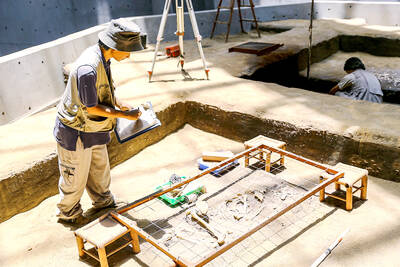
Writing of the finds at the ancient iron-working site of Shihsanhang (十 三行) in New Taipei City’s Bali District (八里), archaeologist Tsang Cheng-hwa (臧振華) of the Academia Sinica’s Institute of History and Philology observes: “One bronze bowl gilded with gold, together with copper coins and fragments of Tang and Song ceramics, were also found. These provide evidence for early contact between Taiwan aborigines and Chinese.” The Shihsanhang Web site from the Ministry of Culture says of the finds: “They were evidence that the residents of the area had a close trading relation with Chinese civilians, as the coins can be
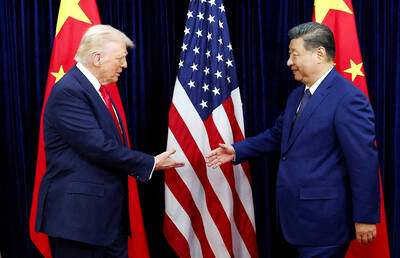
The March/April volume of Foreign Affairs, long a purveyor of pro-China pablum, offered up another irksome Beijing-speak on the issues and solutions for the problems vexing the People’s Republic of China (PRC) and the US: “America and China at the Edge of Ruin: A Last Chance to Step Back From the Brink” rang the provocative title, by David M. Lampton and Wang Jisi (王緝思). If one ever wants to describe what went wrong with US-PRC relations, the career of Wang Jisi is a good place to start. Wang has extensive experience in the US and the West. He was a visiting
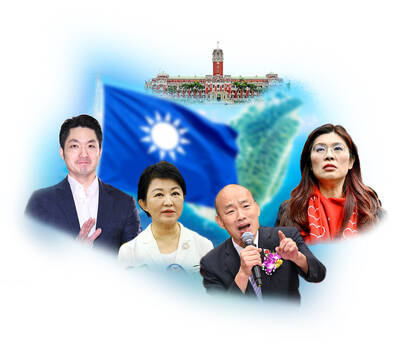
The January 2028 presidential election is already stirring to life. In seven or eight months, the primary season will kick into high gear following this November’s local elections. By this point next year, we will likely know the Democratic Progressive Party (DPP) candidate and whether the Taiwan People’s Party (TPP) will be fielding a candidate. Also around this time, the Chinese Nationalist Party (KMT) will either have already completed their primary, or it will be heading into the final stretch. By next summer, the presidential race will be in high gear. The big question is who will be the KMT’s


 RSS
RSS