


On July 31, China announced that it would ban individual tourists from traveling to Taiwan from Aug. 1 and threatened to extend the ban to tour groups starting next month. Taiwan’s tourism, hotel and aviation industries are all targets of this indiscriminate, anti-market abuse.
This affects every party campaigning for next year’s presidential election, but is hitting the Chinese Nationalist Party’s (KMT) campaign the hardest.
KMT Chairman Wu Den-yih (吳敦義) hastily sent “secret envoys” to China for negotiations, and rumor now has it that Beijing might make a U-turn.
The two envoys sent to China were former Mainland Affairs Council deputy minister Chang Hsien-yao (張顯耀) and KMT Mainland Affairs Committee Director Chou Jih-shine (周繼祥).
They left on Aug. 9 and returned the next day. In that 24 hours, they had in-depth discussions with China’s Taiwan Affairs Office (TAO) Minister Liu Jieyi (劉結一) and other Chinese officials in charge of Taiwan affairs.
The KMT delegation bluntly indicated that the Chinese Ministry of Culture and Tourism’s policy was flawed and seriously damages cross-strait exchanges.
As there have been signs of positive change, Chang and Chou are to visit Beijing again for follow-up talks after updating Wu. They hope to be able to save the nation from being hurt by the ban.
According to China’s linear thinking, putting pressure on Taiwan will sabotage the ruling Democratic Progressive Party, but it forgets that 15 Taiwanese cities and counties are in the KMT’s hands.
The industries that rely heavily on Chinese tourists are also those that are the most welcoming of China “opening up,” a typical example of how ignorance can result in politics outweighing reason.
After Beijing announced the ban, some workers in affected industries petitioned the Ministry of Transportation and Communications and other government agencies for help, but the KMT was the first to be involved, due to its close Chinese connections.
Dozens of local business representatives this month visited the KMT’s Taipei headquarters asking for assistance. Pressured by the election outlook and voter anxiety, Wu had to take the situation seriously.
What the outside world cares more about is that during Chang and Chou’s visit to China, Liu seized on the opportunity to gain a thorough understanding of the campaign of KMT presidential candidate Han Kuo-yu (韓國瑜), and to investigate the likelihood that KMT Legislator Wang Jin-pyng (王金平) and Hon Hai Precision Industry Co founder Terry Gou (郭台銘) will run for president.
A while ago, the TAO invited several groups of Taiwanese politicians to Beijing for a “chat,” but most of the guests found reasons to postpone or decline the invitation due to the event’s sensitive timing.
As chairman of the largest opposition party, Wu had no choice but to send envoys to Beijing, and the KMT and the Chinese Communist Party did exchange opinions on next year’s presidential election.
What did they discuss?
In a democracy, this is a serious question. The 2016 US presidential election was followed by a investigation into alleged Russian interference.
What is the status of the rule of law in Taiwan? How far can a politician go before crossing the line? Perhaps the KMT leadership owes an explanation not only to President Tsai Ing-wen (蔡英文), but also to Wang, Gou and Taipei Mayor Ko Wen-je (柯文哲), who might also have presidential aspirations.
Tzou Jiing-wen is the editor-in-chief of the Liberty Times (the Taipei Times’ sister newspaper).
Translated by Eddy Chang
KMT Chairwoman Cheng Li-wun’s (鄭麗文) recent visit to Beijing and her upcoming visit to Washington will serve as a high-level test of her diplomatic mettle. In Beijing, Cheng was received with symbolic gestures, a warm reception, and high-level access. In Washington, she will receive far less pomp and far sharper questions about the KMT’s vision for the future of Taiwan. Her challenge will be to persuade Washington that the KMT’s engagement with China can coexist with strong deterrence. Cheng’s April 7-12 visit to mainland China coincided with an intense period of conflict in Iran. Despite the strategic significance of Cheng’s trip,
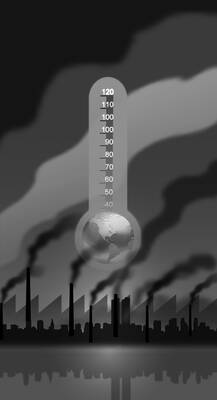
The closure of the Strait of Hormuz has sent the vast Asian chemicals industry into a tailspin. Deprived of the likes of Qatari natural gas and Saudi Arabian oil, the region’s fertilizer and plastics plants are slowing production or even shutting down. Everywhere except China, that is. In petrochemicals, China is unique. As well as a traditional industry that uses oil and gas as feedstock, it has parallel output that relies on its abundant domestic coal. Unsurprisingly, India and other regional powers want to copy and paste the Chinese method. This would not be easy — or climate friendly. The
Indonesian President Prabowo Subianto says he knows how to fix the problems facing Indonesia. Yet his economic mismanagement and authoritarian tendencies are steering the nation toward a familiar mix of currency instability and political chaos. The world’s fourth-most populous nation risks reversing the hard-won democratic and business reforms that came after the Asian Financial Crisis in 1997. At that time, the rupiah collapsed and the political upheaval that followed forced former president Haji Mohamed Suharto from power. Prabowo’s administration is ignoring similar warning signs. That disconnect was apparent in a national address on Wednesday, when Prabowo projected the swagger that has
“Of course you can choose not to be Taiwanese, just do not stay here,” chairwoman of Taipei 101 operator Taipei Financial Center Corp Janet Chia (賈永婕) said in an online interview with local entertainer Tai Chih-yuan (邰智源), triggering intense discussion on social media, with politicians across party lines weighing in. In the interview, which was aired on May 14, Chia and Tai’s discussion over a meal in Taipei 101 covered Chia’s career change from entertainer to chairwoman and US climber Alex Honnold’s free solo climb up the Taipei 101 building. During the interview, Chia said, “Being on this land, we


 RSS
RSS