


According to the Central Propaganda Department, Xi Jinping (習近平) is a wise man, a great man, a man with a glorious plan for China’s and Taiwan’s future. If true, his plan must be super subtle and strategic. Please allow me, a foreign simpleton, to shine light on what may be going on in Beijing’s innermost halls of power.
I know what you are thinking: an American could never do justice to the brilliance of Xi Jinping Thought! That is true. But General Secretary of the Chinese Communist Party Xi is reportedly benevolent and forgiving. Indeed, he allows foreign idiots to interpret his designs all the time. This is well known to China hands everywhere.
You may also worry that I could spoil Commander-in-Chief Xi’s magnificent blueprint by rolling it open before the time is ripe. Let me assure you, for reasons of which you will soon be aware, there’s no stopping his plan. It is like light past the event horizon of a black hole. A new dimension of time and space awaits!
The truth could be as simple as it is shocking: President Xi wants to set Taiwan free. He intends to ensure this democratic island nation, which is also known as the Republic of China, goes its own way and never looks back. That would explain why he appears so bent on pushing his Taiwanese counterparts away. He must cherish the hope that state-to-state relations can be realized soon. Time will tell if he runs out of patience.
It looks like Emperor Xi believes that Taiwan is a burden on the Chinese imperium. Taiwan’s dynamic market economy and free-wheeling representative government are something for the Chinese people to envy, of course, and even to emulate. But the island ties down a million of Xi’s troops, a colossal naval fleet, and untold numbers of propagandists and spies. All of that is expensive and difficult for a fiscally prudent bureaucrat to justify. Let’s not forget, Xi is leader of the Central Financial and Economic Affairs Commission too.
How better to ensure long-term regional stability and financial solvency than to convince Taiwan to cut loose from the mainland without fighting? However, even after 70 years of actual separation, it’s not like Xi can wave a magic wand and achieve a permanent split. So, what to do? While no one knows for sure, it seems likely that Legum Doctor in Marxist Thought Xi began developing his game plan in the early 1990s, when he was the Chinese Communist Party boss of Fuzhou, the closest major city in China to Taipei. Back then, Dr. Xi’s strategy was a mere seedling. Now it is a giant, unshakable redwood.
The strategy appears to have at least five major phases. These are probably being conducted in an overlapping fashion to strengthen the overall effect.
Phase One: Turn China into a dictatorship. Helmsman Xi has undoubtedly read Benjamin Franklin, who wrote, “much the strength of government depends on the opinion of the people, and much of that opinion on the choice of rulers placed immediately over them.” By brutally purging massive numbers of his rivals and their supporters and affiliates in Beijing, Xi can gently nudge Taiwanese public opinion to move in the right direction. It’s all too easy to take freedom for granted when there’s no authoritarian point of juxtaposition.
Phase Two: Spurn all goodwill. The Taiwanese are good-natured folk, apt to show affection to Chinese interests and patiently bear grievances. Since 1987, they have increased the Chinese Communist Party’s strength exponentially with their giant mainland investments and exchanges of managerial and technical knowhow across the Taiwan Strait. They probably suppose some thanks are warranted and feel entitled to some favor. Sensing an excellent opportunity, chairman of the Commission on Military-Civil Fusion Xi has taken pains to forget it all, or resent it, as if Taiwan had done the mainland injury. That sends a wonderful signal to the Taiwanese business community.
Phase Three: Act paranoid. Regardless of how peaceably the Taiwanese submit to their exclusion from the United Nations and other international organizations that provide nations with a voice and a sense of dignity, Beijing has publically supposed the island is always inclined to revolt and therefore deserving of ever more isolation. Leader of the State Security Commission Xi knows that by suffocating the Taiwanese around the world, he can bolster their nationalism — and propel a favorable backlash.
Phase Four: Get Orwellian. From Hong Kong to Tibet to East Turkestan, core leader Xi has sought to destroy the spiritual as well as the temporal lives of his subjects. With luck, this will aid in convincing the Taiwanese that life under the boot of Beijing would be little worth living. Indeed, for religious believers, the Chinese Communist Party can kill not only their bodies, but damn their souls for all eternity. By forcing millions of Muslim minorities into concentration camps, where they are to renounce their faith and accept the divine power of the atheist state, Xi is sending a powerful message to the Taiwanese regarding his fitness to govern.
Phase Five: Threaten mass murder. Nothing could be as repellant to any people as the thought that their families and everything they have worked so hard to build and nourish could be rapidly reduced to rubble and ash. So, as chairman of the Central Military Commission, Xi has spared no expense in the holding of provocative military exercises near Taiwan. To reinforce his delightfully detestable point, the People’s Liberation Army (PLA) aims thousands of lethal ballistic missiles at Taiwan and circles bombers around the island. The PLA even took the trouble of having a mock Taiwanese village built outside Nanjing so it could be assaulted on camera by uniformed thugs with explosives. If that doesn’t arouse patriotic sentiment and embolden resistance, what will?
Given the lack of hard facts available to us on what’s going on in Beijing, we often must weigh alternative theories and speculate fearlessly. I propose this heretofore elusive possibility: Xi Jinping has an elegant plan to realize de jure Taiwanese independence in his lifetime. Why else would he be working overtime to guarantee that no sane individual in Taiwan would ever want to be controlled by the Chinese Communist Party? Let’s not assume the worst and condemn a good man to the abominable status of one of history’s greatest wolves. No, dear reader, take my word for it, something else is afoot. It must be.
Ian Easton is a research fellow at the Project 2049 Institute and author of The Chinese Invasion Threat: Taiwan’s Defense and American Strategy in Asia (中共攻台大解密).
KMT Chairwoman Cheng Li-wun’s (鄭麗文) recent visit to Beijing and her upcoming visit to Washington will serve as a high-level test of her diplomatic mettle. In Beijing, Cheng was received with symbolic gestures, a warm reception, and high-level access. In Washington, she will receive far less pomp and far sharper questions about the KMT’s vision for the future of Taiwan. Her challenge will be to persuade Washington that the KMT’s engagement with China can coexist with strong deterrence. Cheng’s April 7-12 visit to mainland China coincided with an intense period of conflict in Iran. Despite the strategic significance of Cheng’s trip,
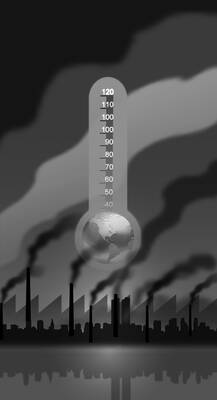
The closure of the Strait of Hormuz has sent the vast Asian chemicals industry into a tailspin. Deprived of the likes of Qatari natural gas and Saudi Arabian oil, the region’s fertilizer and plastics plants are slowing production or even shutting down. Everywhere except China, that is. In petrochemicals, China is unique. As well as a traditional industry that uses oil and gas as feedstock, it has parallel output that relies on its abundant domestic coal. Unsurprisingly, India and other regional powers want to copy and paste the Chinese method. This would not be easy — or climate friendly. The
US President Donald Trump recently repeated his claim that “Taiwan stole America’s chip industry,” reigniting public debate on the issue. As a former Taiwanese minister of economic affairs and an entrepreneur deeply involved in semiconductor supply chain development, I feel a responsibility to clarify this misunderstanding. From the perspective of global industrial evolution and the economic principle of comparative advantage, such a statement appears overly simplistic and risks obscuring the essence of the issue. The rise of Taiwan’s semiconductor industry was not built on “replacing America,” but rather emerged as a result of countries pursuing different development paths within the
Indonesian President Prabowo Subianto says he knows how to fix the problems facing Indonesia. Yet his economic mismanagement and authoritarian tendencies are steering the nation toward a familiar mix of currency instability and political chaos. The world’s fourth-most populous nation risks reversing the hard-won democratic and business reforms that came after the Asian Financial Crisis in 1997. At that time, the rupiah collapsed and the political upheaval that followed forced former president Haji Mohamed Suharto from power. Prabowo’s administration is ignoring similar warning signs. That disconnect was apparent in a national address on Wednesday, when Prabowo projected the swagger that has


 RSS
RSS