


A steel plant belonging to Formosa Plastics Group (FPG) discharged a combination of toxic chemicals along 193km of coastline in central Vietnam, causing a mass fish death in April and poisoning locals.
Last week, Formosa Ha Tinh, an FPG subsidiary, apologized and admitted responsibility for the disastrous leak. It reached an agreement with the Vietnamese government and pledged to pay US$500 million for compensation and environmental restoration.
The company’s steel plant is one of the largest investments by a foreign company in Vietnam, but FPG has a notorious record of environmental scandals around the world. In 2009, the Ethecon Foundation presented FPG with the Black Planet Award — given for actions deemed to be destructive to the world — for its ruthless approaches to ecology, human rights and legal orders.
The toxic spill raised the concerns of Ethecon and triggered protests in Vietnam and in Taiwan calling for regulations to prevent overseas investment scandals and to ensure greater corporate environmental responsibility.
While multinationals wield growing economic and social power, traditionally only states are legally subject to international law. Therefore, international environmental law cannot directly apply to private enterprises, notwithstanding a wide array of initiatives and “soft” laws that attempt to create voluntary and non-voluntary mechanisms.
However, under existing rules, the home states of multinationals have a responsibility to exert control over their corporations operating abroad and to ensure overseas investments do not act to the detriment of host states. This is based on a general duty in international law that requires states not to cause harm to other states, and international environmental obligations can be incorporated into domestic law by states to regulate their corporations abroad.
Examples of treaty acceptance of such responsibility are readily found, especially in the environmental sphere. The treaties controlling the transport of hazardous waste impose a duty on states to prevent such transport to other jurisdictions. Also, in a case regarding pulp mills on the Uruguay River, the International Court of Justice unequivocally recognized the customary status of the requirement to undertake environmental impact assessments whenever there is a risk of pollution that might have trans-boundary effects.
There is also a trend in North American and European jurisdictions, in which certain countries are exploring measures to enshrine notions of “foreign direct liability” and “corporate accountability” for environmental damages or human rights violations in their regulatory regimes. For instance, the recent cases under both the US’ Alien Tort Statute and tort of negligence in the UK clearly demonstrate that corporations and company directors may be held directly liable in domestic courts for violating customary international norms or for tort of negligence.
The Draft Articles on Responsibility of States for Internationally Wrongful Acts of the International Law Commission continues this trend and regards such solutions as a necessary and exciting step forward for sustainable development.
Taiwan’s government should not avoid its regulatory and management responsibilities, as 25 percent of Formosa Ha Tinh is held by China Steel Corp, a largely state-owned company.
As Taiwan is refocusing on a “new southbound policy” and expanding its exchanges with ASEAN members, it needs to work on the integration of environmental and social considerations into economically focused national corporate and foreign investment law regimes.
Yang Chung-han is a doctoral candidate at the University of Cambridge and a member of the Taipei Bar Association.
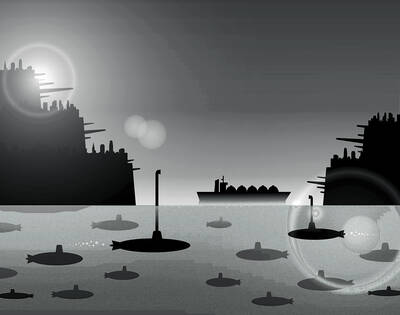
In the event of a war with China, Taiwan has some surprisingly tough defenses that could make it as difficult to tackle as a porcupine: A shoreline dotted with swamps, rocks and concrete barriers; conscription for all adult men; highways and airports that are built to double as hardened combat facilities. This porcupine has a soft underbelly, though, and the war in Iran is exposing it: energy. About 39,000 ships dock at Taiwan’s ports each year, more than the 30,000 that transit the Strait of Hormuz. About one-fifth of their inbound tonnage is coal, oil, refined fuels and liquefied natural gas (LNG),
On Monday, the day before Chinese Nationalist Party (KMT) Chairwoman Cheng Li-wun (鄭麗文) departed on her visit to China, the party released a promotional video titled “Only with peace can we ‘lie flat’” to highlight its desire to have peace across the Taiwan Strait. However, its use of the expression “lie flat” (tang ping, 躺平) drew sarcastic comments, with critics saying it sounded as if the party was “bowing down” to the Chinese Communist Party (CCP). Amid the controversy over the opposition parties blocking proposed defense budgets, Cheng departed for China after receiving an invitation from the CCP, with a meeting with
Chinese Nationalist Party (KMT) Chairwoman Cheng Li-wun (鄭麗文) is leading a delegation to China through Sunday. She is expected to meet with Chinese President Xi Jinping (習近平) in Beijing tomorrow. That date coincides with the anniversary of the signing of the Taiwan Relations Act (TRA), which marked a cornerstone of Taiwan-US relations. Staging their meeting on this date makes it clear that the Chinese Communist Party (CCP) intends to challenge the US and demonstrate its “authority” over Taiwan. Since the US severed official diplomatic relations with Taiwan in 1979, it has relied on the TRA as a legal basis for all
The two major opposition parties, the Chinese Nationalist Party (KMT) and the Taiwan People’s Party (TPP), jointly announced on Tuesday last week that former TPP lawmaker Chang Chi-kai (張啟楷) would be their joint candidate for Chiayi mayor, following polling conducted earlier this month. It is the first case of blue-white (KMT-TPP) cooperation in selecting a joint candidate under an agreement signed by their chairpersons last month. KMT and TPP supporters have blamed their 2024 presidential election loss on failing to decide on a joint candidate, which ended in a dramatic breakdown with participants pointing fingers, calling polls unfair, sobbing and walking


 RSS
RSS