


On Thursday and Friday last week, the World Trade Institute, the Swiss National Center of Competence in Research and Klaipedos Nafta co-organized an international energy forum in Vilnius, Lithuania, that discussed the development of cross-border energy trade, the decarbonization of energy markets and global energy cooperation.
The aspects of the forum that were most relevant for Taiwan pertain to Lithuania’s reforms for energy independence.
Lithuania was 100 percent dependent on oil and gas imports from Russia, but is now 100 percent independent, with a large liquefied natural gas (LNG) terminal built at the Klaipeda seaport, and power links to Sweden and Poland.
The Klaipeda LNG terminal has allowed the nation to obtain a 23 percent discount on natural gas prices. Of the three Baltic states, Lithuania has the lowest LNG price for industrial consumers and the price for households is just slightly higher than in Estonia. In addition, the electricity price in the Lithuanian trading zone at the Nord Pool exchange fell by 18 percent following the completion of the power transmission system to Sweden and Poland.
Looking at the achievements, it is possible to extract three important elements of the reform process: The Lithuanian model emphasizes the role of trade and investment regulations; the country has established a well-designed regulatory environment for the implementation of infrastructure projects; and the authorities implement policy solutions for energy security, economic growth and energy decarbonization simultaneously.
In short, Lithuania not only sees energy market reform as a national issue, but also as a regional and international one. Lithuania has become a global player in the energy sector, and its Klaipeda LNG terminal has the potential of becoming a major hub for joint LNG purchases in the entire Baltic Sea region and beyond. For instance, neighboring Finland ought to use the Klaipeda LNG terminal and the bunkering facilities to boost Finnish domestic competition.
However, in Taiwan, mainstream discussions on energy matters have not properly addressed the importance of international trade rules, mega-regional trade deals and the regulatory design for promoting infrastructure investment. On the one hand, Taiwan depends on imports for about 98 percent of its energy consumption, and on the other, its renewable energy technologies and energy-saving services are still attractive to major international markets. Therefore, facilitating a multilateral solution that combines energy, environmental and economic considerations is a feasible option for Taiwan.
Based on existing WTO and APEC models, the government might first consider observing the International Energy Charter. This treaty — known as “WTO-plus” in the energy sector — outlines principles for cross-national energy cooperation and offers comprehensive mechanisms for investment protection, freedom of energy transmission and international dispute settlements, thereby mitigating risks associated with energy-related trade and investment.
In addition, as Japan regards entry to the Trans-Pacific Partnership as paving the way for US booming shale-gas output and future LNG deals, Taiwan should reflect on its strategies of energy security and the benefits of international trade and investment in the context of both multilateral and bilateral economic integration.
Yang Chung-han is a doctoral candidate at the University of Cambridge and a member of the Taipei Bar Association. His doctoral research examines the interactions between international environmental law and investment law.
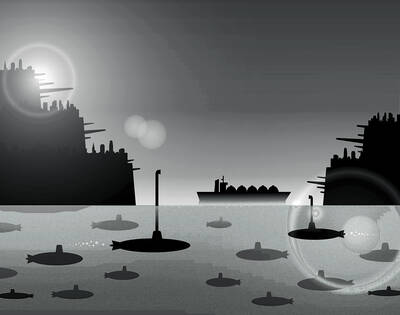
In the event of a war with China, Taiwan has some surprisingly tough defenses that could make it as difficult to tackle as a porcupine: A shoreline dotted with swamps, rocks and concrete barriers; conscription for all adult men; highways and airports that are built to double as hardened combat facilities. This porcupine has a soft underbelly, though, and the war in Iran is exposing it: energy. About 39,000 ships dock at Taiwan’s ports each year, more than the 30,000 that transit the Strait of Hormuz. About one-fifth of their inbound tonnage is coal, oil, refined fuels and liquefied natural gas (LNG),
On Monday, the day before Chinese Nationalist Party (KMT) Chairwoman Cheng Li-wun (鄭麗文) departed on her visit to China, the party released a promotional video titled “Only with peace can we ‘lie flat’” to highlight its desire to have peace across the Taiwan Strait. However, its use of the expression “lie flat” (tang ping, 躺平) drew sarcastic comments, with critics saying it sounded as if the party was “bowing down” to the Chinese Communist Party (CCP). Amid the controversy over the opposition parties blocking proposed defense budgets, Cheng departed for China after receiving an invitation from the CCP, with a meeting with
Chinese Nationalist Party (KMT) Chairwoman Cheng Li-wun (鄭麗文) is leading a delegation to China through Sunday. She is expected to meet with Chinese President Xi Jinping (習近平) in Beijing tomorrow. That date coincides with the anniversary of the signing of the Taiwan Relations Act (TRA), which marked a cornerstone of Taiwan-US relations. Staging their meeting on this date makes it clear that the Chinese Communist Party (CCP) intends to challenge the US and demonstrate its “authority” over Taiwan. Since the US severed official diplomatic relations with Taiwan in 1979, it has relied on the TRA as a legal basis for all
The two major opposition parties, the Chinese Nationalist Party (KMT) and the Taiwan People’s Party (TPP), jointly announced on Tuesday last week that former TPP lawmaker Chang Chi-kai (張啟楷) would be their joint candidate for Chiayi mayor, following polling conducted earlier this month. It is the first case of blue-white (KMT-TPP) cooperation in selecting a joint candidate under an agreement signed by their chairpersons last month. KMT and TPP supporters have blamed their 2024 presidential election loss on failing to decide on a joint candidate, which ended in a dramatic breakdown with participants pointing fingers, calling polls unfair, sobbing and walking


 RSS
RSS