


Under the service trade agreement signed with China last month, Taiwan would open up service sectors such as agricultural product processing and storage, and set up free economic zones in the hope of attracting overseas investment.
Agricultural officials keep telling farmers to be less conservative and more open-minded, but has the government given farmers a level playing field and taught them how to face these new trade challenges?
The big problem for Taiwan’s farming is in the low prices of agricultural products. Successive governments have held prices down out of concern for national food security, commodity price stability and industrial and commercial development. As such, prices are not decided by the market and farmers’ incomes have been consistently lower than the national average.
With incomes not matching effort, many farmers have left the countryside. This impedes new knowledge and new techniques, making farming less efficient or able to meet new challenges.
Past governments imposed various restrictions on the purchase and sale of farmland, leaving each farming household with an average of only about 1.1 hectares of land. Farmers can hardly compete with large-scale farming as practiced overseas. Also key to maintaining stable production and marketing is authorities having a firm grasp of the actual production situation. Yet they are unable to grasp the nation’s basic agricultural data, let alone plan production or establish early-warning mechanisms.
Lacking information, farmers make decisions based on current product prices and on what they see their neighbors planting. The inability to make rational predictions, means imbalances between production and sales occur almost every year, while many farmers live in hardship.
Under such circumstances, how can Taiwan open up its agriculture to compete with better-prepared countries?
Logistics is a very important link in the farm product supply chain, involving the processing, packing, storage and transport of agricultural products all the way up to consumers. In line with the “smiling curve” theory of added value, the supply of seeds and saplings at one end of the agricultural supply chain and branding and services at the other, are important for adding value to products and making the sector more competitive. They generate much greater profits than those earned by frontline farmers engaged in production.
Research shows only about 24 percent of the consumer purchase price of products goes into farmers’ or fishermen’s pockets, while 75 percent goes to the downstream stages of processing, transport, marketing, sales, hospitality and tourism, and to the upstream stage of agricultural inputs.
Therefore, helping farmers on the front line obtain a share of these profits is imperative to increasing their incomes and motivation to stay in the business.
Japan promotes such policies to ensure sustainable agriculture and fisheries industries as it faces the challenges of entering international trade organizations. The policies are centered on producers, encouraging farmers, people in fishing and forestry workers to do their own processing and sales. This can create local business opportunities and new kinds of business, making these sectors more competitive globally.
Yet Taiwan’s government intends to allow overseas companies, especially from China, to engage in agricultural product logistics and related services in Taiwan. In the end, the nation will likely lose its autonomy regarding all stages of agriculture, including production, processing, techniques, and marketing.
Furthermore, China’s agricultural product logistics is beset by many problems. For example, its basic transport and communication infrastructure is weak; most farming is done by small-scale individual household producers; it has insufficient equipment for transport, storage, and loading and unloading of agricultural products; the planning and distribution of farm product markets are irrational; and agricultural technology is not widely applied. All this makes it hard for Taiwan’s farming sector to link up with China’s and free trade will pose even tougher challenges.
Officials and academics often seriously underestimate the value of agriculture simply because it accounts for less than 2 percent of GDP.
In theory, free trade gives every country equal opportunities and rights to pursue its best interests, but the reality is rather different. Large economies manipulate free-trade negotiations to force others to accept their products. In view of this reality, agriculture should not be made entirely dependent on market forces.
There are many challenges ahead for Taiwan. Are we ready to face them?
Du Yu is chief executive officer of the Chen-Li Task Force for Agricultural Reform.
Translated by Eddy Chang
KMT Chairwoman Cheng Li-wun’s (鄭麗文) recent visit to Beijing and her upcoming visit to Washington will serve as a high-level test of her diplomatic mettle. In Beijing, Cheng was received with symbolic gestures, a warm reception, and high-level access. In Washington, she will receive far less pomp and far sharper questions about the KMT’s vision for the future of Taiwan. Her challenge will be to persuade Washington that the KMT’s engagement with China can coexist with strong deterrence. Cheng’s April 7-12 visit to mainland China coincided with an intense period of conflict in Iran. Despite the strategic significance of Cheng’s trip,
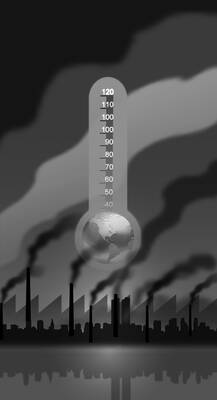
The closure of the Strait of Hormuz has sent the vast Asian chemicals industry into a tailspin. Deprived of the likes of Qatari natural gas and Saudi Arabian oil, the region’s fertilizer and plastics plants are slowing production or even shutting down. Everywhere except China, that is. In petrochemicals, China is unique. As well as a traditional industry that uses oil and gas as feedstock, it has parallel output that relies on its abundant domestic coal. Unsurprisingly, India and other regional powers want to copy and paste the Chinese method. This would not be easy — or climate friendly. The
Indonesian President Prabowo Subianto says he knows how to fix the problems facing Indonesia. Yet his economic mismanagement and authoritarian tendencies are steering the nation toward a familiar mix of currency instability and political chaos. The world’s fourth-most populous nation risks reversing the hard-won democratic and business reforms that came after the Asian Financial Crisis in 1997. At that time, the rupiah collapsed and the political upheaval that followed forced former president Haji Mohamed Suharto from power. Prabowo’s administration is ignoring similar warning signs. That disconnect was apparent in a national address on Wednesday, when Prabowo projected the swagger that has
“Of course you can choose not to be Taiwanese, just do not stay here,” chairwoman of Taipei 101 operator Taipei Financial Center Corp Janet Chia (賈永婕) said in an online interview with local entertainer Tai Chih-yuan (邰智源), triggering intense discussion on social media, with politicians across party lines weighing in. In the interview, which was aired on May 14, Chia and Tai’s discussion over a meal in Taipei 101 covered Chia’s career change from entertainer to chairwoman and US climber Alex Honnold’s free solo climb up the Taipei 101 building. During the interview, Chia said, “Being on this land, we


 RSS
RSS