


Villagers in Map Ta Phut avoid walking in the rain because they say it burns their skin and causes their hair to fall out. They have trouble breathing at night when, they say, factories release toxic fumes. They are terrified by what studies show are unusually high cancer rates.
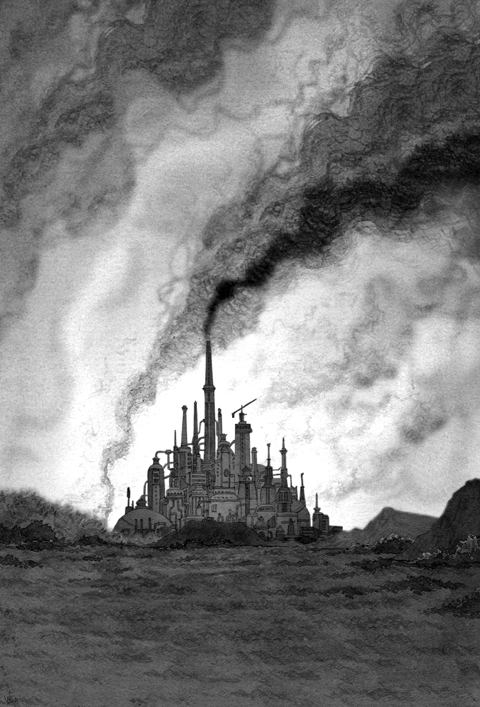
Map Ta Phut is the heart of Thailand’s industrial underbelly, an area rarely seen by the millions of tourists who visit the country every year. Jutting into the Gulf of Thailand, the industrial zone is on the scale of a midsize city — only instead of office buildings and apartments, there are block after block of tangled tubes of steel, vats of chemicals and towering, fire-breathing gas flares.
Two years ago, a group of residents decided to take their health grievances to the courts, a relatively rare move in Thailand, where street demonstrations are the preferred form of civil action. The lawsuit, filed by 27 villagers, has become a landmark in Thailand’s environmental movement, leading to a cascade of decisions that halted a staggering US$9 billion of industrial projects, including Japanese steel factories and German-owned chemical plants.
The judgments stunned foreign investors, infuriated powerful Thai companies and jolted an already shaky Thai government. The Thai Chamber of Commerce has warned that if the injunction against dozens of projects is not lifted soon, the Thai economy could suffer for the next decade.
From the perspective of Srisuwan Janya, the lawyer who won the case, however, the injunction signaled a new dawn in the country’s development and the end of an era in which Thailand’s paramount objective was bolstering GDP.
“From now on, industries will not only care about making money,” said Srisuwan, who comes from a family of rice farmers. “They have to care about the environment and the well-being of the people in the community.”
Even among critics of the court decisions, there is widespread agreement that Map Ta Phut is heavily polluted and unhealthy for those who live nearby, but environmental experts remain skeptical that the court decisions will fix the problem.
The injunction stopped new projects, but older, heavily polluting plants were allowed to carry on. The rulings require the government to write a new set of environmental laws, but what Thailand needs, experts say, is not new laws but better enforcement of existing ones.
“In rural areas, there is almost no enforcement at all,” said Anthony Zola, a US environmental consultant. “Water pollution, air pollution, noise pollution — you can make all the complaints you want and no one pays any attention to you.”
Reports detailing how unhealthy this area is for those who live and work in the shadow of the refineries, plastics factories and other petrochemical facilities have stacked up over the years.
Thailand’s National Cancer Institute found in 2003 that rates of cervical, bladder, breast, liver, nasal, stomach, throat and blood cancers were highest in Rayong Province, where Map Ta Phut and other industrial zones are located. A study led by Italian researchers and released in 2007 found that people living near Map Ta Phut had 65 percent higher levels of genetic damage to blood cells than people in the same province who lived in rural areas. Such cell damage, which is a possible precursor to cancer, was 120 percent higher for refinery workers than for residents of Rayong Province’s rural communities.
Marco Peluso, the lead author of the study, said it would be rare to see these levels of genetic damage in the West.
The main problem appears to be air pollution. The Thai pollution control department reported in September that it had found nine types of carcinogenic compounds in the air around Map Ta Phut.
In March, an initial court decision from the lawsuit by the 27 villagers declared Map Ta Phut a “pollution control zone,” obliging the authorities to measure soil and water quality regularly and to come up with a plan to reduce pollution if it is too high.
The real sting for companies, however, came in September, when another court ruled in a related lawsuit that 76 projects, most of them under construction, should immediately stop work because they were not in compliance with environmental provisions in the country’s new Constitution. The decision was upheld by a higher court early this month for all but 11 of the projects.
Among the companies affected are Bayer, the German pharmaceutical giant; Aditya Birla Chemicals, an Indian conglomerate; BlueScope Steel of Australia; and two dozen companies belonging to PTT, the Thai energy giant.
Lawyers for the companies say the most galling aspect of the injunction is that they could not possibly comply with the law because detailed regulations have yet to be written, a problem that the government acknowledges.
The generals who carried out Thailand’s 2006 military coup promulgated a new Constitution that strengthened environmental law, requiring detailed studies before the approval of any project that causes “serious impact” to the environment or people’s health.
But “serious” was never defined and specific guidelines for companies were never drawn up, partly because government officials have been distracted by continuing political turmoil.
“Right now, companies don’t know which way to turn,” said Sivapong Viriyabusaya, a partner at the law firm Baker and McKenzie in Bangkok, which is representing companies affected by the injunction. “They want to comply, but they cannot because there are no rules.”
Srisuwan, the lawyer who won the injunction, is unapologetic about the potential economic effects of the decision.
“I don’t care about investors,” he said. “I don’t care about losing employment and the economy. I just care that people’s lives will be protected.”
The frustration is echoed by Noi Jaitang, a 70-year-old fruit farmer. Over the past two decades, Noi says, he has lost six members of his family to cancer. Now his wife has a cancerous tumor below her left eye. In October, Noi walked barefoot to Bangkok — about 200km away — to protest the pollution, which he blames for the deaths.
“It’s not that I want to burn the factories down,” he said. “We just want to be able to live together.”
The government says it is moving as quickly as it can to pass the requisite laws that would allow the injunction to be lifted, but Srisuwan calls this lawsuit only the “tip of the iceberg.”
There are 181 other factories in Thailand that are not complying with the new Constitution, including paper, steel and petroleum companies, he says.
“I will file lawsuits against all of them,” Srisuwan said.
ADDITIONAL REPORTING BY NICE POJANAMESBAANSTIT
Recently, China launched another diplomatic offensive against Taiwan, improperly linking its “one China principle” with UN General Assembly Resolution 2758 to constrain Taiwan’s diplomatic space. After Taiwan’s presidential election on Jan. 13, China persuaded Nauru to sever diplomatic ties with Taiwan. Nauru cited Resolution 2758 in its declaration of the diplomatic break. Subsequently, during the WHO Executive Board meeting that month, Beijing rallied countries including Venezuela, Zimbabwe, Belarus, Egypt, Nicaragua, Sri Lanka, Laos, Russia, Syria and Pakistan to reiterate the “one China principle” in their statements, and assert that “Resolution 2758 has settled the status of Taiwan” to hinder Taiwan’s
Singaporean Prime Minister Lee Hsien Loong’s (李顯龍) decision to step down after 19 years and hand power to his deputy, Lawrence Wong (黃循財), on May 15 was expected — though, perhaps, not so soon. Most political analysts had been eyeing an end-of-year handover, to ensure more time for Wong to study and shadow the role, ahead of general elections that must be called by November next year. Wong — who is currently both deputy prime minister and minister of finance — would need a combination of fresh ideas, wisdom and experience as he writes the nation’s next chapter. The world that
Can US dialogue and cooperation with the communist dictatorship in Beijing help avert a Taiwan Strait crisis? Or is US President Joe Biden playing into Chinese President Xi Jinping’s (習近平) hands? With America preoccupied with the wars in Europe and the Middle East, Biden is seeking better relations with Xi’s regime. The goal is to responsibly manage US-China competition and prevent unintended conflict, thereby hoping to create greater space for the two countries to work together in areas where their interests align. The existing wars have already stretched US military resources thin, and the last thing Biden wants is yet another war.
Since the Russian invasion of Ukraine in February 2022, people have been asking if Taiwan is the next Ukraine. At a G7 meeting of national leaders in January, Japanese Prime Minister Fumio Kishida warned that Taiwan “could be the next Ukraine” if Chinese aggression is not checked. NATO Secretary-General Jens Stoltenberg has said that if Russia is not defeated, then “today, it’s Ukraine, tomorrow it can be Taiwan.” China does not like this rhetoric. Its diplomats ask people to stop saying “Ukraine today, Taiwan tomorrow.” However, the rhetoric and stated ambition of Chinese President Xi Jinping (習近平) on Taiwan shows strong parallels with


 RSS
RSS