


As Taiwan goes to the presidential polls, it is imperative the nation notes and understands the situation in Tibet. For those Taiwanese who dream of becoming an integral part of China, it is important to understand that the treatment of Tibet and Tibetans is only a small sample of what lies in store for Taiwan should it become part of China.
For those Taiwanese who believe that Chinese Nationalist Party (KMT) presidential candidate Ma Ying-jeou (
The only definition of "co-existence" for Beijing is "undying loyalty to the Communist Party, upon pain of death."
Ma talks about 30 years of peace with Beijing. But Beijing has murdered Tibet's culture and autonomy over a period of 50 years.
Are you skeptical? Fifty years of Beijing's relationship with the Dalai Lama should have proved this point to the world already.
If a nation cannot co-exist with the Dalai Lama, a leader who personifies peace, just who in the world can they co-exist with?
Nor will Beijing march into Taipei with guns drawn. Its annexation of Taiwan is being planned in far more subtle ways, with or without the KMT's full complicity.
Wearing grins on their faces and talking about social harmony, cross-strait peace and a "one-China market," politicians on both sides are misrepresenting the underlying predatory nature of Beijing to the Taiwanese public.
The plans call for peace, but as soon as the guard is down, as soon as someone decides there is no immediate threat, the dam will burst and the flood of China's overwhelming tide will overwhelm Taiwan.
It will first come from the sheer numbers of Chinese visitors and then immigrants, money, millions of workers, hollowing out invaluable industries, and -- when Taiwan is utterly cowed and dependent on Beijing's succor -- blackmail.
Once overwhelmed, all hope is lost.
Beijing will not treat Taiwan like Hong Kong (which is bad enough), but rather like Tibet, where right now, today, at this very moment, soldiers are conducting house-to-house searches for monks supporting the Dalai Lama, looking for pictures of him or any other evidence of loyalty.
How long before Chinese soldiers are running from house to house in Taipei searching for "splittists"? Where will Ma be then? Standing in front, protecting those houses? Or running along beside the soldiers, aiding and abetting?
You decide.
With President Chen Shui-bian (
They've already sacrificed themselves for Taiwan's democracy before.
I haven't heard anything from Ma that would convince me he wouldn't be on the first plane to Hong Kong (or New York or Beijing)
For those going to the polls, Tibet should serve as a loud and blaring wake up call. For those who think things have changed and that Beijing is a kinder and gentler adversary, wake up.
The predatory neighbor is not coming to visit Taiwan bearing cookies. It is coming bearing dictatorship and tyranny. Vote for anything less than complete vigilance against it, and you are inviting the beast to a dinner where you are the main dish.
And if you doubt that, if you are skeptical that Beijing could do that, just read about Tibet right now.
It's real. It's happening. The actions of Beijing in Tibet are no different than its attitude toward Taiwan.
And it's coming, unless you vote to keep it out.
You decide.
Lee Long-Hwa
New York
KMT Chairwoman Cheng Li-wun’s (鄭麗文) recent visit to Beijing and her upcoming visit to Washington will serve as a high-level test of her diplomatic mettle. In Beijing, Cheng was received with symbolic gestures, a warm reception, and high-level access. In Washington, she will receive far less pomp and far sharper questions about the KMT’s vision for the future of Taiwan. Her challenge will be to persuade Washington that the KMT’s engagement with China can coexist with strong deterrence. Cheng’s April 7-12 visit to mainland China coincided with an intense period of conflict in Iran. Despite the strategic significance of Cheng’s trip,
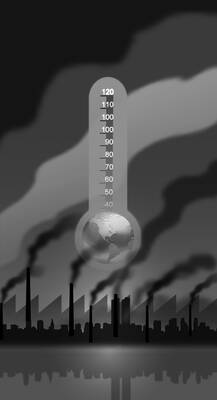
The closure of the Strait of Hormuz has sent the vast Asian chemicals industry into a tailspin. Deprived of the likes of Qatari natural gas and Saudi Arabian oil, the region’s fertilizer and plastics plants are slowing production or even shutting down. Everywhere except China, that is. In petrochemicals, China is unique. As well as a traditional industry that uses oil and gas as feedstock, it has parallel output that relies on its abundant domestic coal. Unsurprisingly, India and other regional powers want to copy and paste the Chinese method. This would not be easy — or climate friendly. The
Indonesian President Prabowo Subianto says he knows how to fix the problems facing Indonesia. Yet his economic mismanagement and authoritarian tendencies are steering the nation toward a familiar mix of currency instability and political chaos. The world’s fourth-most populous nation risks reversing the hard-won democratic and business reforms that came after the Asian Financial Crisis in 1997. At that time, the rupiah collapsed and the political upheaval that followed forced former president Haji Mohamed Suharto from power. Prabowo’s administration is ignoring similar warning signs. That disconnect was apparent in a national address on Wednesday, when Prabowo projected the swagger that has
“Of course you can choose not to be Taiwanese, just do not stay here,” chairwoman of Taipei 101 operator Taipei Financial Center Corp Janet Chia (賈永婕) said in an online interview with local entertainer Tai Chih-yuan (邰智源), triggering intense discussion on social media, with politicians across party lines weighing in. In the interview, which was aired on May 14, Chia and Tai’s discussion over a meal in Taipei 101 covered Chia’s career change from entertainer to chairwoman and US climber Alex Honnold’s free solo climb up the Taipei 101 building. During the interview, Chia said, “Being on this land, we


 RSS
RSS