


The Greenland ice cap is melting so quickly that it is triggering earthquakes as pieces of ice several cubic kilometers in size break off.
Scientists monitoring events this summer say the acceleration could be catastrophic in terms of sea-level rise and make predictions in February by the Intergovernmental Panel on Climate Change (IPCC) far too low.
The glacier at Ilulissat, which supposedly spawned the iceberg that sank the Titantic, is now flowing three times faster into the sea than it was 10 years ago.
acceleration
Robert Corell, chairman of the Arctic Climate Impact Assessment, said in Ilulissat on Friday: "We have seen a massive acceleration of the speed with which these glaciers are moving into the sea. The ice is moving at 2 meters an hour on a front 5km long and 1,500 meters deep. That means that this one glacier puts enough fresh water into the sea in one year to provide drinking water for a city the size of London for a year."
He is visiting Greenland as part of a symposium of religious, scientific, and political leaders to look at the problems of the island, which has an ice cap 3km thick containing enough water to raise worldwide sea levels by 7m.
On Friday Christian, Shia, Sunni, Hindu, Shinto, Buddhist and Jewish religious leaders took a boat to the tongue of the glacier for a silent prayer for the planet. They were invited by Bartholomew I, the spiritual leader of 250 million Orthodox Christians worldwide.
catastrophic
Corell, director of the global change program at the Heinz Center in Washington, said the estimates of sea level rise in the IPCC report were based on data two years old. The predicted rise this century was 20cm to 60cm, but it would be at the upper end of this range at a minimum, he said, and some believed it could be 2m. This would be catastrophic for European coastlines.
He had flown over the Ilulissat glacier and "seen gigantic holes in it through which swirling masses of melt water were falling. I first looked at this glacier in the 1960s and there were no holes. These so-called moulins, 10m to 15m across, have opened up all over the place. There are hundreds of them."
This melt water was pouring through to the bottom of the glacier creating a lake 500m deep which was causing the glacier "to float on land. These melt-water rivers are lubricating the glacier, like applying oil to a surface and causing it to slide into the sea. It is causing a massive acceleration which could be catastrophic."
surges
The glacier is now moving at 15km a year into the sea although in surges it moves even faster. He measured one surge at 5km in 90 minutes -- an extraordinary event.
Veli Kallio, a Finnish scientist, said the quakes were triggered because ice had broken away after being fused to the rock for hundreds of years. The quakes were not vast -- on a magnitude of 1 to 3 -- but had never happened before in northwest Greenland and showed potential for the entire ice sheet to collapse.
"These earthquakes are not dangerous in themselves but the fact that they are happening shows that events are happening far faster than we ever anticipated," Corell said.
Minister of Labor Hung Sun-han (洪申翰) on April 9 said that the first group of Indian workers could arrive as early as this year as part of a memorandum of understanding (MOU) between the Taipei Economic and Cultural Center in India and the India Taipei Association. Signed in February 2024, the MOU stipulates that Taipei would decide the number of migrant workers and which industries would employ them, while New Delhi would manage recruitment and training. Employment would be governed by the laws of both countries. Months after its signing, the two sides agreed that 1,000 migrant workers from India would
In recent weeks, Taiwan has witnessed a surge of public anxiety over the possible introduction of Indian migrant workers. What began as a policy signal from the Ministry of Labor quickly escalated into a broader controversy. Petitions gathered thousands of signatures within days, political figures issued strong warnings, and social media became saturated with concerns about public safety and social stability. At first glance, this appears to be a straightforward policy question: Should Taiwan introduce Indian migrant workers or not? However, this framing is misleading. The current debate is not fundamentally about India. It is about Taiwan’s labor system, its
On March 31, the South Korean Ministry of Foreign Affairs released declassified diplomatic records from 1995 that drew wide domestic media attention. One revelation stood out: North Korea had once raised the possibility of diplomatic relations with Taiwan. In a meeting with visiting Chinese officials in May 1995, as then-Chinese president Jiang Zemin (江澤民) prepared for a visit to South Korea, North Korean officials objected to Beijing’s growing ties with Seoul and raised Taiwan directly. According to the newly released records, North Korean officials asked why Pyongyang should refrain from developing relations with Taiwan while China and South Korea were expanding high-level
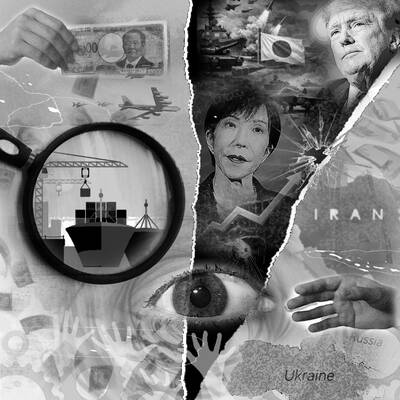
Japan’s imminent easing of arms export rules has sparked strong interest from Warsaw to Manila, Reuters reporting found, as US President Donald Trump wavers on security commitments to allies, and the wars in Iran and Ukraine strain US weapons supplies. Japanese Prime Minister Sanae Takaichi’s ruling party approved the changes this week as she tries to invigorate the pacifist country’s military industrial base. Her government would formally adopt the new rules as soon as this month, three Japanese government officials told Reuters. Despite largely isolating itself from global arms markets since World War II, Japan spends enough on its own


 RSS
RSS