


The Cabinet and the Taipei County Government have decided to evict the residents of the Lo Sheng (Happy Life) Sanatorium on April 16 to make way for the construction of a Mass Rapid Transit maintenance depot. If this isn't stopped, it will be a black day indeed in Taiwanese history. Not only will the government destroy a major cultural artifact and compound the misery of the residents, but even more importantly, it will show us how single-minded politicians lack respect for culture, history and human rights. This is a real tragedy for all Taiwanese.
Of about 60 such institutions around the world, Lo Sheng Sanatorium is one of the few to have survived until today. It bears witness to the process of modernization, in which state violence is used to "purify" society as well as besmirch and oppress disadvantaged groups -- including those of different ethnicity, the lower classes, the mentally ill, the diseased and dissidents.
Preserving Lo Sheng would not only let Taiwan retain one of its cultural assets, but it would also preserve a piece of history for the entire world. The International Association for Integration, Dignity and Economic Advancement, a UN-related organization dedicated to promoting the rights of Hansen's disease patients, also believes that the sanatorium is part of a global heritage and has asked the Taiwanese government to protect it.
In preserving these buildings, Taiwan would allow the residents to continue to live there instead of uprooting long-standing community networks in the name of modernization. This would conform to the community spirit of the "villages" set aside for protection under the Cultural Heritage Preservation Law (文化資產保存法). It would also let the residents, who have been victimized by the Japanese colonial and Taiwanese governments, satisfy their modest wish to live out their lives in suitable and familiar surroundings.
No one can say how much effort has been wasted in the six years that have passed since former Lo Sheng director Chen Ching-chuan (
According both to the spirit and the regulations of the preservation law, officials must fulfill their responsibilities and assess whether or not a location is a cultural asset after receiving an application. Any other considerations must wait until the status has been confirmed. Yet the entire Lo Sheng case has been handled backwards from beginning to end. It began with the idea that construction should be prioritized over culture. Officials discussed the feasibility of the project first and only talked about cultural preservation afterwards. This is the reason why even today Lo Sheng hasn't even entered the appraisal process.
Next, government technocrats should of course perform their bureaucratic responsibilities instead of trying to make things easier for themselves. The Taipei Department of Rapid Transit Systems has held on to information and given several, constantly changing reasons for the demolition, none of which held water in the end. How could this stalemate have continued for six years if there weren't politicians directing and conniving behind the scenes, using technocrats as an excuse to get their own way?
And did the Council for Cultural Affairs (CCA) arrive in time to put a stop this? It seemed to be acting in earnest when it listed Lo Sheng as a temporary historical site in 2005 and later commissioned Hsin Lu Engineering Consultancy to draw up a plan to preserve 90 percent of the sanatorium. But its present claim that the sanatorium's designation is a local affair, and that the central government can only encourage but not intervene, is a serious dereliction of duty.
Article 101 of the preservation law says very clearly that "when city and county regulating organizations fail to act according to this law on issues within their jurisdiction, leading to the jeopardization of the preservation of cultural assets, the Cabinet or central government overseeing organizations shall name it as such for a limited period of time. If the local government still fails to act after that time, the central government should handle the issue for them. But in urgent matters, it should handle the situation directly."
Lo Sheng has always been on the brink of harm. First, during Premier Su Tseng-chang's (蘇貞昌) time as county commissioner, no action was taken out of consideration for major construction projects. Second, during commissioner Chou Hsi-wei's (周錫瑋) term, the government told the CCA it couldn't do anything because of development projects.
Faced with the first case of a local government failing to act since the passage of the preservation law and a sanatorium whose fate is still threatened because it lacks status as a cultural asset, the CCA continues to ignore the existence of this article. It is once again passing the buck back to the local government.
For a long time this case has remained clouded in a myth. Namely, it is misunderstood to be a conflict of interest between 100 sanatorium residents and the several million people living in Taipei. But the preservation of cultural sites has always been for everyone, not just a few, which is clearly illustrated in this case.
Even if preserving the sanatorium were to affect the opening of the MRT line, this shouldn't be seen as a zero-sum relationship. When technocrats cease to monopolize information, especially after the plan to preserve 90 percent of the sanatorium comes out, we will see more clearly that modifying the plans for the maintenance depot will not delay opening the line in the least.
Taiwan, which claims to be a progressive country, has instead acted just the opposite on many issues, including comfort women, human rights for foreign laborers and the sanatorium. If it wants to be respected in the international community, it must do more than just pay lip service to these cases. It must put its full weight into promoting progressive values. These problems persist due to a lack of will, not of ability, and Lo Sheng is no exception. Whether or not Taiwan can repair its tarnished name will depend on the Cabinet adopting the 90 percent preservation plan.
Liao Hsien-hao is former director of the Taipei City Bureau of Cultural Affairs and a professor at National Taiwan University.
Translated by Marc Langer
KMT Chairwoman Cheng Li-wun’s (鄭麗文) recent visit to Beijing and her upcoming visit to Washington will serve as a high-level test of her diplomatic mettle. In Beijing, Cheng was received with symbolic gestures, a warm reception, and high-level access. In Washington, she will receive far less pomp and far sharper questions about the KMT’s vision for the future of Taiwan. Her challenge will be to persuade Washington that the KMT’s engagement with China can coexist with strong deterrence. Cheng’s April 7-12 visit to mainland China coincided with an intense period of conflict in Iran. Despite the strategic significance of Cheng’s trip,
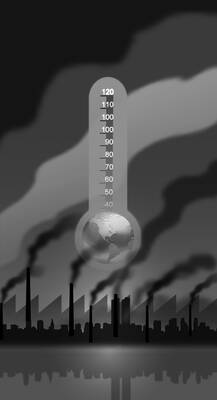
The closure of the Strait of Hormuz has sent the vast Asian chemicals industry into a tailspin. Deprived of the likes of Qatari natural gas and Saudi Arabian oil, the region’s fertilizer and plastics plants are slowing production or even shutting down. Everywhere except China, that is. In petrochemicals, China is unique. As well as a traditional industry that uses oil and gas as feedstock, it has parallel output that relies on its abundant domestic coal. Unsurprisingly, India and other regional powers want to copy and paste the Chinese method. This would not be easy — or climate friendly. The
US President Donald Trump recently repeated his claim that “Taiwan stole America’s chip industry,” reigniting public debate on the issue. As a former Taiwanese minister of economic affairs and an entrepreneur deeply involved in semiconductor supply chain development, I feel a responsibility to clarify this misunderstanding. From the perspective of global industrial evolution and the economic principle of comparative advantage, such a statement appears overly simplistic and risks obscuring the essence of the issue. The rise of Taiwan’s semiconductor industry was not built on “replacing America,” but rather emerged as a result of countries pursuing different development paths within the
The Presidential Office on Saturday reiterated that Taiwan is a sovereign, independent nation after US President Donald Trump said that Taiwan should not “go independent.” “We’re not looking to have somebody say: ‘Let’s go independence because the United States is backing us,’” Trump said in an interview with Fox News aired on Friday. President William Lai (賴清德) on Monday said that the Republic of China (ROC) — Taiwan’s official name — and the People’s Republic of China (PRC) are not subordinate to each other. Speaking at an event marking the 40th anniversary of the establishment of the Democratic Progressive Party (DPP), Lai said


 RSS
RSS