


On Jan. 1, during the coldest time of the year, Russia decided to cut the supply of natural gas to Ukraine.
The effects of this decision were not only felt in Ukraine, but also in other European nations, who had been hoping to mediate in the dispute, urging Russia and Ukraine in the strongest possible terms to come to some sort of understanding on the gas supply. This dispute, after all, threatens Europe's security and economic development.
Ukraine had previously paid Russia less than the market price for the gas supply. The problem started with the Orange Revolution in the winter of 2004, when the people elected a president more sympathetic to the West, who adopted policies that increasingly distanced the country from Russia. It was this situation that led to the decision to ussume such a strict energy policy, as Russia attempted to prevent Ukraine from moving beyond its sphere of influence.
In fact, this conflict will do little for Russian President Vladimir Putin's image in a year in which his country is to host a summit attended by seven other major industrialized nations. The main theme which Russia chose for the summit is none other than energy-supply security issues.
The first problem is that Western Europe relies on Russia for 25 percent of its supply of natural gas, and 80 percent of this is actually routed through Ukraine. As a result, the disruption of Ukraine's supply had a significant impact on Russia's supplies to Western Europe.
Ukraine was only able to hold out for three days before it reached a compromise with Russia, agreeing to a new price, set by Moscow, on Jan. 4. With this, the unit price for natural gas went up from US$50 to US$230, more closely reflecting the actual market price.
From Taiwan's point of view, this illustrates the threat posed to national security by over-reliance on a country with which we have geopolitical disputes.
Despite Ukraine's own geopolitical importance, which stems from the fact that a large part of Western Europe's energy supply runs through its territory, Russia still decided to disrupt the gas supply. Even the damage this would do to Russia's international image, not to mention the impact it would have on the close economic and energy ties it has with other nations, did nothing to make Russian decisionmakers change their minds.
Put another way, it was willing to place its own national interests ahead of geopolitical considerations. Taking this situation to the East-Asian context, we see Taiwan becoming ever more reliant on China.
Taiwan also has some geopolitical importance, as over 85 percent of Japan's crude energy supplies go via the Taiwan Strait and the Bashi Channel, which is controlled by Taiwan.
Nevertheless, if Taiwan does not keep a careful eye on economic and trade policies that are heading more and more in the China's direction, especially when we take into account the nationalist tendencies of that country, we may be facing a serious crisis in the foreseeable future.
Wu Chih-chung is an associate professor in the Department of Political Science at Soochow University.
TRANSLATED BY PAUL COOPER
KMT Chairwoman Cheng Li-wun’s (鄭麗文) recent visit to Beijing and her upcoming visit to Washington will serve as a high-level test of her diplomatic mettle. In Beijing, Cheng was received with symbolic gestures, a warm reception, and high-level access. In Washington, she will receive far less pomp and far sharper questions about the KMT’s vision for the future of Taiwan. Her challenge will be to persuade Washington that the KMT’s engagement with China can coexist with strong deterrence. Cheng’s April 7-12 visit to mainland China coincided with an intense period of conflict in Iran. Despite the strategic significance of Cheng’s trip,
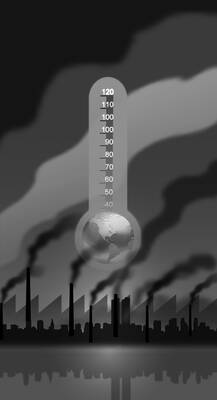
The closure of the Strait of Hormuz has sent the vast Asian chemicals industry into a tailspin. Deprived of the likes of Qatari natural gas and Saudi Arabian oil, the region’s fertilizer and plastics plants are slowing production or even shutting down. Everywhere except China, that is. In petrochemicals, China is unique. As well as a traditional industry that uses oil and gas as feedstock, it has parallel output that relies on its abundant domestic coal. Unsurprisingly, India and other regional powers want to copy and paste the Chinese method. This would not be easy — or climate friendly. The
Indonesian President Prabowo Subianto says he knows how to fix the problems facing Indonesia. Yet his economic mismanagement and authoritarian tendencies are steering the nation toward a familiar mix of currency instability and political chaos. The world’s fourth-most populous nation risks reversing the hard-won democratic and business reforms that came after the Asian Financial Crisis in 1997. At that time, the rupiah collapsed and the political upheaval that followed forced former president Haji Mohamed Suharto from power. Prabowo’s administration is ignoring similar warning signs. That disconnect was apparent in a national address on Wednesday, when Prabowo projected the swagger that has
“Of course you can choose not to be Taiwanese, just do not stay here,” chairwoman of Taipei 101 operator Taipei Financial Center Corp Janet Chia (賈永婕) said in an online interview with local entertainer Tai Chih-yuan (邰智源), triggering intense discussion on social media, with politicians across party lines weighing in. In the interview, which was aired on May 14, Chia and Tai’s discussion over a meal in Taipei 101 covered Chia’s career change from entertainer to chairwoman and US climber Alex Honnold’s free solo climb up the Taipei 101 building. During the interview, Chia said, “Being on this land, we


 RSS
RSS