


Johnson & Johnson (J&J) on Tuesday said that it was partnering with Apple Inc to use an iPhone app and the Apple Watch to study how earlier detection of atrial fibrillation impacts stroke in people aged 65 or older.
Last year, Apple’s Heart Study — which analyzed the role of wearable devices in identifying potential heart problems — found that the watch could accurately detect atrial fibrillation, the most common type of irregular heartbeat.
Atrial fibrillation increases the risk of stroke more than fivefold, the American Heart Association said.
Apple chief operating officer Jeff Williams said that the initial study proved the Apple Watch could detect atrial fibrillation with a low rate of false alarms, which helped Apple gain clearance from the US Food and Drug Administration for a watch app that takes an electrocardiogram (EKG) measurement.
The study with J&J aims to show if early detection leads to better health outcomes.
“We want to follow the science all the way to the end, no matter what the outcomes are, and run this longitudinal study,” Williams said. “It’s not something that we have to do, but it’s the right thing to do.”
The joint effort, called “Heartline,” is significant because J&J is one of the world’s largest medical device makers and pharmaceutical companies.
“What we bring is clinical study capability on a very large scale,” J&J chief scientific officer Paul Stoffels said, adding that the study would track 150,000 participants with long-term follow-ups over two years.
The study could also reach a different population than Apple’s original heart study, which included 400,000 participants, but faced scrutiny from medical experts because more than half of the people who signed up were under 40, a group already at low risk for atrial fibrillation.
J&J said that it wants to target a population with a higher risk.
Paul Burton, vice president of medical affairs at the J&J subsidiary running the study, said that 70 percent of patients experiencing the condition are over 65.
“What we’re trying to do here is definitively answer that question: If you take wearable technology and couple it with an app, can you reduce the risk of a stroke or death?” Burton said.
The J&J study would be open to the more than 40 million people enrolled in traditional US Medicare plans, which cover people aged 65 and older, as well as the disabled. Study participants would be randomly assigned to either use only an iPhone app or use the app in conjunction with a watch capable of taking an EKG.
If patients who enroll are assigned to the arm of the study using the Apple Watch, they would be prompted to acquire one of the devices, which study officials said the participants could either purchase on their own for personal use for US$49 or borrow free of charge for the study.
The latest Apple Watch model starts at list price of US$399.
Burton said that J&J and Apple were sharing the cost of subsidizing the watches.
The study would pay participants, who must agree to share their Medicare claims data.
Apple and J&J officials said that was vital to proving whether the use of the app and watch lead to reduced stroke risk.

The demise of the coal industry left the US’ Appalachian region in tatters, with lost jobs, spoiled water and countless kilometers of abandoned underground mines. Now entrepreneurs are eyeing the rural region with ambitious visions to rebuild its economy by converting old mines into solar power systems and data centers that could help fuel the increasing power demands of the artificial intelligence (AI) boom. One such project is underway by a non-profit team calling itself Energy DELTA (Discovery, Education, Learning and Technology Accelerator) Lab, which is looking to develop energy sources on about 26,305 hectares of old coal land in

Taiwan’s exports soared 56 percent year-on-year to an all-time high of US$64.05 billion last month, propelled by surging global demand for artificial intelligence (AI), high-performance computing and cloud service infrastructure, the Ministry of Finance said yesterday. Department of Statistics Director-General Beatrice Tsai (蔡美娜) called the figure an unexpected upside surprise, citing a wave of technology orders from overseas customers alongside the usual year-end shopping season for technology products. Growth is likely to remain strong this month, she said, projecting a 40 percent to 45 percent expansion on an annual basis. The outperformance could prompt the Directorate-General of Budget, Accounting and

Netflix on Friday faced fierce criticism over its blockbuster deal to acquire Warner Bros Discovery. The streaming giant is already viewed as a pariah in some Hollywood circles, largely due to its reluctance to release content in theaters and its disruption of traditional industry practices. As Netflix emerged as the likely winning bidder for Warner Bros — the studio behind Casablanca, the Harry Potter movies and Friends — Hollywood’s elite launched an aggressive campaign against the acquisition. Titanic director James Cameron called the buyout a “disaster,” while a group of prominent producers are lobbying US Congress to oppose the deal,
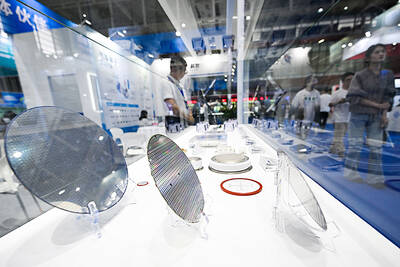
Two Chinese chipmakers are attracting strong retail investor demand, buoyed by industry peer Moore Threads Technology Co’s (摩爾線程) stellar debut. The retail portion of MetaX Integrated Circuits (Shanghai) Co’s (上海沐曦) upcoming initial public offering (IPO) was 2,986 times oversubscribed on Friday, according to a filing. Meanwhile, Beijing Onmicro Electronics Co (北京昂瑞微), which makes radio frequency chips, was 2,899 times oversubscribed on Friday, its filing showed. The bids coincided with Moore Threads’ trading debut, which surged 425 percent on Friday after raising 8 billion yuan (US$1.13 billion) on bets that the company could emerge as a viable local competitor to Nvidia


 RSS
RSS