


US President Donald Trump on Tuesday said that he wants to avoid policies that make it difficult for other countries to do business with the US — even as his administration has done precisely the opposite.
Trump has imposed tariffs on billions of US dollars in goods and launched disputes with most key US trading partners over the past three years, but in a lengthy Twitter post, the president said: “We don’t want to make it impossible to do business with us. That will only mean that orders will go to someplace else.”
“The United States cannot, & will not, become such a difficult place to deal with in terms of foreign countries buying our product, including for the always used National Security excuse, that our companies will be forced to leave in order to remain competitive,” he tweeted.
Trump appeared to be directing his tweets at hardliners in his administration, referring to a proposal to block General Electric Co (GE) from selling jet engines to China.
“I want China to buy our jet engines, the best in the World,” he wrote. “I have seen some of the regulations being circulated... and they are ridiculous.”
US officials are considering denying a license to CFM International SA, a joint venture between GE and France’s Safran SA, to export more of its jet engines to China, the Wall Street Journal said in a report over the weekend, citing people familiar with the discussions.
China is using the engines to develop its own airliner, Commercial Aircraft Corp of China Ltd’s (COMAC, 中國商飛) C919, to compete with Boeing Co and Airbus SE.
The Journal said that US officials worry that Beijing could reverse-engineer the engine and enter the engine market.
Another goal of the US proposal reportedly is to slow development of the COMAC airliner.
GE said that it has provided products and services globally for decades.
“We aggressively protect and defend our intellectual property and work closely with the US government to fulfill our responsibilities and shared security and economic interests,” the Boston-based company said.
The episode marks the latest example of the administration’s often-chaotic approach to policymaking, with the president publicly and unexpectedly weighing in on ongoing deliberations, leaving businesses confused over where US policy is headed.
“Uncertainty is death to trade,” former US Department of Commerce official Kevin Wolf, who is now a partner at the Akin Gump law firm, said at a conference on Tuesday on US export controls, where the president’s tweets caused a stir.
The US Department of Commerce declined to comment. The White House did not immediately respond to requests for comment.
Additional reporting by AP
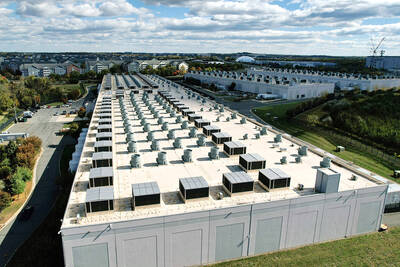
The demise of the coal industry left the US’ Appalachian region in tatters, with lost jobs, spoiled water and countless kilometers of abandoned underground mines. Now entrepreneurs are eyeing the rural region with ambitious visions to rebuild its economy by converting old mines into solar power systems and data centers that could help fuel the increasing power demands of the artificial intelligence (AI) boom. One such project is underway by a non-profit team calling itself Energy DELTA (Discovery, Education, Learning and Technology Accelerator) Lab, which is looking to develop energy sources on about 26,305 hectares of old coal land in
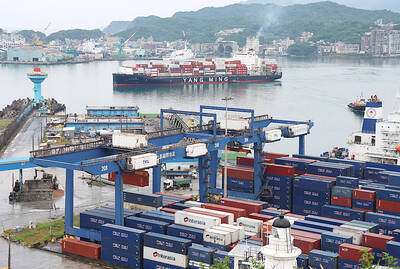
Taiwan’s exports soared 56 percent year-on-year to an all-time high of US$64.05 billion last month, propelled by surging global demand for artificial intelligence (AI), high-performance computing and cloud service infrastructure, the Ministry of Finance said yesterday. Department of Statistics Director-General Beatrice Tsai (蔡美娜) called the figure an unexpected upside surprise, citing a wave of technology orders from overseas customers alongside the usual year-end shopping season for technology products. Growth is likely to remain strong this month, she said, projecting a 40 percent to 45 percent expansion on an annual basis. The outperformance could prompt the Directorate-General of Budget, Accounting and
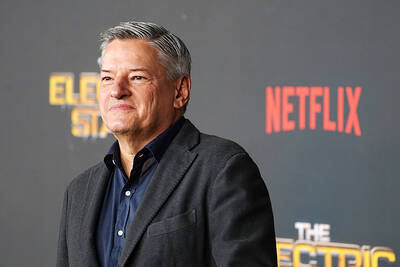
Netflix on Friday faced fierce criticism over its blockbuster deal to acquire Warner Bros Discovery. The streaming giant is already viewed as a pariah in some Hollywood circles, largely due to its reluctance to release content in theaters and its disruption of traditional industry practices. As Netflix emerged as the likely winning bidder for Warner Bros — the studio behind Casablanca, the Harry Potter movies and Friends — Hollywood’s elite launched an aggressive campaign against the acquisition. Titanic director James Cameron called the buyout a “disaster,” while a group of prominent producers are lobbying US Congress to oppose the deal,

Two Chinese chipmakers are attracting strong retail investor demand, buoyed by industry peer Moore Threads Technology Co’s (摩爾線程) stellar debut. The retail portion of MetaX Integrated Circuits (Shanghai) Co’s (上海沐曦) upcoming initial public offering (IPO) was 2,986 times oversubscribed on Friday, according to a filing. Meanwhile, Beijing Onmicro Electronics Co (北京昂瑞微), which makes radio frequency chips, was 2,899 times oversubscribed on Friday, its filing showed. The bids coincided with Moore Threads’ trading debut, which surged 425 percent on Friday after raising 8 billion yuan (US$1.13 billion) on bets that the company could emerge as a viable local competitor to Nvidia


 RSS
RSS