


Gross output from the domestic manufacturing sector took another heavy hit last quarter as it contracted 6.6 percent year-on-year to NT$3.37 trillion (US$111.77 billion), data released yesterday by the Ministry of Economic Affairs showed.
Traditional manufacturing industries were the primary drivers of the sector’s decline, as they continue to face dwindling market demand due to flailing raw material prices, the ministry said.
“Many of our traditional manufacturers are very dependent on overseas sales, which in turn are tied closely to the global economic outlook,” Department of Statistics Deputy Director-General Wang Shu-chuan (王淑娟) said by telephone, adding that a US-China trade dispute last year cast a pall over worldwide market demand.
For example, the chemical materials and machinery equipment industries exported about 47 percent and 62 percent respectively of their goods abroad, Wang said, adding that the two industries saw their gross output drop 21.55 percent and 13.49 percent year-on-year last quarter to NT$381.7 billion and NT$161.8 billion.
“And now traditional manufacturers are confronted by a spreading coronavirus [COVID-19] that’s dampening business sentiment,” Wang said.
The base metal industry last quarter declined 15.76 percent in gross output to NT$320.5 billion, but the sector perform better this quarter, as the government plans to launch large construction projects this year, she said.
“We are also betting on the offshore wind industry, which would stimulate market demand for machine equipment, among other products,” Wang said, adding that Taiwanese companies relocating their production to Taiwan would also drive up demand for machinery equipment.
In contrast, the auto and auto parts industries reported that gross output grew 7.73 percent to NT$95.7 billion last quarter, ending eight consecutive quarters of annual declines, which the ministry attributed to healthy sales of small family vehicles ahead of the Lunar New Year holiday and the popularity of newly launched models.
In the tech sector, gross output from the electronics components industry declined 4.14 percent to NT$953.6 billion, dragged down by shrinking market demand for LCD panels and ICs.
The market for LCD panels also remains oversaturated, resulting in price cuts and a decrease in production of flat panels, color filters and other related products, it said.
“However, the computer, electronic goods and optical components industry has seen tremendous growth, and we hope the momentum will continue this quarter, as companies have shown little intention of slowing production,” Wang said.
Those sector’s gross output surged 17.95 percent to NT$214 billion, thanks to production expansion by returning companies.
The ministry maintains an optimistic outlook regarding all of Taiwan’s tech industry, because of the upcoming deployment of 5G technologies and a trend toward using multi-camera lenses in smartphones.
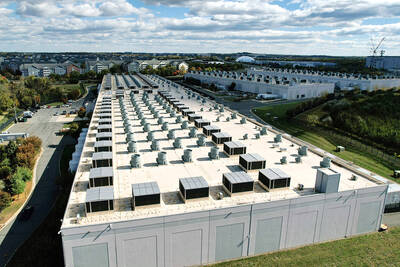
The demise of the coal industry left the US’ Appalachian region in tatters, with lost jobs, spoiled water and countless kilometers of abandoned underground mines. Now entrepreneurs are eyeing the rural region with ambitious visions to rebuild its economy by converting old mines into solar power systems and data centers that could help fuel the increasing power demands of the artificial intelligence (AI) boom. One such project is underway by a non-profit team calling itself Energy DELTA (Discovery, Education, Learning and Technology Accelerator) Lab, which is looking to develop energy sources on about 26,305 hectares of old coal land in
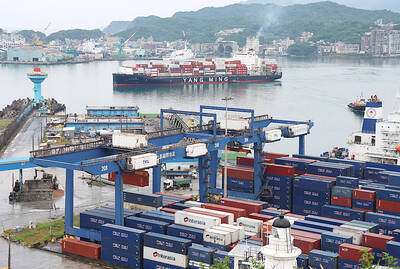
Taiwan’s exports soared 56 percent year-on-year to an all-time high of US$64.05 billion last month, propelled by surging global demand for artificial intelligence (AI), high-performance computing and cloud service infrastructure, the Ministry of Finance said yesterday. Department of Statistics Director-General Beatrice Tsai (蔡美娜) called the figure an unexpected upside surprise, citing a wave of technology orders from overseas customers alongside the usual year-end shopping season for technology products. Growth is likely to remain strong this month, she said, projecting a 40 percent to 45 percent expansion on an annual basis. The outperformance could prompt the Directorate-General of Budget, Accounting and

Netflix on Friday faced fierce criticism over its blockbuster deal to acquire Warner Bros Discovery. The streaming giant is already viewed as a pariah in some Hollywood circles, largely due to its reluctance to release content in theaters and its disruption of traditional industry practices. As Netflix emerged as the likely winning bidder for Warner Bros — the studio behind Casablanca, the Harry Potter movies and Friends — Hollywood’s elite launched an aggressive campaign against the acquisition. Titanic director James Cameron called the buyout a “disaster,” while a group of prominent producers are lobbying US Congress to oppose the deal,

Two Chinese chipmakers are attracting strong retail investor demand, buoyed by industry peer Moore Threads Technology Co’s (摩爾線程) stellar debut. The retail portion of MetaX Integrated Circuits (Shanghai) Co’s (上海沐曦) upcoming initial public offering (IPO) was 2,986 times oversubscribed on Friday, according to a filing. Meanwhile, Beijing Onmicro Electronics Co (北京昂瑞微), which makes radio frequency chips, was 2,899 times oversubscribed on Friday, its filing showed. The bids coincided with Moore Threads’ trading debut, which surged 425 percent on Friday after raising 8 billion yuan (US$1.13 billion) on bets that the company could emerge as a viable local competitor to Nvidia


 RSS
RSS