


Deep in rural western Zimbabwe, where paved roads are nonexistent, Japhet Ngwenya used to spend every season worrying that the people who advise him on how to protect his crops from dry spells and pest invasions would not be able to reach him.
Ngwenya’s farm — in Ntabazinduna, 40km north of Bulawayo — is so remote that he can go a year or more without seeing the agriculture extension officers who are sent by local charities to assist small-scale farmers like him.
“It has always been difficult to get expert advice. There are no proper access roads here and you drive this far at your car’s peril,” he told the Thomson Reuters Foundation as he readied his fields for a crop of corn, tomatoes and cabbages.
Then, last year, two extension officers from the Turning Matabeleland Green (TMG) consortium managed to make their way to Ngwenya’s farm to show him their solution: climate and crop information collected by satellite and sent to farmers’ cellphones.
Zimbabwe has been slow to embrace satellite-based systems for its agricultural sector, but now the country is seeing the benefits of using the technology to help farmers adapt to the impact of climate change, agricultural experts have said.
More than 7 million people work as communal or small-scale farmers, UN Food and Agriculture Organization data showed.
Many still rely on traditional weather-predicting systems and occasional visits by on-the-ground extension officers to get crucial information and advice.
However, using satellite data, groups like TMG can access weather information that is more accurate than the general forecasts supplied by the meteorological department, said Lwazi Mlilo, an agronomist working with TMG.
With mobile phone technology, they can get that information to farmers faster than they would by sending people out to hard-to-reach farms, he added.
Mlilo showed Ngwenya how extension officers can look at the farmer’s 27 hectare holding on Google Maps and combine that with satellite data available online to track everything from weather patterns to the health of crops.
“I can monitor the activity on your farm from my office. We do not need to come here to check the progress of your crops,” he told the visibly awed farmer.
Experts might then advise farmers in the low-rainfall Matabeleland region on what seeds to plant and which techniques to use to keep their crops thriving, Mlilo said.
As most rural farmers in Zimbabwe have no Internet connection — many have no electricity at all — TMG communicates with them via short message service, he told the Thomson Reuters Foundation.
The organization can quickly tell farmers if a plot in their area has suffered a pest invasion or send out warnings about sudden changes in climate conditions to all the farmers in a particular area at once, he said.
“Farming is not as tough as some imagine — as long as one has access to relevant, up-to-date knowledge, especially now with new technologies,” Mlilo said.
About 2,000 small-scale farmers have joined the project since it launched last year, he said.
Approximately 80 percent of Zimbabwe’s rural people depend on rain-fed agriculture for a living, making them highly vulnerable to more extreme weather associated with climate change, agricultural experts have said.
Last year, the UN agency said that satellite data had the potential to help Africa’s farmers “be better prepared for drought and increase agricultural production with less water use.”
Much of the satellite-based information that TMG uses to craft advice it sends to small-scale farmers comes from a new database launched in Zimbabwe in September last year.
It was built through collaboration between the Chinese Academy of Sciences and the University of Zimbabwe, with information collected by high-resolution satellites.
It provides highly detailed information that enables experts to follow the effects of climate change across the country, backers said.
A year earlier, the government launched the Zimbabwe National Geospatial and Space Agency, made up of five departments focused on encouraging the country’s economic and social development.
Both projects use satellite technology for crop surveillance, drought monitoring, tracking soil conditions and documenting the most effective use of water, among other things.
All of that information can be relayed to farmers to help them use their resources most efficiently and safeguard their crops against drought, Zimbabwean Ministry of Lands, Agriculture, Water, Climate and Rural Resettlement principal climate researcher Elisha Moyo said.
“The use of satellite technology is encouraged as an early warning strategy,” he said.
The goal is to improve farming yields and shore up food security in a country where, during times of peak production, up to 80 percent of staple corn is grown by small-scale farmers, government data showed.
Zimbabwean Deputy Minister of Lands, Agriculture, Water, Climate and Rural Resettlement Vangelis Haritatos said that he is confident satellite technology would help farmers adapt to the country’s shifting climate.
“I definitely believe technological interventions will have a great impact on food production and food security as a whole for our nation,” he told the Thomson Reuters Foundation.
For many of Zimbabwe’s long-struggling farmers, the move to satellite data and other modern technology offers hope that they might break the cycle of poor harvests.
Ngwenya said that he is willing to try anything that might help.
“What we really need is rain,” he said. “But we will certainly appreciate anything that will bring us relief.”
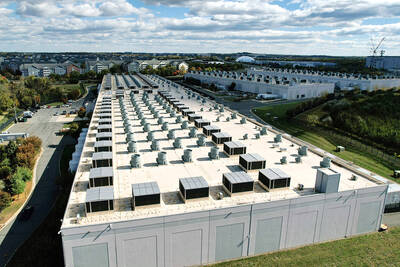
The demise of the coal industry left the US’ Appalachian region in tatters, with lost jobs, spoiled water and countless kilometers of abandoned underground mines. Now entrepreneurs are eyeing the rural region with ambitious visions to rebuild its economy by converting old mines into solar power systems and data centers that could help fuel the increasing power demands of the artificial intelligence (AI) boom. One such project is underway by a non-profit team calling itself Energy DELTA (Discovery, Education, Learning and Technology Accelerator) Lab, which is looking to develop energy sources on about 26,305 hectares of old coal land in
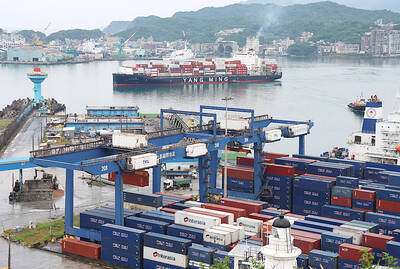
Taiwan’s exports soared 56 percent year-on-year to an all-time high of US$64.05 billion last month, propelled by surging global demand for artificial intelligence (AI), high-performance computing and cloud service infrastructure, the Ministry of Finance said yesterday. Department of Statistics Director-General Beatrice Tsai (蔡美娜) called the figure an unexpected upside surprise, citing a wave of technology orders from overseas customers alongside the usual year-end shopping season for technology products. Growth is likely to remain strong this month, she said, projecting a 40 percent to 45 percent expansion on an annual basis. The outperformance could prompt the Directorate-General of Budget, Accounting and

Netflix on Friday faced fierce criticism over its blockbuster deal to acquire Warner Bros Discovery. The streaming giant is already viewed as a pariah in some Hollywood circles, largely due to its reluctance to release content in theaters and its disruption of traditional industry practices. As Netflix emerged as the likely winning bidder for Warner Bros — the studio behind Casablanca, the Harry Potter movies and Friends — Hollywood’s elite launched an aggressive campaign against the acquisition. Titanic director James Cameron called the buyout a “disaster,” while a group of prominent producers are lobbying US Congress to oppose the deal,

Two Chinese chipmakers are attracting strong retail investor demand, buoyed by industry peer Moore Threads Technology Co’s (摩爾線程) stellar debut. The retail portion of MetaX Integrated Circuits (Shanghai) Co’s (上海沐曦) upcoming initial public offering (IPO) was 2,986 times oversubscribed on Friday, according to a filing. Meanwhile, Beijing Onmicro Electronics Co (北京昂瑞微), which makes radio frequency chips, was 2,899 times oversubscribed on Friday, its filing showed. The bids coincided with Moore Threads’ trading debut, which surged 425 percent on Friday after raising 8 billion yuan (US$1.13 billion) on bets that the company could emerge as a viable local competitor to Nvidia


 RSS
RSS