


China’s financial markets reopened to a battering yesterday. A gauge of the nation’s stocks plunged almost 8 percent, commodity futures from iron ore to crude oil sank by the daily limit, and the yuan weakened past a key level against the US dollar.
Officials tried to ward off panic selling before trading resumed through injections of liquidity into the money market, cutting borrowing rates, restricting some selling by brokerages and appealing for calm.
All to little avail. Spooked by the mounting death toll from the coronavirus and China’s drastic efforts to contain it — two-thirds of the economy remains shut down this week — investors ran for the exits.
It was the first chance mainland investors had since Jan. 23 to trade, due to the extended Lunar New Year break. Many stocks immediately fell by the 10 percent daily limit — almost 3,500 at the last count. While the longevity and scale of the outbreak remain hard to predict, there is little doubt it will have a major effect on the world’s second-largest economy, at least in the short term.
“The pandemic is not something that will only impact the market for just a few days, it’ll last for a while,” China Vision Capital Management Co (中國華新資本管理) president Sun Jianbo (孫建波) said in Beijing.
The effects were felt across the nation’s markets. China’s benchmark iron ore contract declined by its daily limit of 8 percent, while crude and palm oil also sank by the maximum allowed. The yield on China’s most actively traded 10-year government bonds dropped the most since 2014. The yuan tumbled more than 1 percent to weaken past 7 yuan per US dollar.
The CSI 300 Index of companies listed in Shanghai and Shenzhen closed 7.9 percent lower after falling as much as 9.1 percent. The Shanghai Composite Index shed 7.72 percent, or 229.92 points, to 2,746.61 and the Shenzhen Composite Index dropped 8.41 percent, or 147.81 points, to 1,609.00.
Firms linked to tourism and travel were among the worst hit, with energy, telecoms and tech companies also well down, while more than 2,600 stocks fell by their daily 10 percent limit.
“It is really hard to trade stocks,” Beijing WanDeFu Investment Management Co (北京萬得富投資管理) chairman Li Shuwei (李樹偉) said. “It’s impossible to predict how this disease will develop. Even the experts have no clear idea when the outbreak will end, let alone stock traders. It’s too early to buy stocks right now and it’s also difficult to sell as all shares are limit down. So I will just have to wait and see.”
The death toll from the virus has now topped 360, with more than 17,000 confirmed cases in the country.
China’s central bank yesterday unexpectedly lowered the interest rates on reverse repurchase agreements by 10 basis points, with the authorities seeking to ensure ample liquidity as the outbreak’s effect intensifies.
The People’s Bank of China said on its Web site that it was lowering the seven-day reverse repo rate to 2.4 percent from 2.5 percent, and cutting the 14-day tenor to 2.55 percent from 2.65 percent.
The China Securities Regulatory Commission also told some brokerages that their proprietary traders are not allowed to be net sellers of equities this week, people familiar with the matter said.
Yesterday, brokerages were only allowed to sell to meet redemptions by investors, the people said.
In addition, the commission suspended securities lending, one of the few short selling tools available in China, until further notice, the people said.
There was red on the boards elsewhere in Asia. Tokyo was 1 percent lower, while Sydney, Singapore, Wellington and Taipei all shed more than 1 percent. Jakarta lost 0.6 percent, Bangkok dropped 0.3 percent, Manila eased 0.6 percent and Seoul was flat.
However, Hong Kong edged up after losing almost 6 percent in three days last week, while Mumbai also rose slightly.
Additional reporting by AFP
Taiwan Semiconductor Manufacturing Co (TSMC, 台積電) yesterday reported record revenue of NT$416.975 billion (US$13.17 billion) for last month, putting the world’s largest contract chipmaker on track to set a record for quarterly revenue. Last month’s figure surpassed March’s record NT$415.19 billion and represented increases of 1.5 percent from April and 30.1 percent from a year earlier. For the first five months of the year, TSMC generated NT$1.96 trillion in revenue, up 30 percent year-on-year, it said in a statement. TSMC has forecast second-quarter revenue of between US$39 billion and US$40.2 billion, representing sequential growth of about 10 percent and year-on-year growth of about

Infineon Technologies AG is preparing to open its largest single investment, a 5 billion euro (US$5.8 billion) semiconductor factory built with the help of EU subsidies, as the bloc seeks to boost chip production. The power chip fab, which is an extension of the German company’s Dresden campus, is scheduled to open on July 2, Infineon chief operating officer Alexander Gorski said this week at the site. The project is a major recipient of EU Chips Act funds, receiving about 1 billion euros in subsidies. The new plant represents a rare success for the bloc’s flagship semiconductor law, which was drawn up during
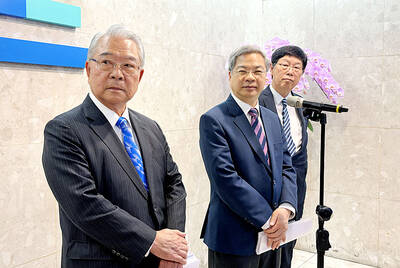
PATENT PROBE: US lawmakers called for a ban on imports of chips made by TSMC if they are found to infringe on US patents, with a preliminary ruling expected soon Minister of Economic Affairs Kung Ming-hsin (龔明鑫) yesterday expressed confidence in Taiwan Semiconductor Manufacturing Co’s (TSMC, 台積電) compliance with patent regulations after reports linked the company to a patent infringement lawsuit in the US. US Representative Ryan Zinke, and US senators Tim Sheehy, Roger Marshall and Bernie Moreno urged the US International Trade Commission in a May 22 letter to ban imports of chips made by TSMC if they are found to infringe on US patents, Axios reported on Wednesday. An administrative law judge is expected to issue a preliminary ruling this month, with the commission potentially making a final decision in
Taiwan remained the sixth-largest net creditor nation in the world last year, despite a fall of more than 10 percent in its net international investment position (NIIP) over the year, the central bank said yesterday. The NIIP is the difference between a country’s external financial assets and its external financial liabilities. Taiwan’s external financial assets hit US$3.27 trillion at the end of last year, up US$275.75 billion or 9.2 percent from a year earlier, the central bank said in its annual NIIP report. The growth largely reflected an increase in holdings of overseas marketable securities by residents in Taiwan, as well as a


 RSS
RSS