


Oil is off to the worst start to a year since 1991, last month tumbling 16 percent on concern that the spread of a coronavirus in China will curb demand for transportation fuels.
Futures on Friday fell 1.1 percent in New York, capping the worst month since May last year as investors were rattled by the fear of demand destruction after the WHO declared the outbreak a global health emergency.
The US Centers for Disease Control and Prevention called the virus an unprecedented public health threat.
“People are looking at the continued rise in cases and how that’s impacting jet fuel and has made those demand fears worse,” KeyBanc Capital Markets Inc energy analyst Leo Mariani said. “It’s going to take the virus not being a persistent event and for global demand to show signs of improvement in order to stabilize.”
China, the world’s second-largest economy and key driver of oil demand, resorted to unprecedented measures to slow the outbreak, including extending the Lunar New Year holiday and a lockdown in major cities and provinces.
At least two-thirds of China’s economy is to stay shut next week, as residents are being told not to return to work or school and to avoid congregating in public places.
The plunge in oil prices has prompted a push led by Saudi Arabia for OPEC and its allies to hold an emergency session this month, with Russia on Friday signaling for the first time it was open to holding the meeting earlier.
The coalition is considering a proposal to deepen production curbs by about 500,000 barrels per day, although there has been no consensus on the idea, consultant Energy Aspects Ltd said.
As the oil producer group and its partners, a 23-nation coalition known as OPEC+, last year already made steep cutbacks, analysts have been skeptical on how much more they are willing to do.
“This virus is requiring more out of the group as the demand picture gets weaker,” CIBC Private Wealth Management senior equity trader Rebecca Babin said.
West Texas Intermediate crude for delivery next month fell US$0.58 to settle at US$51.56 per barrel on the New York Mercantile Exchange, after sliding as much as 2.2 percent during the session.
Brent for delivery next month, which expired on Friday, lost US$0.13 to US$58.16 per barrel on the London-based ICE Futures Europe exchange and sank 12 percent last month. The more active April contract slid US$0.71 to US$56.62 per barrel, US$4.94 per barrel more than West Texas Intermediate for that month.
In addition to the drop in outright prices, the market’s structure showed further signs of the malaise.
April Brent’s premium over May contracts fell by about more than one-third to just US$0.20 per barrel.
The December 2020-December 2021 spread, a closely watched indicator of the market’s strength, shrank US$0.70 per barrel, the lowest since the end of October last year. On Jan. 6, it closed at US$4.05.
In other energy trading, wholesale gasoline was unchanged at US$1.49 per gallon and heating oil declined US$0.01 to US$1.63 per gallon, while natural gas rose US$0.01 to US$1.84 per 1,000 cubic feet.
Gold fell US$0.60 to US$1,582.90 per ounce and silver rose US$0.02 to US$17.97 per ounce, while copper was unchanged at US$2.52 per pound, but it was down 6.4 percent for the week.
Copper is widely used in manufacturing and is often seen as an indicator of how that sector is doing.
Additional reporting by AP
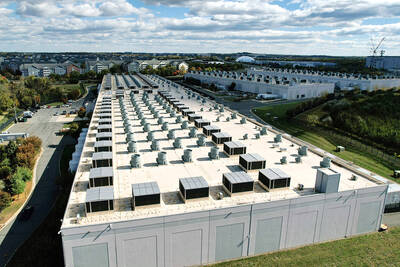
The demise of the coal industry left the US’ Appalachian region in tatters, with lost jobs, spoiled water and countless kilometers of abandoned underground mines. Now entrepreneurs are eyeing the rural region with ambitious visions to rebuild its economy by converting old mines into solar power systems and data centers that could help fuel the increasing power demands of the artificial intelligence (AI) boom. One such project is underway by a non-profit team calling itself Energy DELTA (Discovery, Education, Learning and Technology Accelerator) Lab, which is looking to develop energy sources on about 26,305 hectares of old coal land in
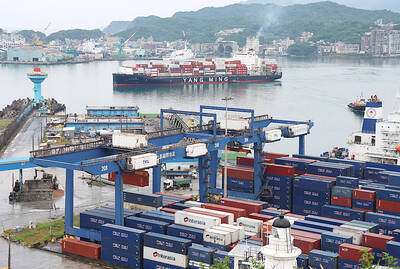
Taiwan’s exports soared 56 percent year-on-year to an all-time high of US$64.05 billion last month, propelled by surging global demand for artificial intelligence (AI), high-performance computing and cloud service infrastructure, the Ministry of Finance said yesterday. Department of Statistics Director-General Beatrice Tsai (蔡美娜) called the figure an unexpected upside surprise, citing a wave of technology orders from overseas customers alongside the usual year-end shopping season for technology products. Growth is likely to remain strong this month, she said, projecting a 40 percent to 45 percent expansion on an annual basis. The outperformance could prompt the Directorate-General of Budget, Accounting and

Netflix on Friday faced fierce criticism over its blockbuster deal to acquire Warner Bros Discovery. The streaming giant is already viewed as a pariah in some Hollywood circles, largely due to its reluctance to release content in theaters and its disruption of traditional industry practices. As Netflix emerged as the likely winning bidder for Warner Bros — the studio behind Casablanca, the Harry Potter movies and Friends — Hollywood’s elite launched an aggressive campaign against the acquisition. Titanic director James Cameron called the buyout a “disaster,” while a group of prominent producers are lobbying US Congress to oppose the deal,

Two Chinese chipmakers are attracting strong retail investor demand, buoyed by industry peer Moore Threads Technology Co’s (摩爾線程) stellar debut. The retail portion of MetaX Integrated Circuits (Shanghai) Co’s (上海沐曦) upcoming initial public offering (IPO) was 2,986 times oversubscribed on Friday, according to a filing. Meanwhile, Beijing Onmicro Electronics Co (北京昂瑞微), which makes radio frequency chips, was 2,899 times oversubscribed on Friday, its filing showed. The bids coincided with Moore Threads’ trading debut, which surged 425 percent on Friday after raising 8 billion yuan (US$1.13 billion) on bets that the company could emerge as a viable local competitor to Nvidia


 RSS
RSS