


US Secretary of Commerce Wilbur Ross on Thursday suggested that a new coronavirus outbreak in China might offer an unexpected benefit for the US economy: It could encourage US manufacturers in China to return home.
“I think it will help to accelerate the return of jobs to North America. Some to US, probably some to Mexico as well,” Ross told Fox Business Network.
Novel coronavirus 2019 (2019-nCoV) has paralyzed business in China. The industrial hub of Wuhan and other Chinese cities are on lockdown.
The crisis has also begun to ripple through US companies with operations in China.
Apple Inc CEO Tim Cook has said that the company’s suppliers in China have been forced to delay reopening factories that closed for the Lunar New Year holiday. More than half of Starbucks’ stores in China are now closed. McDonald’s has closed several hundred restaurants in China.
Ross said that he did not “want to talk about a victory lap over a very unfortunate, very malignant disease.”
However, he added: “The fact is, it does give businesses yet another thing to consider when they go through their review of their supply chain.”
Even before the 2019-nCoV outbreak, many US and other foreign companies had been rethinking their presence in China and considering their options for relocating elsewhere, possibly elsewhere in Asia.
That is partly because US President Donald Trump has imposed tariffs on US$360 billion of Chinese imports in a dispute over Beijing’s economic policies, and partly because Chinese labor and other costs have been rising.
However, skeptics doubt that many US companies with deep roots in China might abandon the country purely over the virus.
For one thing, no one knows how long the viral outbreak would last or how much damage it might inflict, and it takes significant time for companies to choose suppliers or locations for their factories.
Rosemary Coates, whose Blue Silk Consulting firm helps companies make such decisions, said it was “ridiculous” to think the viral outbreak would result in a significant return of business to the US.
“You can’t snap your fingers,” she said. “It can take 18 months or two years to find another supplier. It isn’t easy. It’s complicated.”
Wuhan, a center of China’s steel industry, has attracted General Motors Co and many other foreign manufacturing giants.
“You can’t just say General Motors is going to pick up and move away,” Coates said. “They have a manufacturing plant there and expertise there. Their supply chain runs through there.”
US direct investment in China, which includes factories, continued to rise even after the SARS outbreak disrupted the Chinese economy in 2003. Moreover, labor costs would continue to remain far higher in the US than in China and other Asian countries such as Vietnam.
“Companies that are leaving China are not coming to the US,” said Coates, who is also executive director of the Reshoring Institute, a nonprofit that researches issues surrounding corporate decisions on whether to return to the US.
“They’re going to other Asian countries .... If low cost is the only goal, then the US is not the answer,” she said.
After Ross’ comments drew criticism, the commerce department issued a statement: “As Secretary Ross made clear, the first step is to bring the virus under control and help the victims of this disease.”
“It is also important to consider the ramifications of doing business with a country that has a long history of covering up real risks to its own people and the rest of the world,” it said.
Asked about Ross’ comments, Larry Kudlow, Trump’s top economic adviser, declined to endorse the notion that the US economy stands to benefit from China’s health crisis.
“This is not about trade, jobs or any of that,” Kudlow told reporters.
“The president has a lot of compassion for the Chinese situation. The threat of large numbers of people dying is a terrible thing. We just want to help,” he added.
Shares of contract chipmaker Taiwan Semiconductor Manufacturing Co (TSMC, 台積電) came under pressure yesterday after a report that Apple Inc is looking to shift some orders from the Taiwanese company to Intel Corp. TSMC shares fell NT$55, or 2.4 percent, to close at NT$2,235 on the local main board, Taiwan Stock Exchange data showed. Despite the losses, TSMC is expected to continue to benefit from sound fundamentals, as it maintains a lead over its peers in high-end process development, analysts said. “The selling was a knee-jerk reaction to an Intel-Apple report over the weekend,” Mega International Investment Services Corp (兆豐國際投顧) analyst Alex Huang
Taiwan Semiconductor Manufacturing Co (TSMC, 台積電) is expected to remain Apple Inc’s primary chip manufacturing partner despite reports that Apple could shift some orders to Intel Corp, industry experts said yesterday. The comments came after The Wall Street Journal reported on Friday that Apple and Intel had reached a preliminary agreement following more than a year of negotiations for Intel to manufacture some chips for Apple devices. Taiwan Institute of Economic Research (台灣經濟研究院) economist Arisa Liu (劉佩真) said TSMC’s advanced packaging technologies, including integrated fan-out and chip-on-wafer-on-substrate, remain critical to the performance of Apple’s A-series and M-series chips. She said Intel and Samsung
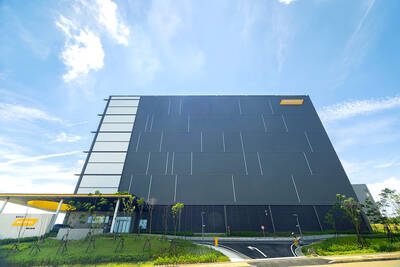
POWER BUILDUP: Powered by Nvidia’s B200 Blackwell chips, the data center would support MediaTek’s computing power demand and business growth, the company said Smartphone chip designer MediaTek Inc (聯發科) yesterday launched a new artificial intelligence (AI) data center with a maximum capacity of 45 megawatts to meet its rising demand for computing power required to develop new advanced chips for AI applications. The company has completed the first-phase computing power buildup at the data center in Miaoli County’s Tongluo Township (銅鑼), providing 15 megawatts of capacity to support its research and development (R&D) capabilities, despite an industrywide shortage of key components, MediaTek said. Supply constraints have plagued a wide range of key components, including memory chips, solid-state drives, power supply units and central
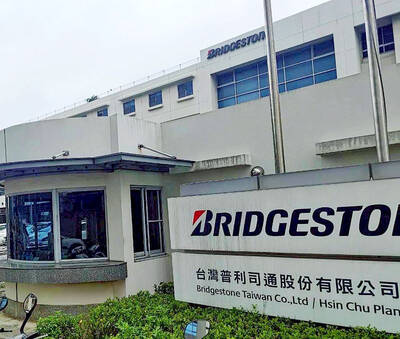
TRANSITION: With the closure, the company would reorganize its Taiwanese unit to a sales and service-focused model, Bridgestone said Bridgestone Corp yesterday announced it would cease manufacturing operations at its tire plant in Hsinchu County’s Hukou Township (湖口), affecting more than 500 workers. Bridgestone Taiwan Co (台灣普利司通) said in a statement that the decision was based on the Tokyo-based tire maker’s adjustments to its global operational strategy and long-term market development considerations. The Taiwanese unit would be reorganized as part of the closure, effective yesterday, and all related production activities would be concluded, the statement said. Under the plan, Bridgestone would continue to deepen its presence in the Taiwanese market, while transitioning to a sales and service-focused business model, it added. The Hsinchu


 RSS
RSS