


A General Motors Co (GM) manufacturing plant that was set to close would instead get a new life producing electric trucks and sports utility vehicles (SUVs), the company announced on Monday
The US auto giant in 2018 announced a massive restructuring, which would have slashed 15 percent of its workforce to save US$6 billion, a move criticized by US President Donald Trump as “nasty” because it would have required shuttering several manufacturing facilities in North America.
The Detroit-Hamtramck assembly plant in Michigan was scheduled to close as part of that plan, but would now get an overhaul and start producing two new electric vehicles (EVs) starting late next year: a pickup truck and the Cruise Origin autonomous shuttle vehicle, the company announced.

Photo: Bloomberg
“Our electric vehicle plan is unmatched in the industry,” GM president Mark Reuss said at a news conference in Detroit. “Hamtramck will be GM’s first dedicated all EV assembly plant.”
GM is investing US$2.2 billion in the plant, along with US$800 million in projects related to the new model, the company said in a statement.
The new configuration will employ more than 2,200 people when it is fully operational at the end of 2022, after the construction of a new paint shop and the addition of modern assembly line equipment, the company said.
The plant, which opened in 1985 and employs about 900 workers, would be idled for several months beginning at the end of next month as the renovations begin, with most workers transferred to other GM plants.
GM’s decision to keep Hamtramck open came after the company announced in 2017 it would launch 20 EV models by 2023 as part of a push for an “all-electric” fleet amid demands from governments worldwide for greater automobile fuel efficiency.
However, the company has also faced political pressure, including from Trump, who has not shied away from publicly berating companies to get them to commit to investing more and creating more US jobs.
The news on the plant would be especially welcome as Trump battles for re-election in November, when he hopes to repeat his upset 2016 election victory in Michigan, which is seen as crucial to him winning a second term.
Michigan politicians and labor unions also pushed against the plant’s closure, with Detroit Mayor Mike Duggan calling GM chief executive Mary Barra to plead the facility’s case.
“I did ask her: ‘Why can’t GM build new vehicles here?’” Barra said, adding that building the factory required more than 4,000 residents to move elsewhere.
Hampered by trade disputes, US manufacturing is in the midst of a recession, with production dropping 1.3 percent in the final months of last year, compared to a year prior, according to the US Federal Reserve.
General Motors reported a decline in US auto sales at the end of the fourth quarter, reflecting the lingering effect of a bruising 40-day strike by the United Auto Workers (UAW) that dented its vehicle inventory.
The labor union cheered the news that the plant would remain open.
“Over 2,200 jobs and a new technology product will deliver job security and a bright economic future for UAW members for decades to come at Hamtramck,” UAW vice president Terry Dittes said in a statement.
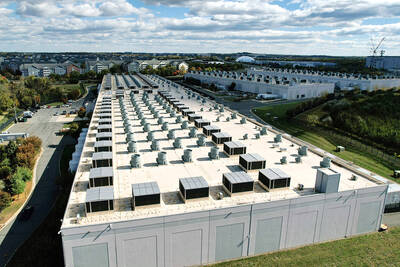
The demise of the coal industry left the US’ Appalachian region in tatters, with lost jobs, spoiled water and countless kilometers of abandoned underground mines. Now entrepreneurs are eyeing the rural region with ambitious visions to rebuild its economy by converting old mines into solar power systems and data centers that could help fuel the increasing power demands of the artificial intelligence (AI) boom. One such project is underway by a non-profit team calling itself Energy DELTA (Discovery, Education, Learning and Technology Accelerator) Lab, which is looking to develop energy sources on about 26,305 hectares of old coal land in

Taiwan’s exports soared 56 percent year-on-year to an all-time high of US$64.05 billion last month, propelled by surging global demand for artificial intelligence (AI), high-performance computing and cloud service infrastructure, the Ministry of Finance said yesterday. Department of Statistics Director-General Beatrice Tsai (蔡美娜) called the figure an unexpected upside surprise, citing a wave of technology orders from overseas customers alongside the usual year-end shopping season for technology products. Growth is likely to remain strong this month, she said, projecting a 40 percent to 45 percent expansion on an annual basis. The outperformance could prompt the Directorate-General of Budget, Accounting and

Netflix on Friday faced fierce criticism over its blockbuster deal to acquire Warner Bros Discovery. The streaming giant is already viewed as a pariah in some Hollywood circles, largely due to its reluctance to release content in theaters and its disruption of traditional industry practices. As Netflix emerged as the likely winning bidder for Warner Bros — the studio behind Casablanca, the Harry Potter movies and Friends — Hollywood’s elite launched an aggressive campaign against the acquisition. Titanic director James Cameron called the buyout a “disaster,” while a group of prominent producers are lobbying US Congress to oppose the deal,
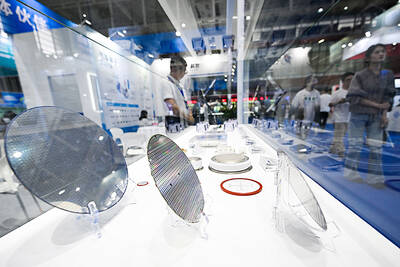
Two Chinese chipmakers are attracting strong retail investor demand, buoyed by industry peer Moore Threads Technology Co’s (摩爾線程) stellar debut. The retail portion of MetaX Integrated Circuits (Shanghai) Co’s (上海沐曦) upcoming initial public offering (IPO) was 2,986 times oversubscribed on Friday, according to a filing. Meanwhile, Beijing Onmicro Electronics Co (北京昂瑞微), which makes radio frequency chips, was 2,899 times oversubscribed on Friday, its filing showed. The bids coincided with Moore Threads’ trading debut, which surged 425 percent on Friday after raising 8 billion yuan (US$1.13 billion) on bets that the company could emerge as a viable local competitor to Nvidia


 RSS
RSS