


Facebook Inc and other global companies, including LG Electronics Inc and Standard Chartered PLC, are restricting travel to China, as the death toll from a novel coronavirus rose above 100 yesterday.
Airlines are also canceling flights and adjusting schedules as a growing number of countries raise travel warnings to not just Hubei Province, where the new coronavirus broke out, but also to the rest of China.
The US on Monday said that Americans should “reconsider” visiting all of China, while South Korea elevated its travel warning yesterday, advising its citizens to refrain from visiting China.
Facebook became the first major US company to announce a travel suspension after the US government’s warning.
The company asked employees to halt non-essential travel to China and told employees who had traveled there to work from home, a spokesman said yesterday.
“Out of an abundance of caution, we have taken steps to protect the health and safety of our employees,” the spokesman told reporters.
South Korean home appliances maker LG has put a complete ban on travel to China and has advised employees on business trips in the country to return home as quickly as possible, a company spokeswoman said.
South Korean chipmaker SK Hynix Inc said it was urging employees to avoid all non-essential travel to China, while banking group Standard Chartered restricted travel to China and Hong Kong.
In Germany, auto supplier Webasto Group, which has 11 sites in China, including Wuhan, has halted all corporate travel to and from China following the outbreak and the infection of an employee.
Japan’s Honda Motor Co Ltd said it recommended employees avoid travel to China, while Nissan Motor Co said it plans to evacuate its Japanese staff and their families in Wuhan via a government-chartered flight.
As companies reassessed the risk of travel to China, some airlines said demand for flights was falling and they were adjusting schedules.
South Korean budget carrier Air Seoul Inc said it would halt all flights to China, while China Airlines Ltd (中華航空) announced a further rescheduling of its flights to China from Friday to Feb. 10, canceling five flights and rearranging the schedules of others.
EVA Airways Corp (長榮航空) also said some flights to China might be canceled.
Germany’s Deutsche Lufthansa AG on Monday said that bookings for its flights to and from China were slightly subdued due to the outbreak.
Hong Kong’s Cathay Pacific Airways Ltd (國泰航空) said it was reducing overnight layovers for crew at all points in China as much as possible, resulting in some changes to its flight schedule.
International SOS, a medical and travel security services firm that advises companies on travel, said that its guidance for now is that business travel to China outside Hubei Province could continue.
However, this could be updated if there were major flight cancelations throughout China and more disruptions to ground transport, including rail, International SOS regional security director James Robertson said.
“Many of our clients have chosen to defer or cancel upcoming travel based on their own individual assessments,” Robertson said. “If people do choose to travel they need flexible itineraries accounting for extra time for temperature and health screenings.”
Global banks from Credit Suisse Group SA to Morgan Stanley are telling Hong Kong staff to work from home for two weeks if they have just visited mainland China.
UBS Group AG and Goldman Sachs Group Inc are among financial firms that have also imposed travel restrictions to mainland China.
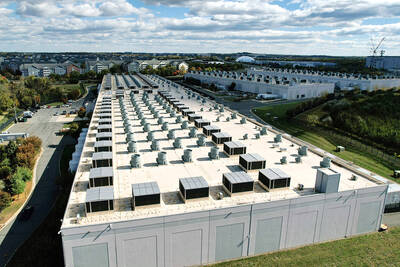
The demise of the coal industry left the US’ Appalachian region in tatters, with lost jobs, spoiled water and countless kilometers of abandoned underground mines. Now entrepreneurs are eyeing the rural region with ambitious visions to rebuild its economy by converting old mines into solar power systems and data centers that could help fuel the increasing power demands of the artificial intelligence (AI) boom. One such project is underway by a non-profit team calling itself Energy DELTA (Discovery, Education, Learning and Technology Accelerator) Lab, which is looking to develop energy sources on about 26,305 hectares of old coal land in
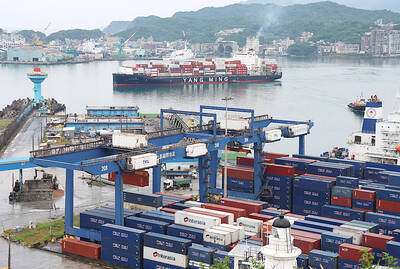
Taiwan’s exports soared 56 percent year-on-year to an all-time high of US$64.05 billion last month, propelled by surging global demand for artificial intelligence (AI), high-performance computing and cloud service infrastructure, the Ministry of Finance said yesterday. Department of Statistics Director-General Beatrice Tsai (蔡美娜) called the figure an unexpected upside surprise, citing a wave of technology orders from overseas customers alongside the usual year-end shopping season for technology products. Growth is likely to remain strong this month, she said, projecting a 40 percent to 45 percent expansion on an annual basis. The outperformance could prompt the Directorate-General of Budget, Accounting and

Netflix on Friday faced fierce criticism over its blockbuster deal to acquire Warner Bros Discovery. The streaming giant is already viewed as a pariah in some Hollywood circles, largely due to its reluctance to release content in theaters and its disruption of traditional industry practices. As Netflix emerged as the likely winning bidder for Warner Bros — the studio behind Casablanca, the Harry Potter movies and Friends — Hollywood’s elite launched an aggressive campaign against the acquisition. Titanic director James Cameron called the buyout a “disaster,” while a group of prominent producers are lobbying US Congress to oppose the deal,
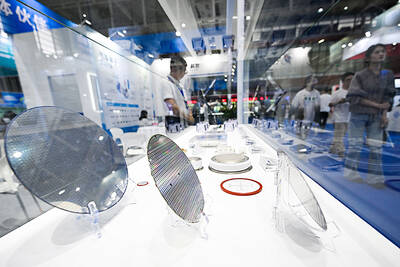
Two Chinese chipmakers are attracting strong retail investor demand, buoyed by industry peer Moore Threads Technology Co’s (摩爾線程) stellar debut. The retail portion of MetaX Integrated Circuits (Shanghai) Co’s (上海沐曦) upcoming initial public offering (IPO) was 2,986 times oversubscribed on Friday, according to a filing. Meanwhile, Beijing Onmicro Electronics Co (北京昂瑞微), which makes radio frequency chips, was 2,899 times oversubscribed on Friday, its filing showed. The bids coincided with Moore Threads’ trading debut, which surged 425 percent on Friday after raising 8 billion yuan (US$1.13 billion) on bets that the company could emerge as a viable local competitor to Nvidia


 RSS
RSS