


Apple Inc’s China-centric manufacturing base is at risk of disruption after the Lunar New Year holiday as the company’s partners confront the coronavirus outbreak that has gripped the country and caused more than 100 deaths.
Virtually all of the world’s iPhones are made in China, primarily by Hon Hai Precision Industry Co (鴻海精密) — known as Foxconn Technology Group (富士康科技集團) outside Taiwan — at its so-called iPhone City in Zhengzhou and by Pegatron Corp (和碩) at an assembly site near Shanghai.
Each of those locations is more than 500km from Wuhan in central China, the epicenter of the viral outbreak, but that distance does not immunize them from its effects.
“I can’t imagine a scenario where the supply chain isn’t disrupted,” said veteran industry analyst Patrick Moorhead of Moor Insights & Strategy. “If there’s one major hiccup in the raw materials, fabrication, assembly, test and shipping, it will be a disruption.”
Apple has been boosting production to meet higher-than-anticipated iPhone demand, Bloomberg News reported last week.
The company typically launches its new high-end iPhones around September, so the virus is unlikely to have meaningful effect on those plans, but the company is also preparing to begin mass production of a new, low-cost iPhone next month, which is more at risk.
Apple has about 10,000 direct employees in China, across its retail and corporate entities.
Its supply chain also has a few million workers manufacturing products such as the iPad, iPhone and Apple Watch.
Many of those employees have been home the past few days for the holiday and the company has not said if it is asking them to stay home for longer to prevent the virus from spreading.
Chinese authorities have imposed severe travel restrictions and taken the drastic step of quarantining the entire city of Wuhan, a population of more than 11 million.
“Supply chain disruption is a worry if employees across Foxconn and other component manufacturing hubs in China are restricted,” Wedbush Securities Inc analyst Dan Ives said.
“If the China outbreak becomes more spread it could negatively impact the supply chain, which would be a major investor worry,” Ives said.
An Apple spokeswoman declined a request for comment.
Hon Hai said it is monitoring the situation in China and following all recommended health practices.
It declined to comment on production in specific locations, but said: “We can confirm that we have measures in place to ensure that we can continue to meet all global manufacturing obligations.”
Confirmed cases of the coronavirus are rising in Henan Province — home to Zhengzhou facility — which might lead Hon Hai or the Chinese government to close factories to prevent further contamination, Bloomberg Intelligence analyst Matthew Kanterman wrote.
The province accounted for one-quarter of China’s smartphone exports last year, while China’s exports make up 27 percent of global smartphone sales, he said, citing government and International Data Corp data.
Apple prepares for extreme scenarios, such as the coronavirus, by mandating that major components be dual-sourced — both in terms of vendors and geography — and a major immediate effect to its production plans is unlikely for now, a person familiar with its operations said.
Even so, the vast majority of its assembly work is done in China, so a shortage of workers for assembly lines would have a direct effect on shipment numbers.
Investors and analysts would be looking to chief executive officer Tim Cook to comment on the virus and its effects on Apple during yesterday’s conference call to discuss the latest quarterly financial results.
Cook tweeted over the weekend that Apple “will be donating to groups on the ground helping support all of those affected” by the virus.
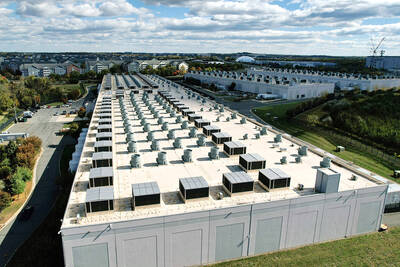
The demise of the coal industry left the US’ Appalachian region in tatters, with lost jobs, spoiled water and countless kilometers of abandoned underground mines. Now entrepreneurs are eyeing the rural region with ambitious visions to rebuild its economy by converting old mines into solar power systems and data centers that could help fuel the increasing power demands of the artificial intelligence (AI) boom. One such project is underway by a non-profit team calling itself Energy DELTA (Discovery, Education, Learning and Technology Accelerator) Lab, which is looking to develop energy sources on about 26,305 hectares of old coal land in
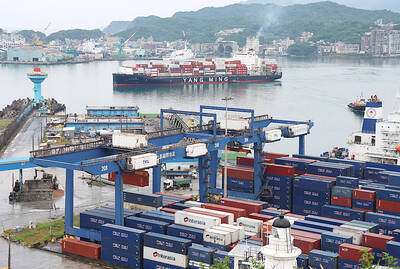
Taiwan’s exports soared 56 percent year-on-year to an all-time high of US$64.05 billion last month, propelled by surging global demand for artificial intelligence (AI), high-performance computing and cloud service infrastructure, the Ministry of Finance said yesterday. Department of Statistics Director-General Beatrice Tsai (蔡美娜) called the figure an unexpected upside surprise, citing a wave of technology orders from overseas customers alongside the usual year-end shopping season for technology products. Growth is likely to remain strong this month, she said, projecting a 40 percent to 45 percent expansion on an annual basis. The outperformance could prompt the Directorate-General of Budget, Accounting and

Netflix on Friday faced fierce criticism over its blockbuster deal to acquire Warner Bros Discovery. The streaming giant is already viewed as a pariah in some Hollywood circles, largely due to its reluctance to release content in theaters and its disruption of traditional industry practices. As Netflix emerged as the likely winning bidder for Warner Bros — the studio behind Casablanca, the Harry Potter movies and Friends — Hollywood’s elite launched an aggressive campaign against the acquisition. Titanic director James Cameron called the buyout a “disaster,” while a group of prominent producers are lobbying US Congress to oppose the deal,
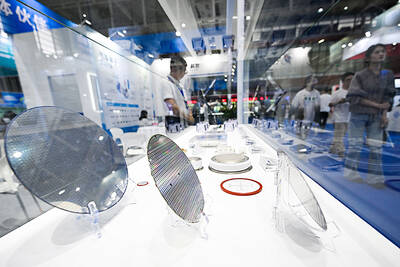
Two Chinese chipmakers are attracting strong retail investor demand, buoyed by industry peer Moore Threads Technology Co’s (摩爾線程) stellar debut. The retail portion of MetaX Integrated Circuits (Shanghai) Co’s (上海沐曦) upcoming initial public offering (IPO) was 2,986 times oversubscribed on Friday, according to a filing. Meanwhile, Beijing Onmicro Electronics Co (北京昂瑞微), which makes radio frequency chips, was 2,899 times oversubscribed on Friday, its filing showed. The bids coincided with Moore Threads’ trading debut, which surged 425 percent on Friday after raising 8 billion yuan (US$1.13 billion) on bets that the company could emerge as a viable local competitor to Nvidia


 RSS
RSS