


US President Donald Trump’s administration expanded its trademark steel and aluminum tariffs to cover certain imported nails, staples, electrical wires and some downstream parts that go into automobiles and tractors, among other products.
The decision comes almost two years after the administration implemented tariffs on imports of foreign raw steel and aluminum that Trump said threatened the viability of the domestic industries and therefore threatened US national security.
Some imports of derivative aluminum products would be subject to an additional 10 percent duty, while some derivative steel products would be slapped with a 25 percent tariff, he said.
Argentina, Australia, Canada and Mexico were exempted from the additional aluminum tariffs. As for the steel tariffs, exemptions were allowed for Brazil, Argentina, Canada, Australia, Mexico and South Korea.
While imports of aluminum and steel have declined since the Trump administration imposed levies, some derivative products “have significantly increased since the imposition of the tariffs and quotas,” according to Trump’s proclamation.
Trump said in the document that he had agreed with US Commerce Secretary Wilbur Ross in his findings that aluminum articles and steel articles were being imported into the US in such quantities and under and under such circumstances as to threaten to impair the national security of the United States.
Since the beginning of his administration, Trump has used tariffs — and the threat of them — to affect policy.
Earlier this week, at the World Economic Forum in Davos, Switzerland, he warned European leaders of new penalties if they were not willing to compromise on a trade deal before the US elections in November.
Trump departed from the more conciliatory tone he had struck earlier in the week, once again highlighting the option of tariffs on imports of European cars and parts and claiming that he targeted China first in his trade war because an unfair EU is harder to deal with.
“They have trade barriers where you can’t trade, they have tariffs all over the place, they make it impossible,” Trump said on Wednesday. “They are frankly more difficult to do business with than China.”
Last month, Trump reinstated tariffs on aluminum and steel from Argentina and Brazil, nations that he criticized for cheapening their currencies to the detriment of US farmers, and he again called on the US Federal Reserve to loosen monetary policy.
Linking his trade agenda with his Fed criticism in an early morning tweet, he said the two South American countries “have been presiding over a massive devaluation of their currencies, which is not good for our farmers.”
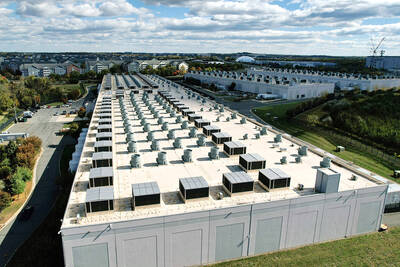
The demise of the coal industry left the US’ Appalachian region in tatters, with lost jobs, spoiled water and countless kilometers of abandoned underground mines. Now entrepreneurs are eyeing the rural region with ambitious visions to rebuild its economy by converting old mines into solar power systems and data centers that could help fuel the increasing power demands of the artificial intelligence (AI) boom. One such project is underway by a non-profit team calling itself Energy DELTA (Discovery, Education, Learning and Technology Accelerator) Lab, which is looking to develop energy sources on about 26,305 hectares of old coal land in
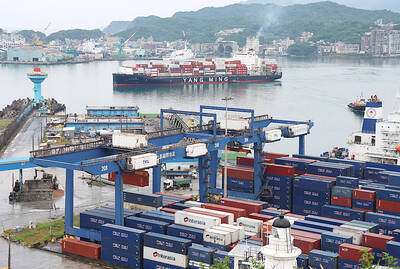
Taiwan’s exports soared 56 percent year-on-year to an all-time high of US$64.05 billion last month, propelled by surging global demand for artificial intelligence (AI), high-performance computing and cloud service infrastructure, the Ministry of Finance said yesterday. Department of Statistics Director-General Beatrice Tsai (蔡美娜) called the figure an unexpected upside surprise, citing a wave of technology orders from overseas customers alongside the usual year-end shopping season for technology products. Growth is likely to remain strong this month, she said, projecting a 40 percent to 45 percent expansion on an annual basis. The outperformance could prompt the Directorate-General of Budget, Accounting and
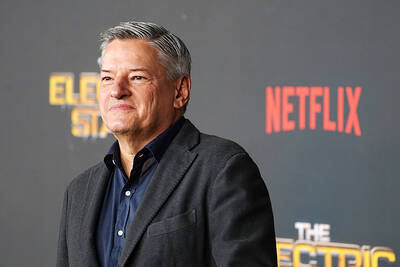
Netflix on Friday faced fierce criticism over its blockbuster deal to acquire Warner Bros Discovery. The streaming giant is already viewed as a pariah in some Hollywood circles, largely due to its reluctance to release content in theaters and its disruption of traditional industry practices. As Netflix emerged as the likely winning bidder for Warner Bros — the studio behind Casablanca, the Harry Potter movies and Friends — Hollywood’s elite launched an aggressive campaign against the acquisition. Titanic director James Cameron called the buyout a “disaster,” while a group of prominent producers are lobbying US Congress to oppose the deal,
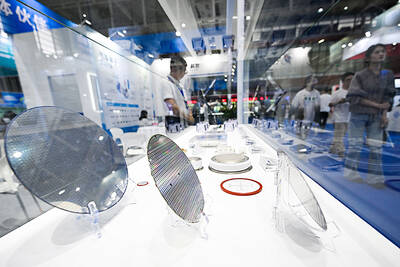
Two Chinese chipmakers are attracting strong retail investor demand, buoyed by industry peer Moore Threads Technology Co’s (摩爾線程) stellar debut. The retail portion of MetaX Integrated Circuits (Shanghai) Co’s (上海沐曦) upcoming initial public offering (IPO) was 2,986 times oversubscribed on Friday, according to a filing. Meanwhile, Beijing Onmicro Electronics Co (北京昂瑞微), which makes radio frequency chips, was 2,899 times oversubscribed on Friday, its filing showed. The bids coincided with Moore Threads’ trading debut, which surged 425 percent on Friday after raising 8 billion yuan (US$1.13 billion) on bets that the company could emerge as a viable local competitor to Nvidia


 RSS
RSS