


Panic coursed through the world’s second-largest equity market as investors sold stocks on concern a deadly virus will worsen over China’s week-long trading break.
The Shanghai Composite Index settled 2.8 percent lower after the close of trading, the worst end to a Lunar Year in its three-decade history.
More than 90 percent of the mainland’s 4,000 stocks fell on volumes that were 20 percent above average, with foreign traders selling a record US$1.7 billion worth of the shares via links with Hong Kong. The yuan weakened as much as 0.4 percent and government bond futures rose to the highest since 2016.
Pressure is building on Beijing to contain a new SARS-like virus that has killed at least 17 people and infected hundreds. The coronavirus first appeared last month in the city of Wuhan in central China, a city with 11 million residents — more than in London or New York — that is now essentially in lockdown after officials halted public travel.
“Fear and panic are rampant,” Bristlecon Pine Asset Management Ltd fund manager Wang Daixin (王代新) said. “It’s hard to tell how bad things will get before a turn for the better. I didn’t get out when I had the chance to, so now I might as well sit it out rather than lose money. Others are offloading at whatever cost.”
The virus and its potential impact on the economy and financial system pose a growing challenge for Chinese President Xi Jinping (習近平). It comes at a time when the Chinese Communist Party is seeking to maintain stability in the face of a trade war with the US, the spread of swine fever, a debt mountain, rising corporate defaults and protests in Hong Kong.
A gauge of consumer-staples stocks — some of last year’s top performers — extended this week’s loss to 6.4 percent, the worst since October 2018. The Lunar New Year is a typically strong season for traveling and spending as families gather for the celebrations. Macau casino stocks also tumbled as the city reported its second case of the novel coronavirus and announced it would cancel all Lunar New Year festivities.
In Hong Kong, where two cases have also been confirmed, the Hang Seng China Enterprises Index dropped 2 percent and the Hang Seng Index fell 1.5 percent.
The final day before the Lunar New Year break is historically a good one for stock investors: since its launch in 1991, the Shanghai Composite Index had ended the session lower on only six occasions.
Without being able to trade for a week, investors are heading into the holiday blind. After an extended break in May, the Shanghai Composite fell 5.6 percent as investors reacted to escalating trade tensions with the US. The sell-off wiped out almost half a trillion US dollars from Chinese equity values.
Guangdong Xiaoyu Investment Management (廣東小禹投資管理) managing director Li Shiyu (黎仕禹) told Bloomberg News that a turnaround in sentiment would depend on the number of new cases in coming weeks.
“The epidemic may reach a peak in two weeks and hopefully start to slow,” he said. “If there is a trend for new cases to decline, I would consider buying shares again.”
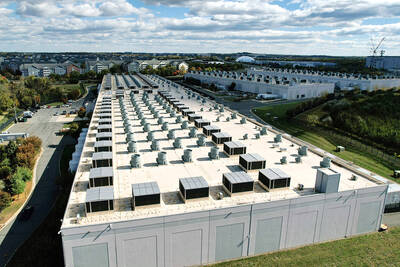
The demise of the coal industry left the US’ Appalachian region in tatters, with lost jobs, spoiled water and countless kilometers of abandoned underground mines. Now entrepreneurs are eyeing the rural region with ambitious visions to rebuild its economy by converting old mines into solar power systems and data centers that could help fuel the increasing power demands of the artificial intelligence (AI) boom. One such project is underway by a non-profit team calling itself Energy DELTA (Discovery, Education, Learning and Technology Accelerator) Lab, which is looking to develop energy sources on about 26,305 hectares of old coal land in
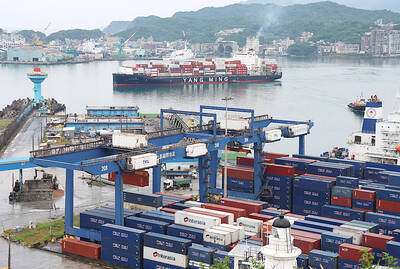
Taiwan’s exports soared 56 percent year-on-year to an all-time high of US$64.05 billion last month, propelled by surging global demand for artificial intelligence (AI), high-performance computing and cloud service infrastructure, the Ministry of Finance said yesterday. Department of Statistics Director-General Beatrice Tsai (蔡美娜) called the figure an unexpected upside surprise, citing a wave of technology orders from overseas customers alongside the usual year-end shopping season for technology products. Growth is likely to remain strong this month, she said, projecting a 40 percent to 45 percent expansion on an annual basis. The outperformance could prompt the Directorate-General of Budget, Accounting and

Netflix on Friday faced fierce criticism over its blockbuster deal to acquire Warner Bros Discovery. The streaming giant is already viewed as a pariah in some Hollywood circles, largely due to its reluctance to release content in theaters and its disruption of traditional industry practices. As Netflix emerged as the likely winning bidder for Warner Bros — the studio behind Casablanca, the Harry Potter movies and Friends — Hollywood’s elite launched an aggressive campaign against the acquisition. Titanic director James Cameron called the buyout a “disaster,” while a group of prominent producers are lobbying US Congress to oppose the deal,

Two Chinese chipmakers are attracting strong retail investor demand, buoyed by industry peer Moore Threads Technology Co’s (摩爾線程) stellar debut. The retail portion of MetaX Integrated Circuits (Shanghai) Co’s (上海沐曦) upcoming initial public offering (IPO) was 2,986 times oversubscribed on Friday, according to a filing. Meanwhile, Beijing Onmicro Electronics Co (北京昂瑞微), which makes radio frequency chips, was 2,899 times oversubscribed on Friday, its filing showed. The bids coincided with Moore Threads’ trading debut, which surged 425 percent on Friday after raising 8 billion yuan (US$1.13 billion) on bets that the company could emerge as a viable local competitor to Nvidia


 RSS
RSS