


Samsung Electronics Co has appointed Roh Tae-moon the head of its smartphone division, tasking a veteran executive with oversight of the world’s largest mobile devices business.
Roh, who was formerly the unit’s No. 2 executive, was to take over the top job from Koh Dong-jin as of yesterday.
Koh remains head of the South Korean conglomerate’s IT and mobile communications division, but hands the reins of smartphones over to a lieutenant credited with building up the marquee Galaxy line of smartphones and tablets.
Roh, a two-decade veteran of Samsung, is regarded internally as an engineering maven who is meticulous about phone features.
Samsung’s shares yesterday climbed as much as 2.5 percent in Seoul.
The largest maker of mobile phones, displays and memory chips shakes up its executive ranks each year, with the extent of the changes often correlated to how its businesses are doing.
This month, the company reported preliminary earnings that showed operating income declining by about one-third from a year earlier.
“Roh is known to be a person who expanded Samsung’s original design manufacturing policy for low to mid-range smartphones,” CIMB analyst Lee Dohoon said. “Samsung may now gradually follow Apple in focusing on design and developments. Though it’s expanded outsourcing for production, Samsung will keep a tighter rein on quality control to protect its brands.”
The company is likely try to keep expanding its market share in Asia and Europe this year while closest rival, Huawei Technologies Co (華為), is struggling to protect its market share in the wake of sanctions by US President Donald Trump’s administration, Lee added.
Samsung is racing to secure an early lead in 5G wireless smartphones as well as foldables, both of which are to take centerstage during its annual Unpacked event in San Francisco on Feb. 11.
The company’s mainstream flagship device — whose name is rumored to be the Galaxy S20, a change in naming scheme — is also likely to be unveiled at that event.
Its devices accounted for 54 percent of the global 5G smartphone market as of November last year, after it shipped more than 6.7 million Galaxy 5G smartphones last year, the company has said.
Separately, Huawei last week said that it shipped more than 6.9 million 5G phones last year.
Roh was also to assume responsibility for repairing the mobile division’s reputation.
Under Koh’s leadership, Samsung suffered from major quality issues at least twice: In 2016, Samsung killed off the Note 7 for good after models tended to burst into flames, while last year, it also had to delay the Galaxy Fold by several months after review models exhibited issues with displays that were easily peeled off.
Those debacles were widely seen as a result of the company’s rushing phones to market to try and steal a march on Apple Inc and Huawei.
Away from smartphones, the chiefs of three key Samsung divisions — semiconductors, consumer appliances and electronics and IT services — remained the same.
That ensures stability given vice chairman and heir apparent Jay Y. Lee is defending himself in court over graft allegations, raising the possibility of a potential leadership vacuum.
Samsung also promoted several presidents in its latest restructuring, including Cheun Kyung-whoon, who now heads networking.

The demise of the coal industry left the US’ Appalachian region in tatters, with lost jobs, spoiled water and countless kilometers of abandoned underground mines. Now entrepreneurs are eyeing the rural region with ambitious visions to rebuild its economy by converting old mines into solar power systems and data centers that could help fuel the increasing power demands of the artificial intelligence (AI) boom. One such project is underway by a non-profit team calling itself Energy DELTA (Discovery, Education, Learning and Technology Accelerator) Lab, which is looking to develop energy sources on about 26,305 hectares of old coal land in

Taiwan’s exports soared 56 percent year-on-year to an all-time high of US$64.05 billion last month, propelled by surging global demand for artificial intelligence (AI), high-performance computing and cloud service infrastructure, the Ministry of Finance said yesterday. Department of Statistics Director-General Beatrice Tsai (蔡美娜) called the figure an unexpected upside surprise, citing a wave of technology orders from overseas customers alongside the usual year-end shopping season for technology products. Growth is likely to remain strong this month, she said, projecting a 40 percent to 45 percent expansion on an annual basis. The outperformance could prompt the Directorate-General of Budget, Accounting and
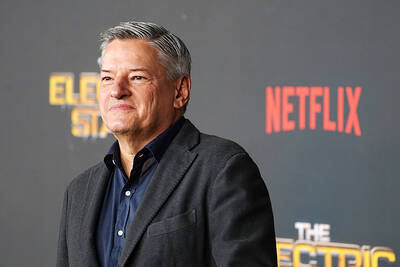
Netflix on Friday faced fierce criticism over its blockbuster deal to acquire Warner Bros Discovery. The streaming giant is already viewed as a pariah in some Hollywood circles, largely due to its reluctance to release content in theaters and its disruption of traditional industry practices. As Netflix emerged as the likely winning bidder for Warner Bros — the studio behind Casablanca, the Harry Potter movies and Friends — Hollywood’s elite launched an aggressive campaign against the acquisition. Titanic director James Cameron called the buyout a “disaster,” while a group of prominent producers are lobbying US Congress to oppose the deal,
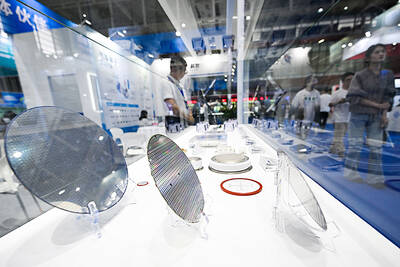
Two Chinese chipmakers are attracting strong retail investor demand, buoyed by industry peer Moore Threads Technology Co’s (摩爾線程) stellar debut. The retail portion of MetaX Integrated Circuits (Shanghai) Co’s (上海沐曦) upcoming initial public offering (IPO) was 2,986 times oversubscribed on Friday, according to a filing. Meanwhile, Beijing Onmicro Electronics Co (北京昂瑞微), which makes radio frequency chips, was 2,899 times oversubscribed on Friday, its filing showed. The bids coincided with Moore Threads’ trading debut, which surged 425 percent on Friday after raising 8 billion yuan (US$1.13 billion) on bets that the company could emerge as a viable local competitor to Nvidia


 RSS
RSS