


Oil prices yesterday jumped back above US$65 a barrel as supply disruptions in Iraq and Libya reignited concerns over the market’s vulnerability to geopolitical risk in key production regions. Futures rose more than 1.7 percent in London and New York.
Iraq on Sunday temporarily stopped output at an oil field, with supply from a second site threatened as unrest escalates in OPEC’s second-biggest producer.
In Libya, the country’s oil production almost ground to a halt after armed forces shut down a pipeline, halting output from the nation’s biggest field.
The double-whammy of disruptions in two key producers has jolted focus back to supply risks as oil markets continue their dramatic start to the year.
Brent crude has swung in an US$8-a-barrel trading range as initial fears that the US killing of a top Iranian general threatened Middle East exports gave way to confidence that the world had an adequate supply cushion.
“It’s a very nervous time for oil traders at the moment,” said Michael McCarthy, chief market strategist at CMC Markets in Sydney, adding that “any escalation, particularly in Iraq,” would be a much more significant risk than the news out of Libya. “We remain on high alert.”
Brent crude added as much as US$1.15, or 1.8 percent, to US$66 a barrel on the ICE Futures Europe exchange and traded at US$65.67 as of 2:53pm in Singapore.
West Texas Intermediate futures climbed as much as US$1.19, or 2 percent, to US$59.73 on the New York Mercantile Exchange, before easing to US$59.19.
Libya’s oil production will be limited to 72,000 barrels per day once its storage tanks are full, state-run National Oil Corp (NOC) said, down from more than 1.2 million barrels per day on Saturday.
That is the lowest level since August 2011, data compiled by Bloomberg showed.
The output plunge started when an eastern military commander, General Khalifa Haftar, blocked exports at ports under his control, NOC said on Saturday.
The company declared force majeure, which can allow Libya — home to Africa’s largest-proven oil reserves — to legally suspend delivery contracts.
This is a policy-related disruption,” said Edward Bell, director of commodity research at Dubai-based bank Emirates NBD PJSC. “There could be a pretty quick turnaround if there’s a political solution.”
Separately, security guards in Iraq seeking permanent employment contracts blocked access to the al-Ahdab oil field, prompting a production halt, according to an official who could not be identified.
The Badra field is also at risk of closure.
Oil prices surged earlier this month after Iran retaliated for the US killing of Iraqi general Qassem Soleimani before retreating back to where they were in the middle of last month as the market shrugged off the threat of further disruptions.
OPEC members have spare production capacity after cutting supply to prop up prices, while non-OPEC output is expected to climb this year, adding a buffer to potential outages.
“Prices are likely to remain capped, given the market’s reactive nature to fade geopolitical risk quickly,” AxiTrader Asia-Pacific strategist Stephen Innes said in a note.
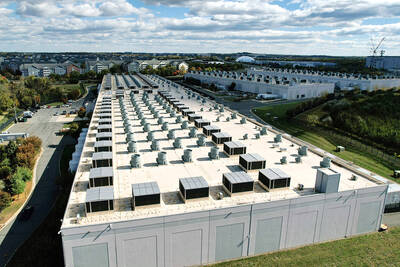
The demise of the coal industry left the US’ Appalachian region in tatters, with lost jobs, spoiled water and countless kilometers of abandoned underground mines. Now entrepreneurs are eyeing the rural region with ambitious visions to rebuild its economy by converting old mines into solar power systems and data centers that could help fuel the increasing power demands of the artificial intelligence (AI) boom. One such project is underway by a non-profit team calling itself Energy DELTA (Discovery, Education, Learning and Technology Accelerator) Lab, which is looking to develop energy sources on about 26,305 hectares of old coal land in
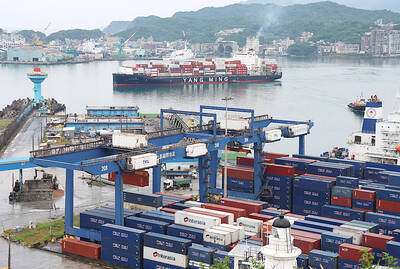
Taiwan’s exports soared 56 percent year-on-year to an all-time high of US$64.05 billion last month, propelled by surging global demand for artificial intelligence (AI), high-performance computing and cloud service infrastructure, the Ministry of Finance said yesterday. Department of Statistics Director-General Beatrice Tsai (蔡美娜) called the figure an unexpected upside surprise, citing a wave of technology orders from overseas customers alongside the usual year-end shopping season for technology products. Growth is likely to remain strong this month, she said, projecting a 40 percent to 45 percent expansion on an annual basis. The outperformance could prompt the Directorate-General of Budget, Accounting and

Netflix on Friday faced fierce criticism over its blockbuster deal to acquire Warner Bros Discovery. The streaming giant is already viewed as a pariah in some Hollywood circles, largely due to its reluctance to release content in theaters and its disruption of traditional industry practices. As Netflix emerged as the likely winning bidder for Warner Bros — the studio behind Casablanca, the Harry Potter movies and Friends — Hollywood’s elite launched an aggressive campaign against the acquisition. Titanic director James Cameron called the buyout a “disaster,” while a group of prominent producers are lobbying US Congress to oppose the deal,

Two Chinese chipmakers are attracting strong retail investor demand, buoyed by industry peer Moore Threads Technology Co’s (摩爾線程) stellar debut. The retail portion of MetaX Integrated Circuits (Shanghai) Co’s (上海沐曦) upcoming initial public offering (IPO) was 2,986 times oversubscribed on Friday, according to a filing. Meanwhile, Beijing Onmicro Electronics Co (北京昂瑞微), which makes radio frequency chips, was 2,899 times oversubscribed on Friday, its filing showed. The bids coincided with Moore Threads’ trading debut, which surged 425 percent on Friday after raising 8 billion yuan (US$1.13 billion) on bets that the company could emerge as a viable local competitor to Nvidia


 RSS
RSS