


The financial sector should take rapid steps to address record or near-record inequality levels within countries that new research shows could be a harbinger of a new financial crisis, IMF managing director Kristalina Georgieva said on Friday.
Georgieva issued what she termed a “call to action,” urging a shift to facilitate more lending to small and women-led businesses, which in turn would help bolster resilience in the event of a future crisis.
“Our new research shows that inequality tends to increase before a financial crisis, signaling a strong link between inequality and financial stability,” she said, citing parallels to 1920s boom years that led to the Great Depression.

Photo: AFP
A report by IMF staff showed that expanding financial services to more low-income households, women and small businesses could serve as a powerful lever in creating a more inclusive society, but the increasing complexity of the financial sector often wound up benefiting mainly wealthy people.
“If we act, and act together, we can avoid repeating the mistakes of the 1920s in the 2020s,” Georgieva told an event at the Peterson Institute for International Economics.
The IMF would apply the lessons of the new research to its assessment and surveillance of financial sector stability, while focusing on bolstered financial literacy among less “sophisticated” populations, she said.
It is important to maintain high lending standards and good supervision, but work was needed to reverse widening gaps between rich and poor people, Georgieva said.
Unlike the 1920s, climate change was a huge factor exacerbating inequality today, she said, citing a World Bank estimate that 100 million people could be living in extreme poverty by 2030 if current policies were not changed.
The IMF in November last year called for central banks to develop stress tests for climate risks and Georgieva said it would seek to incorporate them into its assessment instruments this year.
Governments should continue using fiscal policies to address growing rates of inequality, and avert the populism and political upheaval it could spawn, she said.
However, the financial sector also had a key role to play, she said, citing research by IMF staff that showed a 2 to 3 percentage point difference in longer-term GDP growth between financially inclusive countries and their less inclusive peers.
Georgieva also said the signing of a “phase one” trade agreement between the US and China will reduce — but not eliminate — uncertainty that has dampened global economic growth.
Georgieva declined to give an adjusted global economic forecast, saying that would be released today at the World Economic Forum in Davos, Switzerland.
However, she said the IMF expected the trade deal would ensure that China’s GDP expands by 6 percent this year and she had shared that forecast with Chinese Vice Premier Liu He (劉鶴) at a meeting last week.
“It brings China in the parameters of around 6 percent growth for 2020, rather than below,” she said.
Georgieva said the IMF had previously estimated that global trade tensions would shave 0.8 percent, or US$700 billion, off international economic growth. Only about one-third of that was due to tariffs, with the larger share resulting from a slowdown in business investment.
Since the US-China trade deal was only an interim solution, the impact on investment would not be eradicated, she said.
“What we are seeing now is we have some reduction of this uncertainty, but it is not eliminated,” she said.
Georgieva also said that the IMF generally favored multilateral agreements and warned that bilateral agreements could have negative implications for world economic growth in the longer term.
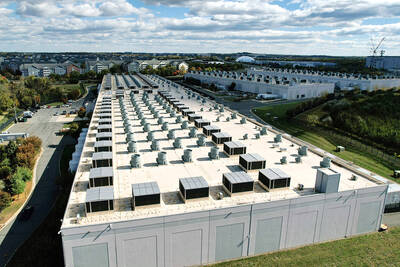
The demise of the coal industry left the US’ Appalachian region in tatters, with lost jobs, spoiled water and countless kilometers of abandoned underground mines. Now entrepreneurs are eyeing the rural region with ambitious visions to rebuild its economy by converting old mines into solar power systems and data centers that could help fuel the increasing power demands of the artificial intelligence (AI) boom. One such project is underway by a non-profit team calling itself Energy DELTA (Discovery, Education, Learning and Technology Accelerator) Lab, which is looking to develop energy sources on about 26,305 hectares of old coal land in
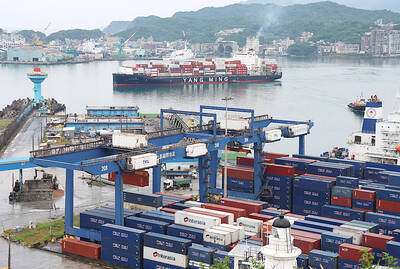
Taiwan’s exports soared 56 percent year-on-year to an all-time high of US$64.05 billion last month, propelled by surging global demand for artificial intelligence (AI), high-performance computing and cloud service infrastructure, the Ministry of Finance said yesterday. Department of Statistics Director-General Beatrice Tsai (蔡美娜) called the figure an unexpected upside surprise, citing a wave of technology orders from overseas customers alongside the usual year-end shopping season for technology products. Growth is likely to remain strong this month, she said, projecting a 40 percent to 45 percent expansion on an annual basis. The outperformance could prompt the Directorate-General of Budget, Accounting and

Netflix on Friday faced fierce criticism over its blockbuster deal to acquire Warner Bros Discovery. The streaming giant is already viewed as a pariah in some Hollywood circles, largely due to its reluctance to release content in theaters and its disruption of traditional industry practices. As Netflix emerged as the likely winning bidder for Warner Bros — the studio behind Casablanca, the Harry Potter movies and Friends — Hollywood’s elite launched an aggressive campaign against the acquisition. Titanic director James Cameron called the buyout a “disaster,” while a group of prominent producers are lobbying US Congress to oppose the deal,

Two Chinese chipmakers are attracting strong retail investor demand, buoyed by industry peer Moore Threads Technology Co’s (摩爾線程) stellar debut. The retail portion of MetaX Integrated Circuits (Shanghai) Co’s (上海沐曦) upcoming initial public offering (IPO) was 2,986 times oversubscribed on Friday, according to a filing. Meanwhile, Beijing Onmicro Electronics Co (北京昂瑞微), which makes radio frequency chips, was 2,899 times oversubscribed on Friday, its filing showed. The bids coincided with Moore Threads’ trading debut, which surged 425 percent on Friday after raising 8 billion yuan (US$1.13 billion) on bets that the company could emerge as a viable local competitor to Nvidia


 RSS
RSS