


Toshiba Corp chief executive officer Nobuaki Kurumatani is to add the title of president effective April, part of a revamp among top management aimed at speeding up decision making.
Current president Satoshi Tsunakawa, who was promoted in 2016 following an accounting scandal, would resign and become non-executive chairman from April, Toshiba said in a statement on Saturday.
Kurumatani, 62, joined Toshiba in April 2018 after the electronics conglomerate decided to sell its crown-jewel memory unit to a consortium led by Bain Capital, in order to avoid delisting after billions of US dollars of losses in its US nuclear energy operations.
A former vice president at Sumitomo Mitsui Banking Corp and executive at CVC Capital Partners Ltd, Kurumatani restored Toshiba’s dividend and bought back ¥700 billion (US$6.35 billion) worth of shares.
Kurumatani, who spent his entire career in banking, was only the second outsider appointed to lead Toshiba in the past 50 years, an unusual development at a conglomerate where executives typically spend decades working their way to the top.
When he joined, he said his mission was to revive Toshiba’s spirit of technological and entrepreneurial innovation, conceding he faced a “difficult job.”
Toshiba is adopting a new corporate officer system that “will provide key personnel who lead the development of Toshiba Group with responsibilities, authority and compensation commensurate with their achievements, and enhance their presence in external sales activities,” the Tokyo-based company said in the statement. It would add three executive officers as of April.
However, Toshiba is unable to confirm as much as ¥20 billion in sales at a subsidiary involving “suspicious transactions,” the electronics conglomerate said.
An internal investigation found that some transactions at Toshiba IT-Services Corp, a wholly owned subsidiary of yet another unit called Toshiba Digital Services Corp, could not be confirmed, the company said in the statement. Toshiba said it would eliminate the amount it has discovered so far from its financial statements for the fiscal third quarter.
“There are unsettled debts and credits among parties of suspicious transactions,” the company said in the statement.
“The final impact on profit and revenue as well as facts relating to suspicious transactions are subject to further investigation,” it said.
Separately, Toshiba is pressing forward with plans to take over NuFlare Technology Inc, despite a higher competing offer for the provider of critical chipmaking equipment.
Toshiba was already NuFlare’s biggest shareholder with 52.4 percent when it initiated the buyout. Toshiba Machine Co, an independent company that retains the former parent’s name and is the second-largest NuFlare stockholder, has said it would sell its 15.8 percent stake to Toshiba.
In a new twist, Yoshiaki Murakami, Japan’s best-known activist investor, announced a tender offer for Toshiba Machine late on Friday.
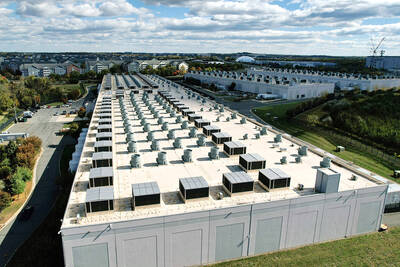
The demise of the coal industry left the US’ Appalachian region in tatters, with lost jobs, spoiled water and countless kilometers of abandoned underground mines. Now entrepreneurs are eyeing the rural region with ambitious visions to rebuild its economy by converting old mines into solar power systems and data centers that could help fuel the increasing power demands of the artificial intelligence (AI) boom. One such project is underway by a non-profit team calling itself Energy DELTA (Discovery, Education, Learning and Technology Accelerator) Lab, which is looking to develop energy sources on about 26,305 hectares of old coal land in
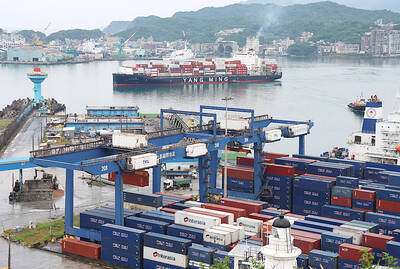
Taiwan’s exports soared 56 percent year-on-year to an all-time high of US$64.05 billion last month, propelled by surging global demand for artificial intelligence (AI), high-performance computing and cloud service infrastructure, the Ministry of Finance said yesterday. Department of Statistics Director-General Beatrice Tsai (蔡美娜) called the figure an unexpected upside surprise, citing a wave of technology orders from overseas customers alongside the usual year-end shopping season for technology products. Growth is likely to remain strong this month, she said, projecting a 40 percent to 45 percent expansion on an annual basis. The outperformance could prompt the Directorate-General of Budget, Accounting and
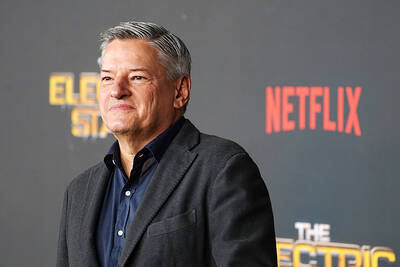
Netflix on Friday faced fierce criticism over its blockbuster deal to acquire Warner Bros Discovery. The streaming giant is already viewed as a pariah in some Hollywood circles, largely due to its reluctance to release content in theaters and its disruption of traditional industry practices. As Netflix emerged as the likely winning bidder for Warner Bros — the studio behind Casablanca, the Harry Potter movies and Friends — Hollywood’s elite launched an aggressive campaign against the acquisition. Titanic director James Cameron called the buyout a “disaster,” while a group of prominent producers are lobbying US Congress to oppose the deal,
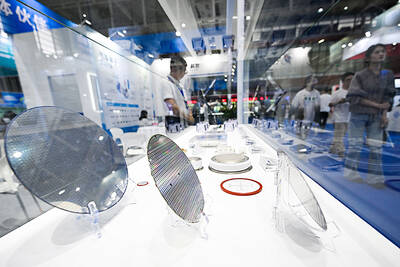
Two Chinese chipmakers are attracting strong retail investor demand, buoyed by industry peer Moore Threads Technology Co’s (摩爾線程) stellar debut. The retail portion of MetaX Integrated Circuits (Shanghai) Co’s (上海沐曦) upcoming initial public offering (IPO) was 2,986 times oversubscribed on Friday, according to a filing. Meanwhile, Beijing Onmicro Electronics Co (北京昂瑞微), which makes radio frequency chips, was 2,899 times oversubscribed on Friday, its filing showed. The bids coincided with Moore Threads’ trading debut, which surged 425 percent on Friday after raising 8 billion yuan (US$1.13 billion) on bets that the company could emerge as a viable local competitor to Nvidia


 RSS
RSS