


German car giants Volkswagen AG (VW), BMW AG and Daimler AG have posted strong sales growth in the face of last year’s contracting global market, shifting massive numbers of sport utility vehicles (SUVs) ahead of a pivotal year for electric mobility.
While Fitch Ratings Inc estimated global unit sales shrank 4 percent year-on-year, figures released over the past week showed BMW gaining 2 percent, Daimler’s Mercedes-Benz 1.3 percent and the 12-brand VW group flagship brand 1.3 percent.
However, even with growing sales, automakers plan more than 40,000 jobs cuts in the coming years, with Opel Automobile GmbH the latest to announce 2,100 voluntary departures on Tuesday.
HIGH-END SUPREMACY
“German manufacturers are well-positioned with their premium brands,” said Ferdinand Dudenhoeffer, industry expert at the University of Duisburg-Essen.
In the fierce race to be worldwide No. 1 in high-end cars, Daimler’s nose remained ahead for the fourth year in a row.
The Stuttgart-based firm shipped 2.34 million Mercedes-Benz vehicles, while Munich sold 2.17 million BMWs — both all-time records.
Both premium manufacturers’ figures were massively boosted by China, with Mercedes sales there growing 6.2 percent and BMW 13.1 percent year-on-year.
However, VW also highlighted strong performance in China “thanks to the strength of its brand,” Dudenhoeffer said.
More keenly touched by a US-China trade conflict were US manufacturers like Ford Motor Co and General Motors Co, he added.
SUV DOMINANCE
For all the German automakers, last year brought new strides for the dominance of SUVs in sales figures.
Sales of BMW’s “X” range grew 21 percent, now making up about half of total deliveries.
At Daimler, one in three Mercedes sold was an SUV at almost 784,000 units, while VW’s SEAT SA and Porsche AG subsidiaries also shipped more of the models.
“It’s perfectly clear that SUVs drive sales and profits for the carmakers,” Stefan Bratzel of the Center of Automotive Management said.
CARBON FOOTPRINT
However, demand for the high-margin gas guzzlers will squeeze manufacturers as they scramble to reduce carbon dioxide emissions in response to new EU rules.
From this year, automakers must reach average carbon dioxide emissions across their new vehicle fleets of less than 95g per kilometer, on pain of harsh fines from next year.
“Electric cars have to hit the roads, otherwise the fines will land and they will be painful,” Dudenhoeffer said.
Looking to reduce their carbon footprint, manufacturers have dozens of electric and hybrid models lined up for release in the coming years.
In particular focus is Volkswagen’s ID.3 compact car, presented to great fanfare at the International Motor Show Germany in September last year as the electric counterpart to the company’s stalwart Golf.
GREENER FUTURE
Meanwhile, BMW and Daimler are placing most of their chips on hybrids rather than all-electric power.
“The manufacturers can’t leave SUVs by the wayside,” Bratzel said. “Rather, they’ll try to give them a coat of green paint” to overcome their negative image.
With many drivers still reluctant to take the electric plunge, “demand will depend in the long term on charging infrastructure” to reassure the doubters, he said.
Charging points also represent one factor for automakers’ success not completely under their control, he added.
However, they are fundamental to plans — like VW’s aim of selling 26 million electric vehicles and 6 million hybrids by 2029.
Even if the targets are met, far fewer workers are needed to assemble an electric than an internal combustion vehicle, and cash is needed for research and development spending.
That points to “a second major challenge” on the jobs front for the pillar of German industry, Dudenhoeffer said.
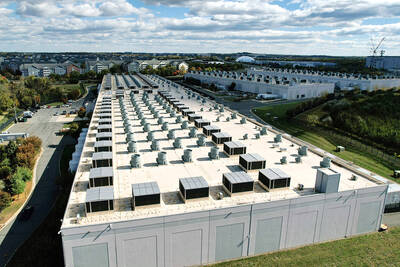
The demise of the coal industry left the US’ Appalachian region in tatters, with lost jobs, spoiled water and countless kilometers of abandoned underground mines. Now entrepreneurs are eyeing the rural region with ambitious visions to rebuild its economy by converting old mines into solar power systems and data centers that could help fuel the increasing power demands of the artificial intelligence (AI) boom. One such project is underway by a non-profit team calling itself Energy DELTA (Discovery, Education, Learning and Technology Accelerator) Lab, which is looking to develop energy sources on about 26,305 hectares of old coal land in
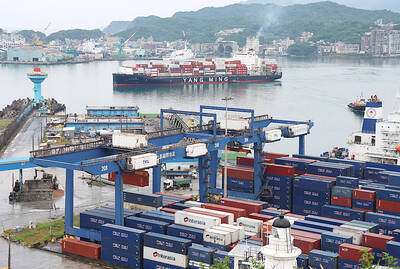
Taiwan’s exports soared 56 percent year-on-year to an all-time high of US$64.05 billion last month, propelled by surging global demand for artificial intelligence (AI), high-performance computing and cloud service infrastructure, the Ministry of Finance said yesterday. Department of Statistics Director-General Beatrice Tsai (蔡美娜) called the figure an unexpected upside surprise, citing a wave of technology orders from overseas customers alongside the usual year-end shopping season for technology products. Growth is likely to remain strong this month, she said, projecting a 40 percent to 45 percent expansion on an annual basis. The outperformance could prompt the Directorate-General of Budget, Accounting and
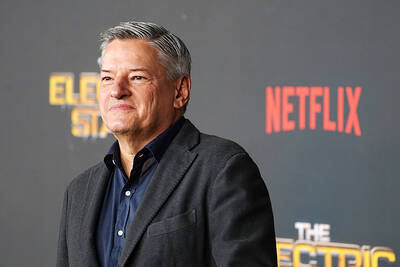
Netflix on Friday faced fierce criticism over its blockbuster deal to acquire Warner Bros Discovery. The streaming giant is already viewed as a pariah in some Hollywood circles, largely due to its reluctance to release content in theaters and its disruption of traditional industry practices. As Netflix emerged as the likely winning bidder for Warner Bros — the studio behind Casablanca, the Harry Potter movies and Friends — Hollywood’s elite launched an aggressive campaign against the acquisition. Titanic director James Cameron called the buyout a “disaster,” while a group of prominent producers are lobbying US Congress to oppose the deal,
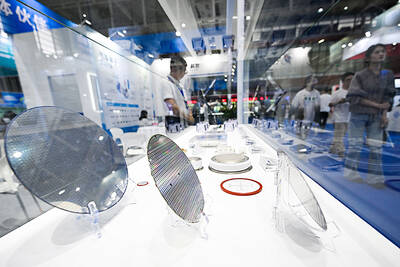
Two Chinese chipmakers are attracting strong retail investor demand, buoyed by industry peer Moore Threads Technology Co’s (摩爾線程) stellar debut. The retail portion of MetaX Integrated Circuits (Shanghai) Co’s (上海沐曦) upcoming initial public offering (IPO) was 2,986 times oversubscribed on Friday, according to a filing. Meanwhile, Beijing Onmicro Electronics Co (北京昂瑞微), which makes radio frequency chips, was 2,899 times oversubscribed on Friday, its filing showed. The bids coincided with Moore Threads’ trading debut, which surged 425 percent on Friday after raising 8 billion yuan (US$1.13 billion) on bets that the company could emerge as a viable local competitor to Nvidia


 RSS
RSS