


Taiwan’s economy is expected to remain healthy this year with GDP growth of 2.1 percent on the back of improving exports and stable domestic demand, but cross-strait relations could affect the tourism sector, Australia and New Zealand Banking Group Ltd (ANZ) said yesterday.
“Stable domestic demand, alongside robust external demand, underpins our positive outlook,” ANZ economists Bansi Madhavani and Raymond Yeung (楊宇霆) said in a report.
Madhavani and Yeung expect domestic demand to add 1.5 percentage points to Taiwan’s GDP this year, and external demand to contribute another 0.6 percentage points, the report showed.
Based on government data, exports are forecast to grow 1.9 percent this year, reversing a contraction of 1.4 percent, the report said.
Manufacturing surveys and production trends already pointed to an incipient recovery, ANZ said, adding that an ongoing revival of the semiconductor industry would benefit the export outlook and the domestic corporate sector.
Global semiconductor sales might register growth of 5.9 percent this year following a 12.8 percent decline last year, ANZ said.
Major local tech firms, such as Taiwan Semiconductor Manufacturing Co (台積電), have raised their capital expenditures to US$14 billion or more due to the increased market penetration rate expected from 5G-enabled smartphones, the report said.
Positive cyclical movements in the technology sector would allow exports and industrial production to stage a comeback in the first half of the year, and a sustained recovery would underpin momentum through the second half, it said.
US-China trade tensions have prompted production migration, which has realigned the electronics supply chain and enabled Taiwan to integrate more in Asia’s value chain, the report said.
Meanwhile, policymakers have introduced incentives to attract investment and encourage local manufacturers to move operations home from China, the report said, adding that business-friendly policies place Taiwan in a position to benefit from a revival in the tech sector, facilitating a 2.5 percent increase in exports next year.
Cross-strait relations might cloud issues for the tourism sector, ANZ said.
Arrivals from Asia accounted for more than 89 percent of all tourists last year, with visitors from China making up nearly 25 percent, it said, adding that it remains to be seen whether Beijing’s restrictions on tourist visits to Taiwan will be kept in place after the elections
However, improvements in growth outlook and stock market performance would support consumer sentiment, ANZ said.
Inflation is likely to remain low, with readings for headline and core consumer prices expected to edge up 0.6 percent and 0.7 percent respectively this year, the lowest in Asia, it said.
Benign inflation would allow the central bank to hold policy rates at 1.375 percent for the year, it said.
The New Taiwan dollar could trade at NT$30 to the US dollar as ongoing currency and capital flows reflect optimism, ANZ said.
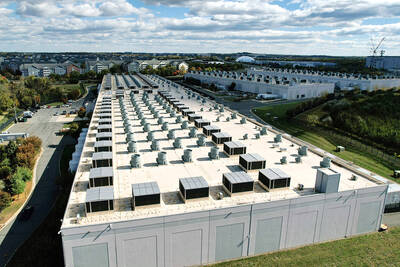
The demise of the coal industry left the US’ Appalachian region in tatters, with lost jobs, spoiled water and countless kilometers of abandoned underground mines. Now entrepreneurs are eyeing the rural region with ambitious visions to rebuild its economy by converting old mines into solar power systems and data centers that could help fuel the increasing power demands of the artificial intelligence (AI) boom. One such project is underway by a non-profit team calling itself Energy DELTA (Discovery, Education, Learning and Technology Accelerator) Lab, which is looking to develop energy sources on about 26,305 hectares of old coal land in
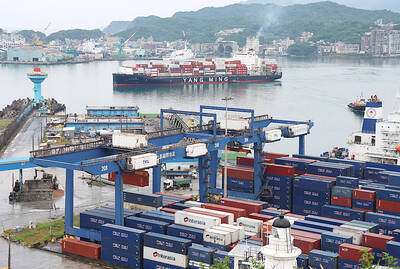
Taiwan’s exports soared 56 percent year-on-year to an all-time high of US$64.05 billion last month, propelled by surging global demand for artificial intelligence (AI), high-performance computing and cloud service infrastructure, the Ministry of Finance said yesterday. Department of Statistics Director-General Beatrice Tsai (蔡美娜) called the figure an unexpected upside surprise, citing a wave of technology orders from overseas customers alongside the usual year-end shopping season for technology products. Growth is likely to remain strong this month, she said, projecting a 40 percent to 45 percent expansion on an annual basis. The outperformance could prompt the Directorate-General of Budget, Accounting and

Netflix on Friday faced fierce criticism over its blockbuster deal to acquire Warner Bros Discovery. The streaming giant is already viewed as a pariah in some Hollywood circles, largely due to its reluctance to release content in theaters and its disruption of traditional industry practices. As Netflix emerged as the likely winning bidder for Warner Bros — the studio behind Casablanca, the Harry Potter movies and Friends — Hollywood’s elite launched an aggressive campaign against the acquisition. Titanic director James Cameron called the buyout a “disaster,” while a group of prominent producers are lobbying US Congress to oppose the deal,

Two Chinese chipmakers are attracting strong retail investor demand, buoyed by industry peer Moore Threads Technology Co’s (摩爾線程) stellar debut. The retail portion of MetaX Integrated Circuits (Shanghai) Co’s (上海沐曦) upcoming initial public offering (IPO) was 2,986 times oversubscribed on Friday, according to a filing. Meanwhile, Beijing Onmicro Electronics Co (北京昂瑞微), which makes radio frequency chips, was 2,899 times oversubscribed on Friday, its filing showed. The bids coincided with Moore Threads’ trading debut, which surged 425 percent on Friday after raising 8 billion yuan (US$1.13 billion) on bets that the company could emerge as a viable local competitor to Nvidia


 RSS
RSS