


Exports last month rose for a second straight month, increasing 4 percent from a year earlier to US$29.5 billion, as electronics shipments rose ahead of the Lunar New Year holiday, while declines in non-tech products tapered off, the Ministry of Finance said yesterday.
Following November last year’s 3.3 percent year-on-year increase, the latest data suggest a recovery for technology products as the US and China move to solve their trade dispute, the ministry said.
“The pickup is evident for electronics, the mainstay of Taiwanese exports, which saw an 11.9 percent increase from a year earlier,” thanks to active inventory demand from China, the US and Japan, Department of Statistics Director-General Beatrice Tsai (蔡美娜) told a media briefing in Taipei.
Semiconductor shipments grew 14.2 percent to US$9.4 billion on the back of 5G deployments by Chinese technology brands, Tsai said.
China’s Xiaomi Corp (小米), Oppo Mobile Telecommunications Corp (歐珀) and Vivo Communication Technology Co (維沃) are to roll out 5G smartphones powered by chips designed by MediaTek Inc (聯發科) and made by Taiwan Semiconductor Manufacturing Co (台積電).
Robust demand for information and communication devices also pushed shipments for the product category to a record high of US$4.07 billion, as the benefits of order transfers and trade rerouting were sustained and would extend into this year, Tsai said.
Meanwhile, a protracted retreat in non-tech product exports has subsided, although it is premature to speculate on a turnaround, she said.
Exports of base metals, plastic and mineral products posted a single-digit decline as local steelmakers spotted signs of improvement for selling prices, while others looked at an extended soft patch, Tsai said.
Imports also sent a positive message, with a 13.9 percent increase from a year earlier to US$26.99 billion, the ministry’s report showed.
Extensive imports of capital equipment, especially by semiconductor firms, underpinned the solid bounce, it said.
“Strong imports are encouraging, as they usually arise from needs for capacity expansion and technology upgrades,” Tsai said.
Last month’s figures gave Taiwan a trade surplus of US$2.5 billion, a 46.4 percent decline from a year earlier.
For the fourth quarter, exports returned to the positive zone with a 1.9 percent increase year-on-year to US$87.06 billion, while imports grew 4.9 percent to US$76.34 billion, the ministry said.
It credited the uptick to strong shipments of tech gadgets boosted by peak season effects.
For the whole of last year, outbound shipments dropped 1.4 percent to US$329.34 billion, while imports squeezed a 0.4 percent gain to US$285.86 billion, it said.
All data ended slightly better than expectations by the Directorate-General of Budget, Accounting and Statistics.
However, fewer working days this month — due to the extended Lunar New Year holiday — could drive exports back to negative territory, with a decline of between 4.5 percent and 6.5 percent, although there is no need to worry about isolated holiday disruptions, Tsai said.
Additional reporting by CNA
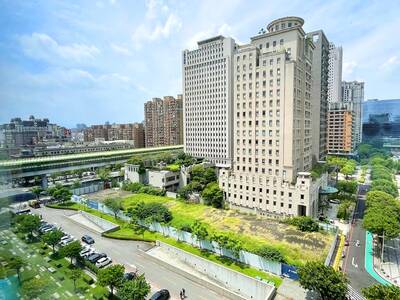
Taichung reported the steepest fall in completed home prices among the six special municipalities in the first quarter of this year, data compiled by Taiwan Realty Co (台灣房屋) showed yesterday. From January through last month, the average transaction price for completed homes in Taichung fell 8 percent from a year earlier to NT$299,000 (US$9,483) per ping (3.3m²), said Taiwan Realty, which compiled the data based on the government’s price registration platform. The decline could be attributed to many home buyers choosing relatively affordable used homes to live in themselves, instead of newly built homes in the city’s prime property market, Taiwan Realty
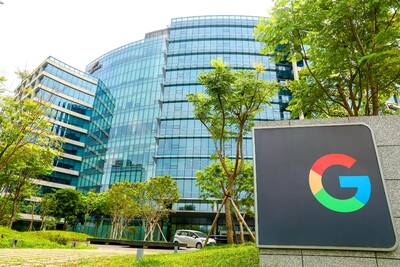
The government yesterday approved applications by Alphabet Inc’s Google to invest NT$27.08 billion (US$859.98 million) in Taiwan, the Ministry of Economic Affairs said in a statement. The Department of Investment Review approved two investments proposed by Google, with much of the funds to be used for data processing and electronic information supply services, as well as inventory procurement businesses in the semiconductor field, the ministry said. It marks the second consecutive year that Google has applied to increase its investment in Taiwan. Google plans to infuse NT$25.34 billion into Charter Investments Ltd (特許投資顧問) through its Singapore-based subsidiary Fructan Holdings Singapore Pte Ltd, and

JET JUICE: The war on Iran’s secondary effects have seen fuel prices skyrocket, knocking flight schedules down to earth in return as airlines struggle with costs Airline passengers should brace for more irritation in the next few months as carriers worldwide cancel flights and ground planes to cope with stratospheric increases in jet-fuel prices. Dutch flag carrier KLM is the latest company to cut its schedule, saying on Thursday that it would scrap 80 return flights at Amsterdam’s Schiphol Airport in the coming month. That puts it in the same league as United Airlines Holdings Inc, Deutsche Lufthansa AG and Cathay Pacific Airways Ltd, which have all pruned itineraries to mitigate costs. Global capacity for next month has been reduced by about 3 percentage points, with all

The US said it plans to help build a first-of-its-kind industrial hub in the Philippines to boost production of inputs crucial to US supply chains. The 4,000-acre hub is intended to be “a purpose-built platform for allied manufacturing” and “an investment acceleration hub where the specific industrial activities are shaped by market demand,” the US Department of State said on Thursday. The project — touted as an “economic security zone” — would be within the Luzon Economic Corridor, a flagship economic project backed by the US and Japan on the main Philippine island. The project was also described as “the first artificial intelligence


 RSS
RSS