


Oil prices surged, gold hit a more than six-year high and most equities tumbled yesterday after the US assassination last week of a top Iranian general fanned fears of a major conflict in the Middle East.
US President Donald Trump warned of a “major retaliation” against Tehran after it threatened revenge for the killing on Friday of commander Qasem Soleimani, which shocked world markets and sparked a sell-off in stocks and a spike in crude.
Iran on Sunday announced a further rollback of its commitments to its nuclear accord, while Iraq’s parliament demanded the departure of US troops from the country as fallout from the attack spread.
The crisis has jolted investors, who had been in an upbeat mood as China and the US prepare to sign their mini-trade deal next week, while data indicate a slight improvement in the global economy.
Both main crude contracts were up more than 2 percent in early Asian trade, with Brent above US$70 for the first time since September last year, when attacks on two Saudi Arabian facilities briefly halved output by the world’s top producer.
While facing criticism for the action and calls to dial down the tension, Trump was in combative mood, saying that the White House had dozens of sites lined up for strikes in case of retaliation by Iran — adding that he did not need congressional approval, even for a “disproportionate” hit.
“Geopolitical tensions look like remaining elevated in coming days, so lending support to oil prices and keeping risk asset markets on the defensive,” National Australia Bank Ltd head of foreign-exchange strategy Ray Attrill said.
Safe-haven assets popular in times of turmoil were also on the rise, with gold at highs not seen since the middle of 2013, while the Japanese yen was at a three-month high against the US dollar.
“The nasty wake-up calls that no one wanted to start the year has roused the global stock market as investors had assumed smooth sailing after the ‘phase one’ trade deal was announced,” AxiTrader Ltd chief Asia market strategist Stephen Innes said. “Now they’re scrambling to seek out safe harbors.”
Equity markets tracked losses on Wall Street, where the three main indices fell from record highs, while all seven bourses in the Gulf Cooperation Council (GCC) states finished sharply down, with some fearing Iranian revenge attacks on US assets or troops.
Some of the GCC members, including Kuwait, Qatar and Bahrain, are home to major US military bases, while there are also hundreds of troops in Saudi Arabia.
The losses on equity markets extended into Asia, with Tokyo down almost 2 percent as dealers returned for the first time since the New Year break. Hong Kong lost 1.1 percent.
Singapore fell 0.7 percent, Seoul shed 1 percent, Taipei and Mumbai each lost more than 1 percent, and Manila fell 0.9 percent, with Jakarta down 0.7 percent.
Shanghai ended flat as investors cheered a pledge by authorities at the weekend to support China’s troubled banking sector and small businesses in the face of a growing debt mountain.
However, escalating friction between the US and Iran would likely have limited impact on Asian stock markets, according to UBS Global Wealth Management and JPMorgan Asset Management.
Previous periods of increased tensions suggest that the impact on broader markets tends to be “short-lived,” said Mark Haefele, global chief investment officer of UBS Global Wealth Management in Zurich, Switzerland.
He said worried investors should consider the less-volatile options market, and recommended dynamic and systematic allocation strategies for portfolio diversification, or structured notes “that offer a degree of capital protection.”
The market impact would largely be determined by the effect on oil prices, and to what degree this is already priced in, said Kerry Craig, a global market strategist at JPMorgan Asset Management.
While most Asian economies are net oil importers, rising global trade volumes and a reviving manufacturing cycle are “supportive of earnings in Asian markets,” where estimates are on the rise.
“2019 illustrates that uncertainty doesn’t have to be the enemy of investors given the strong market returns in spite of heightened political tensions,” he added.
Additional reporting by Bloomberg
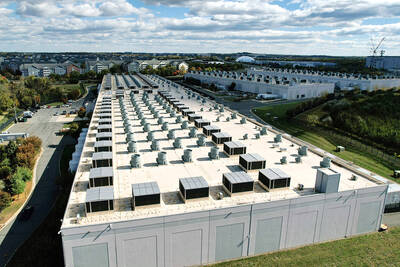
The demise of the coal industry left the US’ Appalachian region in tatters, with lost jobs, spoiled water and countless kilometers of abandoned underground mines. Now entrepreneurs are eyeing the rural region with ambitious visions to rebuild its economy by converting old mines into solar power systems and data centers that could help fuel the increasing power demands of the artificial intelligence (AI) boom. One such project is underway by a non-profit team calling itself Energy DELTA (Discovery, Education, Learning and Technology Accelerator) Lab, which is looking to develop energy sources on about 26,305 hectares of old coal land in
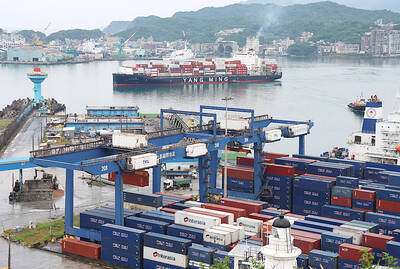
Taiwan’s exports soared 56 percent year-on-year to an all-time high of US$64.05 billion last month, propelled by surging global demand for artificial intelligence (AI), high-performance computing and cloud service infrastructure, the Ministry of Finance said yesterday. Department of Statistics Director-General Beatrice Tsai (蔡美娜) called the figure an unexpected upside surprise, citing a wave of technology orders from overseas customers alongside the usual year-end shopping season for technology products. Growth is likely to remain strong this month, she said, projecting a 40 percent to 45 percent expansion on an annual basis. The outperformance could prompt the Directorate-General of Budget, Accounting and
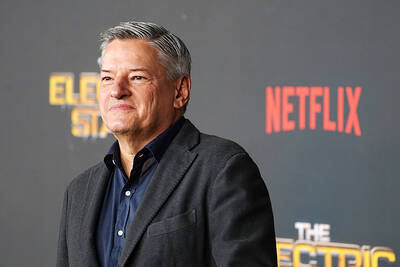
Netflix on Friday faced fierce criticism over its blockbuster deal to acquire Warner Bros Discovery. The streaming giant is already viewed as a pariah in some Hollywood circles, largely due to its reluctance to release content in theaters and its disruption of traditional industry practices. As Netflix emerged as the likely winning bidder for Warner Bros — the studio behind Casablanca, the Harry Potter movies and Friends — Hollywood’s elite launched an aggressive campaign against the acquisition. Titanic director James Cameron called the buyout a “disaster,” while a group of prominent producers are lobbying US Congress to oppose the deal,

Two Chinese chipmakers are attracting strong retail investor demand, buoyed by industry peer Moore Threads Technology Co’s (摩爾線程) stellar debut. The retail portion of MetaX Integrated Circuits (Shanghai) Co’s (上海沐曦) upcoming initial public offering (IPO) was 2,986 times oversubscribed on Friday, according to a filing. Meanwhile, Beijing Onmicro Electronics Co (北京昂瑞微), which makes radio frequency chips, was 2,899 times oversubscribed on Friday, its filing showed. The bids coincided with Moore Threads’ trading debut, which surged 425 percent on Friday after raising 8 billion yuan (US$1.13 billion) on bets that the company could emerge as a viable local competitor to Nvidia


 RSS
RSS