


Hong Kong Exchanges & Clearing Ltd (HKEX) is discussing secondary listings with Chinese technology companies, including Trip.com Group Ltd (攜程) and Netease Inc (網易), after Alibaba Group Holding Ltd (阿里巴巴) last year raised US$13 billion in its share offering in the territory, people familiar with the matter said.
Stock exchange officials have held follow-up talks with the two US-listed firms about the possibility of a secondary share sale, the people said on condition of anonymity, adding that the discussions are preliminary and subject to change.
HKEX has said that it is seeing a spike in inquiries about secondary listings from Chinese companies.
The interest comes at a time when US scrutiny of Chinese companies has intensified. A decision to proceed would see China’s biggest online travel service provider and second-biggest gaming firm — with a combined market value of about US$60 billion — follow in the footsteps of Alibaba, which last year pulled off the financial hub’s largest equity offering since 2010.
Trip.com, known also as Ctrip, and the Hong Kong exchange declined to comment in e-mailed statements. A Netease representative had no comment when contacted.
Alibaba’s share sale marked a triumph for Asia’s largest stock exchange operator, which has lost many of China’s brightest technology stars to US rivals.
The territory’s bourse introduced new rules to allow dual-class shares after initially resisting such a change, a move that had prompted Alibaba’s decision to debut in New York in 2014.
More secondary listings from technology companies would bolster the Hong Kong exchange, which posted its worst profit drop in almost three years in the third quarter of last year.
The financial hub has also been shaken by months of pro-democracy protests, casting uncertainty over its prospects for this year.
Total fundraising from Hong Kong initial public offerings are expected to decline this year by as much as 27 percent to HK$230 billion (US$29.5 billion), PricewaterhouseCoopers (PwC) said yesterday.
About 180 companies might debut, with more “new economy enterprises” to seek listings thanks to regulation reforms, it said.
“More US-listed Chinese concept stocks will come back to Hong Kong in 2020,” PwC partner Benson Wong (黃煒邦) said at a news conference in Hong Kong.
That trend is expected to continue beyond next year, although it would be harder to see offerings on Alibaba’s scale, he added.
A secondary offering in Hong Kong would help Chinese tech companies hedge their risks as US President Donald Trump’s administration is stepping up scrutiny against Chinese technology players beyond Huawei Technologies Co (華為) and US lawmakers have called for curbs on US pension fund investments in Chinese companies.
It could also help raise capital to survive an economic slowdown and increasing competitive pressure this year.
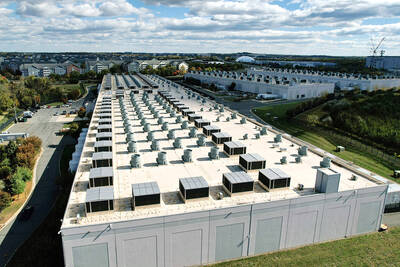
The demise of the coal industry left the US’ Appalachian region in tatters, with lost jobs, spoiled water and countless kilometers of abandoned underground mines. Now entrepreneurs are eyeing the rural region with ambitious visions to rebuild its economy by converting old mines into solar power systems and data centers that could help fuel the increasing power demands of the artificial intelligence (AI) boom. One such project is underway by a non-profit team calling itself Energy DELTA (Discovery, Education, Learning and Technology Accelerator) Lab, which is looking to develop energy sources on about 26,305 hectares of old coal land in

Taiwan’s exports soared 56 percent year-on-year to an all-time high of US$64.05 billion last month, propelled by surging global demand for artificial intelligence (AI), high-performance computing and cloud service infrastructure, the Ministry of Finance said yesterday. Department of Statistics Director-General Beatrice Tsai (蔡美娜) called the figure an unexpected upside surprise, citing a wave of technology orders from overseas customers alongside the usual year-end shopping season for technology products. Growth is likely to remain strong this month, she said, projecting a 40 percent to 45 percent expansion on an annual basis. The outperformance could prompt the Directorate-General of Budget, Accounting and

Netflix on Friday faced fierce criticism over its blockbuster deal to acquire Warner Bros Discovery. The streaming giant is already viewed as a pariah in some Hollywood circles, largely due to its reluctance to release content in theaters and its disruption of traditional industry practices. As Netflix emerged as the likely winning bidder for Warner Bros — the studio behind Casablanca, the Harry Potter movies and Friends — Hollywood’s elite launched an aggressive campaign against the acquisition. Titanic director James Cameron called the buyout a “disaster,” while a group of prominent producers are lobbying US Congress to oppose the deal,
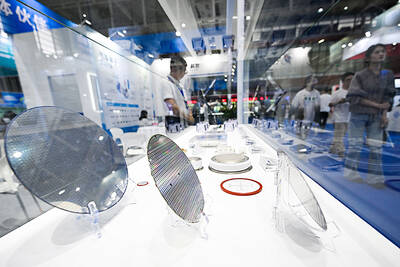
Two Chinese chipmakers are attracting strong retail investor demand, buoyed by industry peer Moore Threads Technology Co’s (摩爾線程) stellar debut. The retail portion of MetaX Integrated Circuits (Shanghai) Co’s (上海沐曦) upcoming initial public offering (IPO) was 2,986 times oversubscribed on Friday, according to a filing. Meanwhile, Beijing Onmicro Electronics Co (北京昂瑞微), which makes radio frequency chips, was 2,899 times oversubscribed on Friday, its filing showed. The bids coincided with Moore Threads’ trading debut, which surged 425 percent on Friday after raising 8 billion yuan (US$1.13 billion) on bets that the company could emerge as a viable local competitor to Nvidia


 RSS
RSS