


Mr Brown Coffee (伯朗咖啡) would close up to 10 of its coffeeshops nationwide, Chinese-language media reported yesterday, citing its operator, King Car Group (金車).
King Car would close the stores when their leases expire due to lower-than-expected profits, the United Daily News and Commercial Times reported.
The store in New Taipei City’s Tamsui District (淡水) is scheduled to close by the end of this month, they said.
However, the company would consider opening new stores in more suitable locations, the reports said.
Employees at the closing stores would either be transferred to other outlets or dismissed in accordance with the Labor Standards Act (勞基法), they said, citing King Car.
The company launched its series of canned Mr Brown Coffee products in 1982 and opened its first coffeeshop in 1998. At one time its had 46 shops nationwide.
It now has 39 stores, according to its Web site, following the closure of seven outlets in Taipei, including one in the Tianmu (天母) area more than a month ago, the reports said.
As market competition intensifies with the arrival of new brands and drink stalls, firstcomers are finding themselves under heavy pressure, H&B Business Group (住商不動產) head researcher Jessica Hsu (徐佳馨) said.
Convenience stores, which are constantly changing their marketing strategies, offer strong competition and might be another reason for the closure of Mr Brown Coffee shops, Knight Frank Taiwan researcher Andy Huang (黃舒衛) said.
Rising costs of ingredients, rent and labor are also pushing coffee shop operators out of the market, as most of them absorb the price increases instead of passing them on to their customer in fear of losing them, the news reports added.
King Car has sought to reposition itself in the domestic coffee shop market and slowly transformed Mr Brown stores to offer more food options such as light meals and snacks.
The company also operates the local Kavalan whiskey and Buckskin beer brands, as well as a range of soft drinks.
Ministry of Labor Department of Employment Relations Director Wang Hou-wei (王厚偉) yesterday told the Central New Agency that he had not received word from the company on a mass redundancy of workers, and was seeking clarification on whether the layoffs reached the legal threshold.
Additional reporting by staff writer and CNA

The demise of the coal industry left the US’ Appalachian region in tatters, with lost jobs, spoiled water and countless kilometers of abandoned underground mines. Now entrepreneurs are eyeing the rural region with ambitious visions to rebuild its economy by converting old mines into solar power systems and data centers that could help fuel the increasing power demands of the artificial intelligence (AI) boom. One such project is underway by a non-profit team calling itself Energy DELTA (Discovery, Education, Learning and Technology Accelerator) Lab, which is looking to develop energy sources on about 26,305 hectares of old coal land in
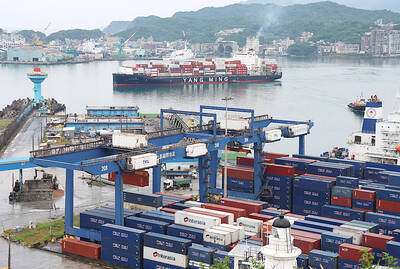
Taiwan’s exports soared 56 percent year-on-year to an all-time high of US$64.05 billion last month, propelled by surging global demand for artificial intelligence (AI), high-performance computing and cloud service infrastructure, the Ministry of Finance said yesterday. Department of Statistics Director-General Beatrice Tsai (蔡美娜) called the figure an unexpected upside surprise, citing a wave of technology orders from overseas customers alongside the usual year-end shopping season for technology products. Growth is likely to remain strong this month, she said, projecting a 40 percent to 45 percent expansion on an annual basis. The outperformance could prompt the Directorate-General of Budget, Accounting and

Netflix on Friday faced fierce criticism over its blockbuster deal to acquire Warner Bros Discovery. The streaming giant is already viewed as a pariah in some Hollywood circles, largely due to its reluctance to release content in theaters and its disruption of traditional industry practices. As Netflix emerged as the likely winning bidder for Warner Bros — the studio behind Casablanca, the Harry Potter movies and Friends — Hollywood’s elite launched an aggressive campaign against the acquisition. Titanic director James Cameron called the buyout a “disaster,” while a group of prominent producers are lobbying US Congress to oppose the deal,

Two Chinese chipmakers are attracting strong retail investor demand, buoyed by industry peer Moore Threads Technology Co’s (摩爾線程) stellar debut. The retail portion of MetaX Integrated Circuits (Shanghai) Co’s (上海沐曦) upcoming initial public offering (IPO) was 2,986 times oversubscribed on Friday, according to a filing. Meanwhile, Beijing Onmicro Electronics Co (北京昂瑞微), which makes radio frequency chips, was 2,899 times oversubscribed on Friday, its filing showed. The bids coincided with Moore Threads’ trading debut, which surged 425 percent on Friday after raising 8 billion yuan (US$1.13 billion) on bets that the company could emerge as a viable local competitor to Nvidia


 RSS
RSS