


Fast Retailing Co CEO Tadashi Yanai is leaving Softbank Group Corp’s board after more than 18 years as one of the few directors with the heft to challenge founder and CEO Masayoshi Son.
Yanai, Japan’s richest man, is to step down on Tuesday, a Softbank statement said yesterday.
He is leaving the post to focus on running his own business, Softbank spokeswoman Hiroe Kotera said. The founder of fashion chain Uniqlo has served as a Softbank board member since June 2001.
With this departure, Softbank investors lose one of the few board members capable of standing up to Son. The 70-year-old has been reported as a rare voice of dissent when it came to Son’s ambitious and risky acquisitions.
The two men, whose respective companies both went public in the same month of 1994, have often engaged in jocular sparring at Softbank’s annual shareholders’ meetings.
At the June meeting this year, Son shared some predictions that were eye-popping even by the standards of the outspoken Japanese billionaire. The value of Softbank’s investment portfolio could grow 33-fold to ¥200 trillion (US$1.8 trillion) in 20 years, he said.
The remarks drew laughs from directors, while Yanai feigned outrage, urging shareholders to look out or Son “will go out of control.”
Son’s investment style came under fire this year after he boosted the equity in office-sharing start-up WeWork only to see it plummet as investors balked at enormous losses and troublesome governance. The Vision Fund has also had to write down the value of its ride-hailing portfolio after Uber Technologies Inc fell more than 30 percent following its listing in May.
Still, Softbank’s shares are set to end the year 30 percent higher and Son appears unfazed by the setbacks. The 62-year-old is in the process of raising another mega-fund — the Vision Fund 2.
“Independent board members are not going to change this company,” said Mitsushige Akino, an executive officer at Ichiyoshi Asset Management Co in Tokyo. “Softbank has always been and will remain Son’s company.”
Yanai’s exit leaves Softbank’s board with only a handful of truly independent outside directors: Mitsui & Co chairman Masami Iijima and University of Tokyo professor Yutaka Matsuo, who joined in June.
Alibaba Group Holding Ltd (阿里巴巴) founder Jack Ma (馬雲) is an external director, but Alibaba counts Softbank as its biggest shareholder.

The demise of the coal industry left the US’ Appalachian region in tatters, with lost jobs, spoiled water and countless kilometers of abandoned underground mines. Now entrepreneurs are eyeing the rural region with ambitious visions to rebuild its economy by converting old mines into solar power systems and data centers that could help fuel the increasing power demands of the artificial intelligence (AI) boom. One such project is underway by a non-profit team calling itself Energy DELTA (Discovery, Education, Learning and Technology Accelerator) Lab, which is looking to develop energy sources on about 26,305 hectares of old coal land in

Taiwan’s exports soared 56 percent year-on-year to an all-time high of US$64.05 billion last month, propelled by surging global demand for artificial intelligence (AI), high-performance computing and cloud service infrastructure, the Ministry of Finance said yesterday. Department of Statistics Director-General Beatrice Tsai (蔡美娜) called the figure an unexpected upside surprise, citing a wave of technology orders from overseas customers alongside the usual year-end shopping season for technology products. Growth is likely to remain strong this month, she said, projecting a 40 percent to 45 percent expansion on an annual basis. The outperformance could prompt the Directorate-General of Budget, Accounting and
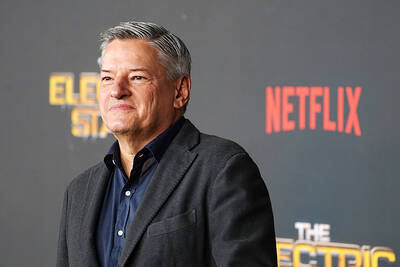
Netflix on Friday faced fierce criticism over its blockbuster deal to acquire Warner Bros Discovery. The streaming giant is already viewed as a pariah in some Hollywood circles, largely due to its reluctance to release content in theaters and its disruption of traditional industry practices. As Netflix emerged as the likely winning bidder for Warner Bros — the studio behind Casablanca, the Harry Potter movies and Friends — Hollywood’s elite launched an aggressive campaign against the acquisition. Titanic director James Cameron called the buyout a “disaster,” while a group of prominent producers are lobbying US Congress to oppose the deal,
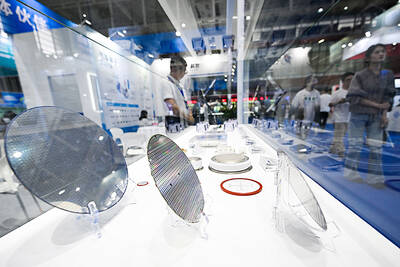
Two Chinese chipmakers are attracting strong retail investor demand, buoyed by industry peer Moore Threads Technology Co’s (摩爾線程) stellar debut. The retail portion of MetaX Integrated Circuits (Shanghai) Co’s (上海沐曦) upcoming initial public offering (IPO) was 2,986 times oversubscribed on Friday, according to a filing. Meanwhile, Beijing Onmicro Electronics Co (北京昂瑞微), which makes radio frequency chips, was 2,899 times oversubscribed on Friday, its filing showed. The bids coincided with Moore Threads’ trading debut, which surged 425 percent on Friday after raising 8 billion yuan (US$1.13 billion) on bets that the company could emerge as a viable local competitor to Nvidia


 RSS
RSS