


The Investment Commission yesterday approved Japanese e-commerce firm Rakuten Inc’s NT$1.2 billion (US$39.73 million) investment in the Lamigo Monkeys through its Singaporean branch Rakuten Asia Pte, making it the nation’s first professional baseball team owned by a foreign firm.
Lamigo, formerly run by Kaohsiung-based shoe manufacturer La New Corp (老牛皮國際), announced the sale to Rakuten more than three months ago following losses of NT$1.6 billion.
Rakuten has rebranded the club Rakuten Monkeys.
The e-commerce giant also owns another professional baseball team in Japan, the Tohoku Rakuten Golden Eagles, and a professional soccer club, Vissel Kobe, in the J1 League.
The commission also gave the green light to investments in the nation’s offshore wind power industry — NT$5.07 billion from Macquarie Corporate Holding Pty and NT$2.13 billion from Stonepeak Oceanview (Cayman) Holding Co to develop the Formosa II wind farm off the coast of Miaoli County.
The development of the offshore wind farm is currently under the charge of Formosa II Wind Power Co (海能風力發電), which is 75 percent owned by Macquarie and 25 percent by Swancor Renewable Energy Co (上緯新能源).
The latter’s parent company, Swancor Holding Co (上緯投控), sold 95 percent of its stake in Swancor Renewable Energy to Stonepeak two months ago for between US$25 million and US$101 million.
Swancor Holding yesterday announced that it had booked an asset disposal gain of NT$388.87 million on top of another US$8 million. The company still owns a 1.25 percent stake in the Miaoli wind farm.
The commission also approved Danish energy company Orsted Wind Power TW Holding’s plan to invest NT$5 billion to develop its offshore wind farms off the coast of Changhua County.
Other approved foreign investments included GE Mauritius Infrastructure Holding’s application to invest NT$1.75 billion in GE Evergreen Engine Services (長異發動機維修), a joint venture between GE and Evergreen Aviation Technologies Corp (長榮航太科技); and Kinestral Technologies Inc’s plan to invest NT$790.71 million in its local unit to manufacture glass products.
Aside from approving US$523.08 million in foreign investments yesterday, the commission gave its nod to applications by local companies to invest US$300 million abroad, including by Formosa Plastics Corp (台塑) and Nanya Technology Corp (南亞科技) in their overseas subsidiaries.
Applications to invest in China totaled US$250 million: US$120 million by Chang Chun Plastics Co (長春人造樹脂) to set up a unit in Gulei, Fujian Province; US$80 million by Walsin Lihwa Corp (華新麗華) into its Yantai (煙台) subsidiary in Shandong Province; and US$50 million by Quanta Computer Inc (廣達電腦) into its Chongqing subsidiary.
In related news, the Ministry of Economic Affairs yesterday approved two companies’ applications to join two of its three programs launched this year to encourage domestic investments.
Contract handset maker Arima Communications Corp (華冠通訊) is to invest more than NT$500 million to rebuild its idle plant in New Taipei City’s Yingge District (鶯歌) as it seeks to relocate production from China amid concern over trade tensions with the US.
Packaging specialist Taiwan Lamination Industries Inc (台灣積層工業) plans to invest NT$500 million to set up a third-phase plant in Taoyuan’s Jhongli District (中壢).
With the ministry approving 302 companies’ applications, combined investment pledges in the three programs have reached NT$842.4 billion, it said.
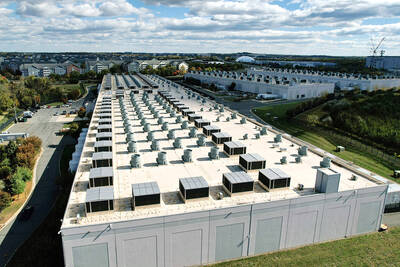
The demise of the coal industry left the US’ Appalachian region in tatters, with lost jobs, spoiled water and countless kilometers of abandoned underground mines. Now entrepreneurs are eyeing the rural region with ambitious visions to rebuild its economy by converting old mines into solar power systems and data centers that could help fuel the increasing power demands of the artificial intelligence (AI) boom. One such project is underway by a non-profit team calling itself Energy DELTA (Discovery, Education, Learning and Technology Accelerator) Lab, which is looking to develop energy sources on about 26,305 hectares of old coal land in
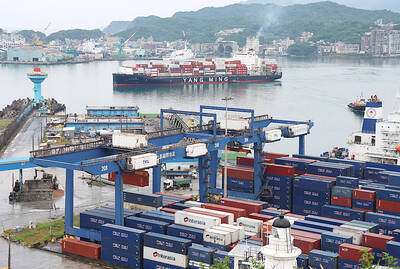
Taiwan’s exports soared 56 percent year-on-year to an all-time high of US$64.05 billion last month, propelled by surging global demand for artificial intelligence (AI), high-performance computing and cloud service infrastructure, the Ministry of Finance said yesterday. Department of Statistics Director-General Beatrice Tsai (蔡美娜) called the figure an unexpected upside surprise, citing a wave of technology orders from overseas customers alongside the usual year-end shopping season for technology products. Growth is likely to remain strong this month, she said, projecting a 40 percent to 45 percent expansion on an annual basis. The outperformance could prompt the Directorate-General of Budget, Accounting and
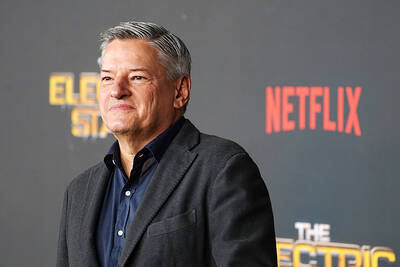
Netflix on Friday faced fierce criticism over its blockbuster deal to acquire Warner Bros Discovery. The streaming giant is already viewed as a pariah in some Hollywood circles, largely due to its reluctance to release content in theaters and its disruption of traditional industry practices. As Netflix emerged as the likely winning bidder for Warner Bros — the studio behind Casablanca, the Harry Potter movies and Friends — Hollywood’s elite launched an aggressive campaign against the acquisition. Titanic director James Cameron called the buyout a “disaster,” while a group of prominent producers are lobbying US Congress to oppose the deal,
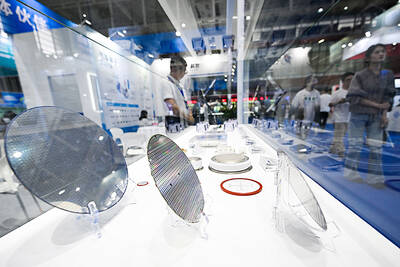
Two Chinese chipmakers are attracting strong retail investor demand, buoyed by industry peer Moore Threads Technology Co’s (摩爾線程) stellar debut. The retail portion of MetaX Integrated Circuits (Shanghai) Co’s (上海沐曦) upcoming initial public offering (IPO) was 2,986 times oversubscribed on Friday, according to a filing. Meanwhile, Beijing Onmicro Electronics Co (北京昂瑞微), which makes radio frequency chips, was 2,899 times oversubscribed on Friday, its filing showed. The bids coincided with Moore Threads’ trading debut, which surged 425 percent on Friday after raising 8 billion yuan (US$1.13 billion) on bets that the company could emerge as a viable local competitor to Nvidia


 RSS
RSS