


Will the wow factor return to consumer hardware next year? Will blockchain and 5G punch into the mainstream? Or will the world unify against big tech’s tax-avoiding practices?
This is a look at five themes set to shape the world of technology after a year in which debate intensified over privacy.
5G PROMISE
Super-fast fifth-generation (5G) network speeds are meant to revolutionize communications along with areas like urban transport, but so far, 5G has failed to meet expectations due to lagging infrastructure in many places. Apple Inc is yet to launch a compatible phone, unlike rivals, including Samsung Electronics Co.
The rollout should quicken next year as more countries install base stations and networking equipment — although US President Donald Trump’s opposition to Chinese sector leader Huawei Technologies Co (華為) remains a wild card.
As smartphone sales plateau around the world, manufacturers have been focusing more on ancillary services.
“You have to sell the entire experience, the entire ecosystem,” said Dominique Bindels, senior analyst for home and tech with London-based research firm Euromonitor International.
Highlighting Apple’s success in payments and peripheral devices such as AirPods, Bindels predicted that smart earphones, along with speakers and at-home devices connected via the Internet of Things, would be among the more dynamic sectors next year.
Digital assistants such as Alexa and Siri might start talking to each other after Amazon.com Inc, Apple and Google this month formed an alliance with other industry players to develop a common standard for smart home devices.
Another trend could be consolidation in TV streaming, after Apple and Disney joined Netflix, Amazon Video and some national broadcasters in a crowded subscription market.
THE QUANTUM DARK
For the industry at large, business consultancy Accenture this year coined the acronym DARQ to denote four major trends: distributed ledger technology (such as blockchain), artificial intelligence (AI), extended reality and quantum computing.
Blockchain networks of computers have already been generating virtual currencies in the form of bitcoin and its ilk, bypassing the need for a regulator like a government or central bank. Facebook Inc wants to make the tech respectable through its Libra project, but has hit political opposition around the world and several financial partners have pulled out.
Unwilling to let private enterprise dictate terms, China and other nations are building their own digital payments systems, which could come to fruition next year.
However, blockchain networks devour huge amounts of energy and concerns will mount about their environmental impact as debate intensifies more broadly about tech’s contribution to climate change.
PRICE OF PRIVACY
Most companies are now engaged across the spectrum of another tech acronym, SMAC: social, mobile, analytics and cloud. For consumers, SMAC is felt in how they communicate with friends, and how they search and shop.
That is accentuating fears about privacy after a series of data leaks at Facebook first laid bare how much of people’s online lives are exploited by companies and political parties.
“People are becoming more conscious of sharing data, but also in the same moment, the Nest cameras and smart speakers are flying off the shelves,” Bindels said.
“There’s a huge divide. People have been learning to trade privacy for convenience. It’s just another currency,” he said.
In a study last month into Facebook and Google, Amnesty International said that the trade-off amounts to a “Faustian bargain” that imperils human rights.
TECH WARS
To Beijing’s anger, Washington alleges that Huawei and another telecoms group, ZTE Corp (中興), are little more than shell fronts for Chinese spy chiefs.
Ni Lexiong (倪樂雄), a professor at the Shanghai National Defense Strategy Institute, said that US sanctions depriving those firms of access to US components would only encourage China to stand on its own feet.
“In the end, once China has formed its own industrial chain in the field of artificial intelligence, the United States will also lose a large market,” Ni said.
Samm Sacks, an expert on China’s digital economy at the Washington-based think tank New America, said the tech standoff could harm progress in areas such as precision medicine and AI-based diagnoses.
The two countries have cooperated in research, “and severing that could have global consequences,” Sacks said.
TAXING TIMES
The US presidential election in November next year is likely to prove another flashpoint over disinformation peddled on social media. Democratic presidential hopeful Elizabeth Warren wants Amazon, Facebook and Google to be broken up on antitrust grounds.
The Organisation for Economic Co-operation and Development is due by June next year to present a “unified approach” for richer countries to levy a digital tax on Internet giants.
Some, such as France, have gone ahead with their own tax, igniting another front in Trump’s multifaceted trade disputes as the US threatens tariffs on a range of French goods.
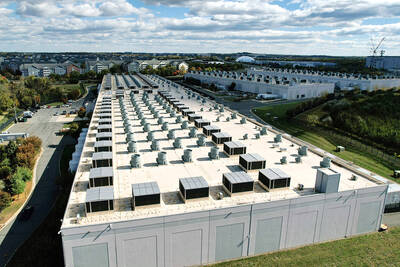
The demise of the coal industry left the US’ Appalachian region in tatters, with lost jobs, spoiled water and countless kilometers of abandoned underground mines. Now entrepreneurs are eyeing the rural region with ambitious visions to rebuild its economy by converting old mines into solar power systems and data centers that could help fuel the increasing power demands of the artificial intelligence (AI) boom. One such project is underway by a non-profit team calling itself Energy DELTA (Discovery, Education, Learning and Technology Accelerator) Lab, which is looking to develop energy sources on about 26,305 hectares of old coal land in

Taiwan’s exports soared 56 percent year-on-year to an all-time high of US$64.05 billion last month, propelled by surging global demand for artificial intelligence (AI), high-performance computing and cloud service infrastructure, the Ministry of Finance said yesterday. Department of Statistics Director-General Beatrice Tsai (蔡美娜) called the figure an unexpected upside surprise, citing a wave of technology orders from overseas customers alongside the usual year-end shopping season for technology products. Growth is likely to remain strong this month, she said, projecting a 40 percent to 45 percent expansion on an annual basis. The outperformance could prompt the Directorate-General of Budget, Accounting and
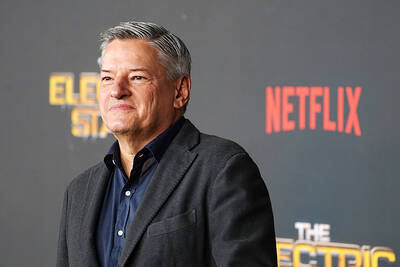
Netflix on Friday faced fierce criticism over its blockbuster deal to acquire Warner Bros Discovery. The streaming giant is already viewed as a pariah in some Hollywood circles, largely due to its reluctance to release content in theaters and its disruption of traditional industry practices. As Netflix emerged as the likely winning bidder for Warner Bros — the studio behind Casablanca, the Harry Potter movies and Friends — Hollywood’s elite launched an aggressive campaign against the acquisition. Titanic director James Cameron called the buyout a “disaster,” while a group of prominent producers are lobbying US Congress to oppose the deal,
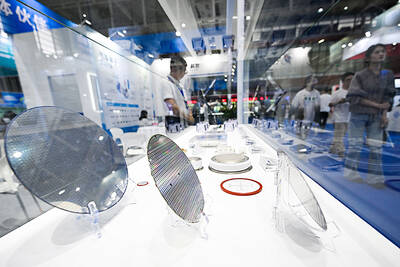
Two Chinese chipmakers are attracting strong retail investor demand, buoyed by industry peer Moore Threads Technology Co’s (摩爾線程) stellar debut. The retail portion of MetaX Integrated Circuits (Shanghai) Co’s (上海沐曦) upcoming initial public offering (IPO) was 2,986 times oversubscribed on Friday, according to a filing. Meanwhile, Beijing Onmicro Electronics Co (北京昂瑞微), which makes radio frequency chips, was 2,899 times oversubscribed on Friday, its filing showed. The bids coincided with Moore Threads’ trading debut, which surged 425 percent on Friday after raising 8 billion yuan (US$1.13 billion) on bets that the company could emerge as a viable local competitor to Nvidia


 RSS
RSS