


In living rooms across the world, Christmas lights this year tell a complicated tale about the US-China trade dispute that stretches all the way to Vietnam.
For many years the holiday lights were produced almost solely in China, but increased US tariffs on Chinese goods pushed many buyers to source the goods elsewhere. One country that has come out a clear winner is Vietnam: Seaborne shipments of Christmas lights from Vietnam to the US more than doubled in the first 10 months of the year from the same period last year, according to US customs data.
At the same time, US imports of the lights from China fell 49 percent.
A deeper look at the data and discussions with trade experts and businesses reveal a complex story.
Christmas lights are following a pattern that is becoming familiar up and down the US tariff lists: Chinese suppliers are finding ways to ditch the “Made in China” label to evade penalties, using neighboring countries such as Vietnam to transport goods across borders, relabel them and ship them to the US.
There is no doubt that Vietnam is attracting legitimate foreign investment and manufacturing business — and had been doing so well before US President Donald Trump began shaking up global supply chains. However, the trade dispute has increased the risk of illegal goods trafficking, putting Vietnam under the spotlight.
The Chinese “are very good at churning out low value and high volumes with a certain amount of skill that can’t easily be moved or replicated,” said Deborah Elms, executive director of the Asian Trade Centre in Singapore.
Businesses have “huge incentives” to move items in a different way to avoid hefty tariffs that can eclipse profit margins, Elms said.
It is a conclusion vividly illustrated in Vietnam, where a stretch of three consecutive blocks in Hanoi’s Old Quarter is flush with Christmas retail at this time of year.
“There are some local companies that brought material, parts from China and assemble them into these kinds of lights to sell,” said Nguyen Thi Ha, a 34-year-old shopkeeper along Hang Ma, which roughly translates to “Votive Street” for the ever-changing holiday retail offered throughout the year.
“They can’t produce by themselves because it will cost them way more than importing parts from China to assemble,” she said in Vietnamese through a translator.
Tariff pressures have meant more Chinese suppliers flooding the market this year, several shopkeepers along Hang Ma said.
In May, the Trump administration slapped 25 percent tariffs on Christmas lights from China, up from 10 percent previously. The item is not covered by the “phase one” trade deal the US and China agreed on earlier this month.
For Au Anh Tuan, head of customs control and supervision in the General Department of Vietnam Customs, curbing the flow of illegal goods is a struggle.
Through October, officials had uncovered about 14 significant cases of exports with fake labels this year.
“We’ve been working with the ministry of planning and investment in scanning thoroughly FDI [foreign direct investment] from China and Hong Kong,” he said in an interview in Hanoi last month.
Chinese foreign direct investment in Vietnam grew by triple digits this year, data through November showed.
Tuan said that authorities have been looking at the investment value — and especially the scale of factories and technology use — to determine whether investors aim to “just set up a place to assemble all the parts they brought from China.”
They also check whether the planned products are subject to US tariffs, a clue that investors might be trying to evade the penalties.
Several big-name companies such as Kyocera Corp, Sharp Corp and Nintendo Co have invested in Vietnam since the trade dispute began, with others considering it.
Foreign direct investment in Vietnam is on track to reach US$35 billion this year, about the same as each of the previous two years.
That success has come with a cost. Vietnam’s goods surplus with the US climbed to US$46.3 billion in the first 10 months of the year — a 39 percent increase from the same period last year — making it a target for the White House.
Trump has called Vietnam a trade abuser, with the US slapping tariffs of more than 400 percent on steel from Vietnam due to charges of illegal trans-shipment.
In the meantime, businesses on the other side of the world remain troubled by their own painful supply-chain revisions — including around Christmas lights.
“It’s a large disruption to economies of scale that took years to establish,” said Frank Skinner, marketing director of Georgia-based Wintergreen Corp, whose company imports Christmas lights and other holiday decorations. “It’ll take several years for companies to work through this. For those companies like us who also have a huge seasonality demand curve, it’s that much more challenging.”
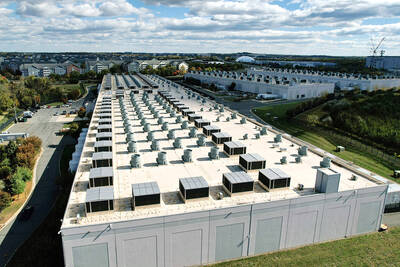
The demise of the coal industry left the US’ Appalachian region in tatters, with lost jobs, spoiled water and countless kilometers of abandoned underground mines. Now entrepreneurs are eyeing the rural region with ambitious visions to rebuild its economy by converting old mines into solar power systems and data centers that could help fuel the increasing power demands of the artificial intelligence (AI) boom. One such project is underway by a non-profit team calling itself Energy DELTA (Discovery, Education, Learning and Technology Accelerator) Lab, which is looking to develop energy sources on about 26,305 hectares of old coal land in
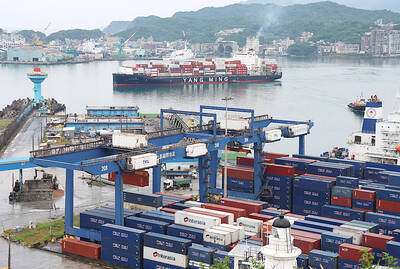
Taiwan’s exports soared 56 percent year-on-year to an all-time high of US$64.05 billion last month, propelled by surging global demand for artificial intelligence (AI), high-performance computing and cloud service infrastructure, the Ministry of Finance said yesterday. Department of Statistics Director-General Beatrice Tsai (蔡美娜) called the figure an unexpected upside surprise, citing a wave of technology orders from overseas customers alongside the usual year-end shopping season for technology products. Growth is likely to remain strong this month, she said, projecting a 40 percent to 45 percent expansion on an annual basis. The outperformance could prompt the Directorate-General of Budget, Accounting and

Netflix on Friday faced fierce criticism over its blockbuster deal to acquire Warner Bros Discovery. The streaming giant is already viewed as a pariah in some Hollywood circles, largely due to its reluctance to release content in theaters and its disruption of traditional industry practices. As Netflix emerged as the likely winning bidder for Warner Bros — the studio behind Casablanca, the Harry Potter movies and Friends — Hollywood’s elite launched an aggressive campaign against the acquisition. Titanic director James Cameron called the buyout a “disaster,” while a group of prominent producers are lobbying US Congress to oppose the deal,
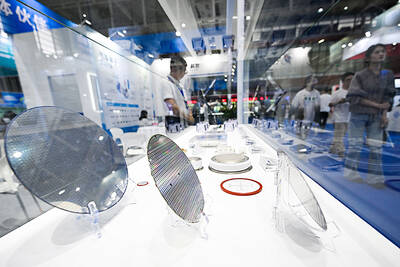
Two Chinese chipmakers are attracting strong retail investor demand, buoyed by industry peer Moore Threads Technology Co’s (摩爾線程) stellar debut. The retail portion of MetaX Integrated Circuits (Shanghai) Co’s (上海沐曦) upcoming initial public offering (IPO) was 2,986 times oversubscribed on Friday, according to a filing. Meanwhile, Beijing Onmicro Electronics Co (北京昂瑞微), which makes radio frequency chips, was 2,899 times oversubscribed on Friday, its filing showed. The bids coincided with Moore Threads’ trading debut, which surged 425 percent on Friday after raising 8 billion yuan (US$1.13 billion) on bets that the company could emerge as a viable local competitor to Nvidia


 RSS
RSS