


It has been a good year for Asia’s richest man, Mukesh Ambani.
The 62-year-old Indian tycoon added almost US$17 billion to his wealth as of Dec. 23, the most in Asia, taking his net worth to about US$61 billion, according to the Bloomberg Billionaires Index.
In comparison, Alibaba Group Holding Ltd (阿里巴巴) founder Jack Ma’s (馬雲) net worth grew US$11.3 billion, while Amazon.com Inc chief executive officer Jeff Bezos lost US$13.2 billion.
The surge in Ambani’s fortune this year was fueled by a 40 percent jump in the shares of his Reliance Industries Ltd, a conglomerate that is pivoting more toward consumer offerings than its core oil refining and petrochemicals businesses.
The rally in the stock is more than double the gains for India’s benchmark S&P BSE SENSEX during the period.
Investors are piling money on Reliance, betting that newer businesses such as telecommunications and retail could soon unlock value. With a goal of building a local e-commerce giant to challenge the likes of Amazon.com in India, Ambani has spent almost US$50 billion — mostly debt — on a wireless carrier that became India’s No. 1 within three years of debut.
“Mukesh Ambani changed the narrative for Reliance Industries” as a leader not just in oil and gas but also in telecom and retail, and possibly soon in e-commerce as well, said Chakri Lokapriya, chief investment officer at TCG Asset Management in Mumbai.
“He successfully identified, invested and executed rapidly to create this new narrative,” Lokapriya said. “We believe this can potentially double shareholder value over the next four years.”
The newer businesses are likely to contribute 50 percent of Reliance’s earnings in a few years, from about 32 percent now, Ambani said in August.
A representative for Reliance did not reply to an e-mail seeking comment on Ambani’s wealth.
While the success of the phone operator was cause for cheer, the business mogul’s plans to pare Reliance’s debt have sent the company’s stock soaring to a record.
Ambani has vowed to slash the group’s net debt to zero by early 2021.
Plans include a stake sale in Reliance’s oil-to-chemicals business to Saudi Arabian Oil Co, listings of the telecommunications and retail units within five years, sale of tower assets and strategic partners for a digital platform linked to Reliance Jio Infocomm Ltd, a telecoms firm.
The value of Reliance’s shares have almost tripled since the end of 2016, when Jio entered the Indian market with free calls and cheap data, and forced some heavily indebted incumbents to exit or merge with rivals.
Still, investors have been wary of the ballooning debt at the group that spent about US$76 billion in the past five years.
Reliance Industries had a net debt of 1.54 trillion rupees (US$21.6 billion) at the end of March 31, Ambani told shareholders in August.
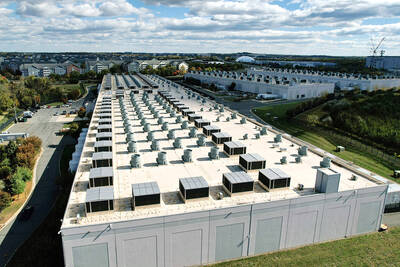
The demise of the coal industry left the US’ Appalachian region in tatters, with lost jobs, spoiled water and countless kilometers of abandoned underground mines. Now entrepreneurs are eyeing the rural region with ambitious visions to rebuild its economy by converting old mines into solar power systems and data centers that could help fuel the increasing power demands of the artificial intelligence (AI) boom. One such project is underway by a non-profit team calling itself Energy DELTA (Discovery, Education, Learning and Technology Accelerator) Lab, which is looking to develop energy sources on about 26,305 hectares of old coal land in
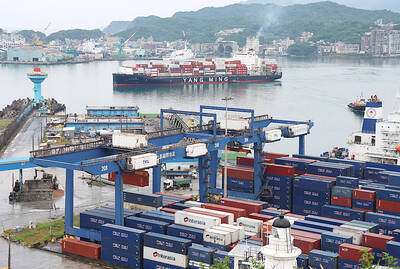
Taiwan’s exports soared 56 percent year-on-year to an all-time high of US$64.05 billion last month, propelled by surging global demand for artificial intelligence (AI), high-performance computing and cloud service infrastructure, the Ministry of Finance said yesterday. Department of Statistics Director-General Beatrice Tsai (蔡美娜) called the figure an unexpected upside surprise, citing a wave of technology orders from overseas customers alongside the usual year-end shopping season for technology products. Growth is likely to remain strong this month, she said, projecting a 40 percent to 45 percent expansion on an annual basis. The outperformance could prompt the Directorate-General of Budget, Accounting and
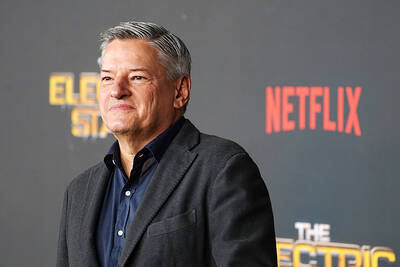
Netflix on Friday faced fierce criticism over its blockbuster deal to acquire Warner Bros Discovery. The streaming giant is already viewed as a pariah in some Hollywood circles, largely due to its reluctance to release content in theaters and its disruption of traditional industry practices. As Netflix emerged as the likely winning bidder for Warner Bros — the studio behind Casablanca, the Harry Potter movies and Friends — Hollywood’s elite launched an aggressive campaign against the acquisition. Titanic director James Cameron called the buyout a “disaster,” while a group of prominent producers are lobbying US Congress to oppose the deal,

Two Chinese chipmakers are attracting strong retail investor demand, buoyed by industry peer Moore Threads Technology Co’s (摩爾線程) stellar debut. The retail portion of MetaX Integrated Circuits (Shanghai) Co’s (上海沐曦) upcoming initial public offering (IPO) was 2,986 times oversubscribed on Friday, according to a filing. Meanwhile, Beijing Onmicro Electronics Co (北京昂瑞微), which makes radio frequency chips, was 2,899 times oversubscribed on Friday, its filing showed. The bids coincided with Moore Threads’ trading debut, which surged 425 percent on Friday after raising 8 billion yuan (US$1.13 billion) on bets that the company could emerge as a viable local competitor to Nvidia


 RSS
RSS