


Defaults across Asia could be headed even higher next year, with trouble seen especially in China and India.
Many investors expect fewer bailouts by the Chinese government after it recently let commodities trader Tewoo Group Co Ltd (天津物產集團) default in the biggest failure on a US dollar bond by a state-owned firm in two decades, and companies in the region have been on a buying spree fueled by debt.
Those factors could make things even worse next year after China onshore defaults rose to a record this year.
As some economies in Asia slow, companies are left vulnerable to any tightening in liquidity. A rise in defaults would likely further weigh on investor sentiment, and raise the cost of borrowing for the riskiest firms.
Defaults in China are likely to rise in the onshore and offshore bond markets next year amid a tightening in funding, and weaker state-owned firms and local government financing vehicles might be at risk, said Monica Hsiao (蕭洛青), chief investment officer at hedge fund Triada Capital Ltd.
The nation’s real-estate firms, traditionally seen as the bulwark of the economy, could also be vulnerable.
“We should not assume that the China property sector is immune if conditions continue to tighten for small over-levered developers that do not have stakeholders with strong political ties, for example,” Hsiao said.
A wave of acquisitions has also prompted companies with overextended balance sheets to stumble. Shandong Ruyi Technology Group Co (山東如意科技集團), which made a string of overseas purchases, including UK trench-coat maker Aquascutum, has been struggling to repay debt. Singapore-headquartered MMI International Ltd, which was sold to a Chinese buyout group, has missed loan repayments.
Meanwhile, troubled Chinese conglomerate HNA Group Co (海航集團) faces a crucial test — avoiding its first public bond default.
Once a front-runner in China’s debt-fueled global spending spree, HNA was scheduled to repay a 1.3 billion yuan (US$185.5 million) local bond yesterday.
Earlier this month, HNA said that it would halt trading of this bond from Dec. 6 until its maturity due to an unspecified “major event that has yet to be finalized.”
It did not give any details. The suspended bond last traded at 97.55 yuan on Dec. 5.
In India, companies have defaulted on record amounts of local currency and international bonds as the shadow banking crisis has triggered a credit squeeze.
While Essar Steel India Ltd’s insolvency was resolved with its takeover by ArcelorMittal SA, other companies have faced delays in the sale of assets under India’s bankruptcy law.
“India is still struggling to deal with the mountain of debt that exists, and there haven’t been yet that many success stories,” said David Kidd, a partner at Linklaters LLP who focuses on restructuring and insolvency matters.
In Southeast Asia, oil and gas companies are still reeling from depressed oil prices. There has been an “uptick” in defaults in Malaysia and a few companies have had to restructure debt with lenders, Kidd said.
Growing trade linkages between China and the rest of Asia also leave other regional economies vulnerable to the nation’s weakening growth.
“The Chinese slowdown and the potential for defaults in China, perhaps that’s also having a knock-on effect regionally,” Kidd said.
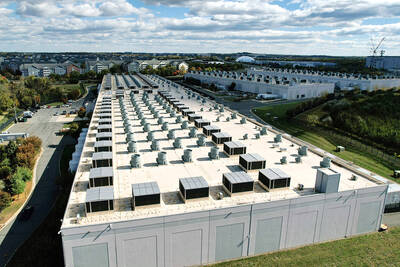
The demise of the coal industry left the US’ Appalachian region in tatters, with lost jobs, spoiled water and countless kilometers of abandoned underground mines. Now entrepreneurs are eyeing the rural region with ambitious visions to rebuild its economy by converting old mines into solar power systems and data centers that could help fuel the increasing power demands of the artificial intelligence (AI) boom. One such project is underway by a non-profit team calling itself Energy DELTA (Discovery, Education, Learning and Technology Accelerator) Lab, which is looking to develop energy sources on about 26,305 hectares of old coal land in
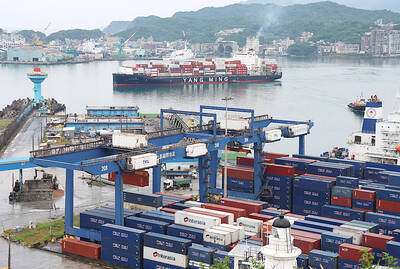
Taiwan’s exports soared 56 percent year-on-year to an all-time high of US$64.05 billion last month, propelled by surging global demand for artificial intelligence (AI), high-performance computing and cloud service infrastructure, the Ministry of Finance said yesterday. Department of Statistics Director-General Beatrice Tsai (蔡美娜) called the figure an unexpected upside surprise, citing a wave of technology orders from overseas customers alongside the usual year-end shopping season for technology products. Growth is likely to remain strong this month, she said, projecting a 40 percent to 45 percent expansion on an annual basis. The outperformance could prompt the Directorate-General of Budget, Accounting and

Netflix on Friday faced fierce criticism over its blockbuster deal to acquire Warner Bros Discovery. The streaming giant is already viewed as a pariah in some Hollywood circles, largely due to its reluctance to release content in theaters and its disruption of traditional industry practices. As Netflix emerged as the likely winning bidder for Warner Bros — the studio behind Casablanca, the Harry Potter movies and Friends — Hollywood’s elite launched an aggressive campaign against the acquisition. Titanic director James Cameron called the buyout a “disaster,” while a group of prominent producers are lobbying US Congress to oppose the deal,

Two Chinese chipmakers are attracting strong retail investor demand, buoyed by industry peer Moore Threads Technology Co’s (摩爾線程) stellar debut. The retail portion of MetaX Integrated Circuits (Shanghai) Co’s (上海沐曦) upcoming initial public offering (IPO) was 2,986 times oversubscribed on Friday, according to a filing. Meanwhile, Beijing Onmicro Electronics Co (北京昂瑞微), which makes radio frequency chips, was 2,899 times oversubscribed on Friday, its filing showed. The bids coincided with Moore Threads’ trading debut, which surged 425 percent on Friday after raising 8 billion yuan (US$1.13 billion) on bets that the company could emerge as a viable local competitor to Nvidia


 RSS
RSS